


U.S. Air Force Orders C-17 Defense System Upgrades for Allies
The United States Air Force has awarded Boeing a $13 million contract to upgrade infrared countermeasure systems on C-17 Globemaster III transport aircraft operated by Canada and Australia under a Foreign Military Sales program, according to a contract announcement released Feb. 18, 2026.
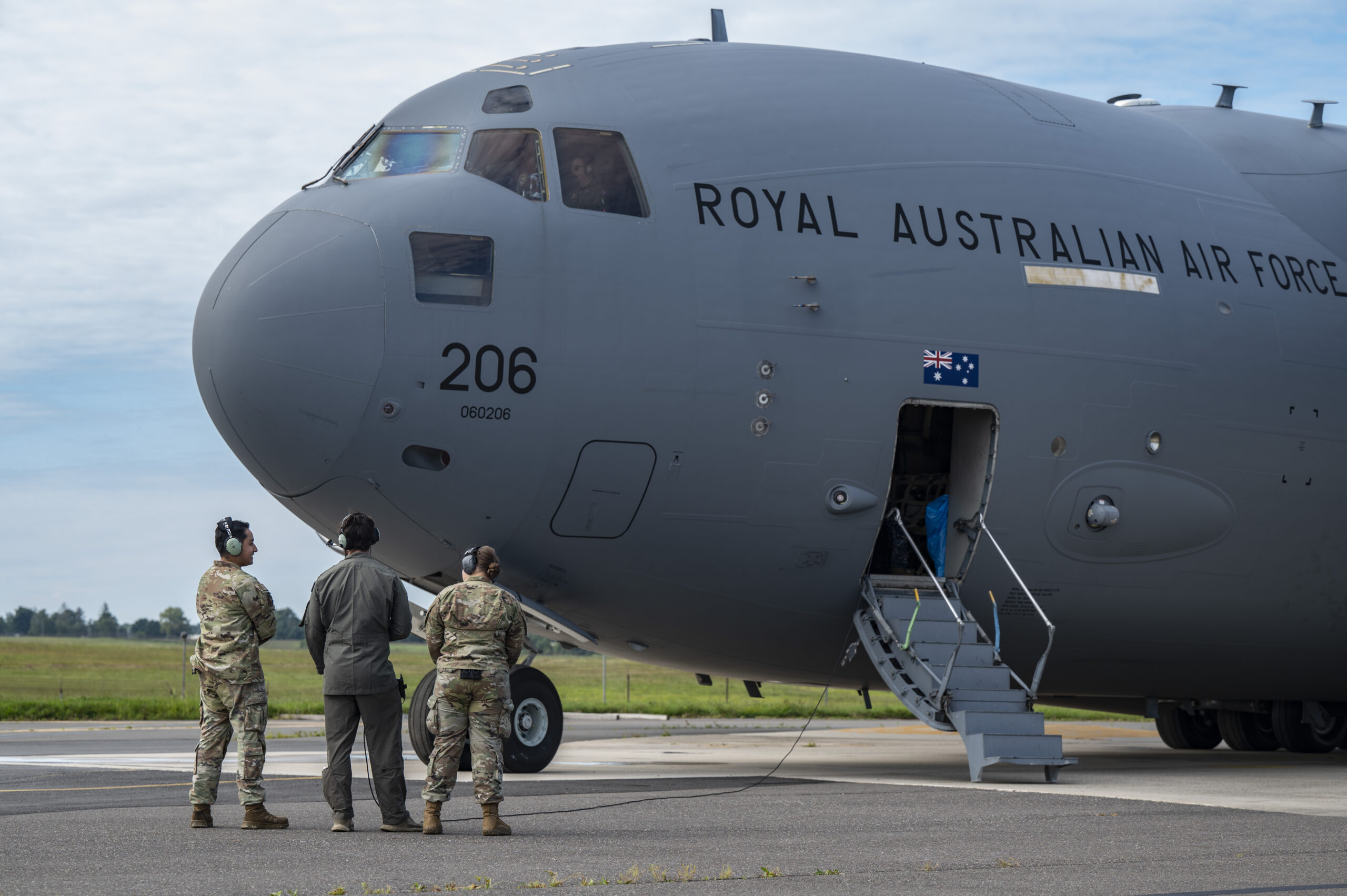
The award covers upgrades converting existing Block 10 defensive systems to the newer Block 30 configuration across eight Royal Australian Air Force aircraft and five Royal Canadian Air Force aircraft. The work includes procurement of Group A kits, Group A and Group B installation activities, and technical installation support provided by the supplier.
The contract was issued as a sole-source acquisition, with Foreign Military Sales funds totaling $13,150,150 obligated at the time of award. Work will be performed in San Antonio, Texas, and is scheduled for completion by July 2030. The Air Force Life Cycle Management Center at Warner Robins, Georgia, serves as the contracting activity under contract number FA8526-26-F-B006.
According to the contract notice, the modernization effort focuses on large aircraft infrared countermeasures designed to improve survivability against infrared-guided threats. These systems are installed on strategic airlift aircraft to detect and defeat incoming heat-seeking missiles through automated defensive responses.
The C-17 Globemaster III is a heavy military transport aircraft used for strategic and tactical airlift missions, including troop deployment, cargo delivery, humanitarian operations, and aeromedical evacuation. Canada and Australia both operate the platform as a core component of long-range mobility operations supporting national and coalition missions.
Infrared countermeasure upgrades typically involve improvements to onboard sensors, processors, and defensive response capabilities that allow aircraft crews to operate in contested environments where portable air defense systems present risks to slow-moving or low-altitude aircraft. The Block 30 configuration represents a newer defensive standard compared with earlier Block 10 installations currently fielded on portions of allied fleets.
As noted in the contract announcement, the effort includes both hardware procurement and installation support, indicating a phased modernization process conducted alongside operational service schedules. Technical assistance from the supplier is included to ensure integration and certification of upgraded defensive systems.
Foreign Military Sales programs allow allied nations to procure U.S. defense equipment and upgrades through U.S. government contracting channels, ensuring compatibility with American military standards and sustainment frameworks. Under this arrangement, the U.S. Air Force manages contracting and execution while partner nations fund the upgrades.
Boeing, headquartered in Long Beach, California, is the original manufacturer of the C-17 aircraft and continues to provide sustainment, modernization, and lifecycle support services for global operators of the platform. The company maintains long-term involvement in upgrades aimed at extending operational viability and improving aircraft survivability.