

Boeing Secures U.S. Special Operations Command MH-47G deal
United States Special Operations Command has awarded Boeing a $19,4 million modification to an existing delivery order for the procurement of MH-47G rotary-wing aircraft, according to a contract announcement.
The modification supports continued acquisition of special operations helicopters, with most work to be performed in Ridley Park, Pennsylvania, through November 2030.
The contract action addresses ongoing requirements to sustain and expand specialized aviation capabilities used by United States special operations forces. The MH-47G platform provides heavy-lift and long-range infiltration support for missions conducted in demanding operational environments where conventional rotary-wing aircraft may face limitations.
According to the announcement, the modification applies to delivery order H9224126FE001 and funds procurement activities associated with MH-47G aircraft production. United States Special Operations Command, headquartered at MacDill Air Force Base, Florida, serves as the contracting activity overseeing the effort.
The contract is structured as a firm-fixed-price modification, establishing predetermined costs for the procurement work covered under the agreement. The majority of manufacturing and integration activities will take place at Boeing’s rotorcraft facility in Ridley Park, a long-standing production site for military helicopters supporting U.S. and allied customers.
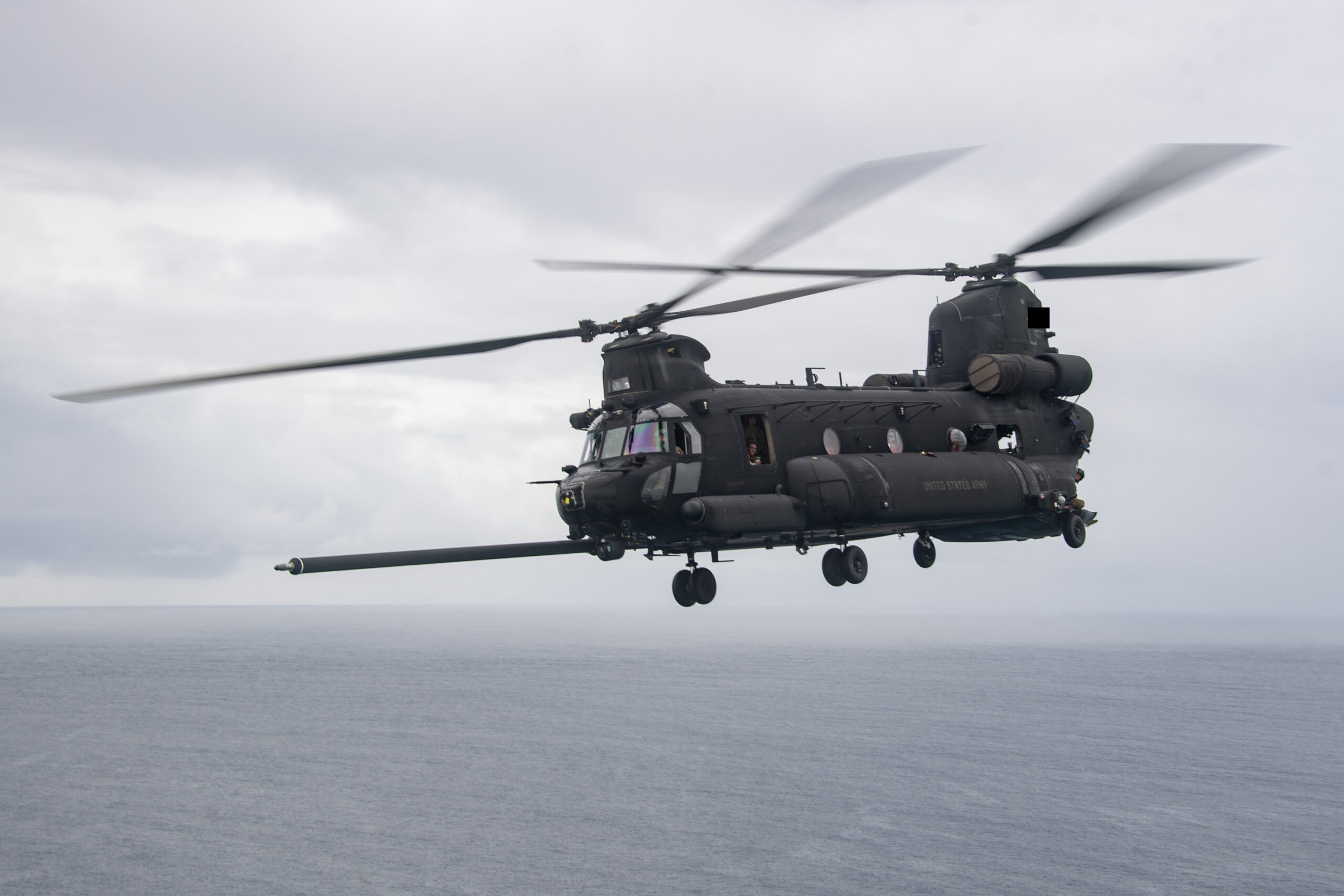
As noted in the contract notice, the award continues procurement of the MH-47G variant, a specialized version of the CH-47 Chinook tailored for special operations missions. The aircraft is configured to support long-range insertion, extraction, and resupply of special operations forces under challenging conditions.
In operational terms, the MH-47G differs from standard transport helicopters through a combination of extended-range fuel capability, advanced avionics, terrain-following navigation systems, and specialized mission equipment. These features allow crews to conduct low-level flights at night or in reduced visibility while carrying personnel, vehicles, or equipment into contested areas.
The platform is widely used for missions requiring heavy payload capacity combined with operational flexibility. Its tandem-rotor configuration provides stability and lift performance suited for high-altitude and hot-weather environments often encountered during special operations deployments.
United States Special Operations Command employs the MH-47G to support a range of mission profiles, including infiltration of special operations teams, rapid extraction operations, logistical resupply, and humanitarian response missions when required. The aircraft’s ability to operate over long distances without refueling is central to its role within special operations aviation units.
Boeing remains the primary manufacturer of the Chinook family of helicopters, maintaining production lines that support modernization and sustainment of existing fleets. Continued procurement actions ensure industrial continuity while allowing special operations aviation units to maintain aircraft availability levels.
Across the U.S. military, rotary-wing modernization efforts have emphasized survivability, range, and mission adaptability. Special operations aviation places particular emphasis on aircraft capable of operating independently in contested environments, often at night and at extended distances from established bases.