
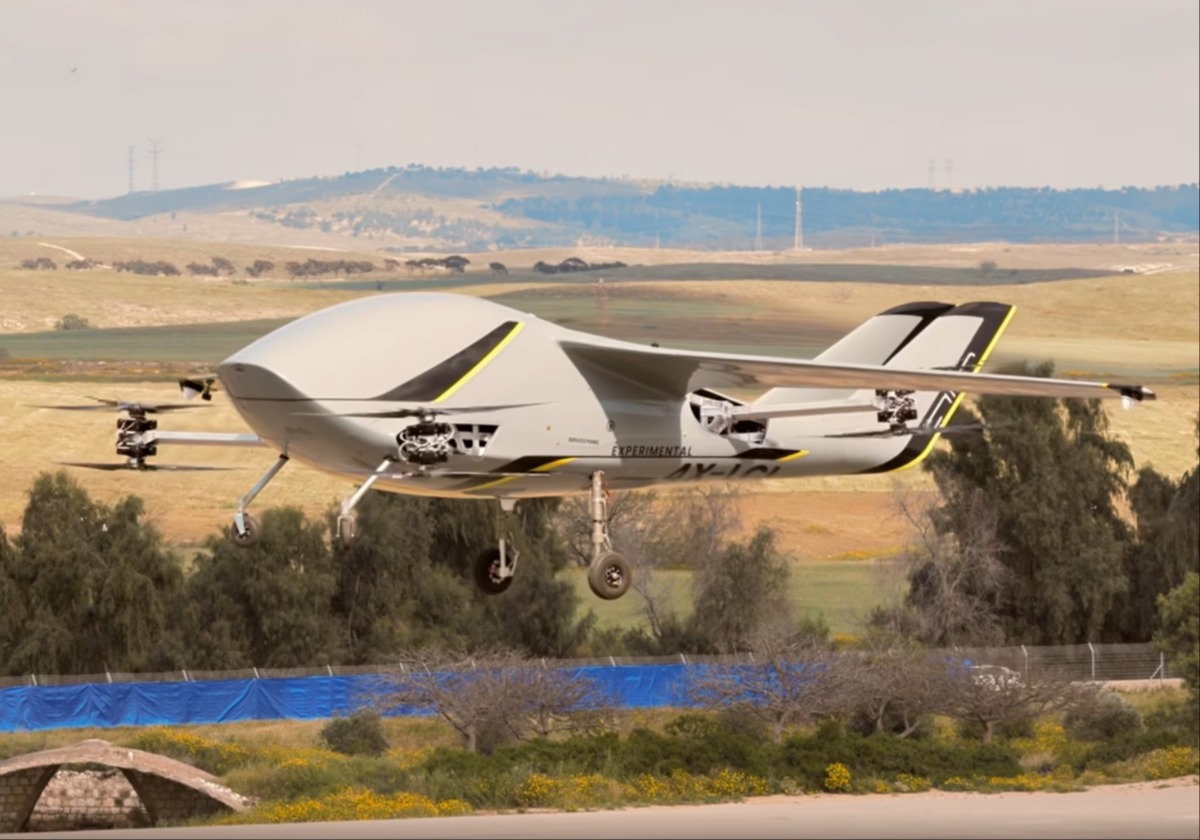
Florida-based aerospace company AIR says it has begun flight operations with its new heavy-lift cargo unmanned aircraft, marking the first public confirmation that the platform has moved into active flying status.
The aircraft, which the company describes as one of the largest in its category, is built to carry payloads of up to 550 pounds (250 kg). It includes a cargo bay with a volume of 70 cubic feet, allowing it to transport bulkier supplies that smaller delivery drones cannot handle in a single trip.
AIR says the system represents its production platform, developed over several years of flight testing and operational refinement. The first flight confirms the aircraft has moved beyond the development stage and into active flight operations, with the company positioning it for real-world logistics use.
Unlike traditional fixed-wing cargo aircraft, the platform is capable of vertical takeoff and landing. That means it does not require a runway, giving it access to remote locations and areas with limited infrastructure, including forward operating environments or disaster zones.
The aircraft is designed with simplified operation in mind, allowing it to integrate into existing logistics networks without major changes to ground infrastructure. AIR also highlights its foldable architecture, which can ease transport and deployment when operating in confined or mobile settings.
The company says the system is intended to support a wide range of missions, including remote resupply and time-sensitive delivery of critical goods. Because it operates without a pilot onboard, the aircraft can be used in situations where risks to personnel would otherwise limit the use of manned transport.
At a technical level, the aircraft combines electric propulsion with vertical lift capability. This configuration is becoming more common among next-generation cargo drones, as it allows operators to move supplies quickly without relying on established airfields or exposed ground convoys.
With its payload capacity, the AIR platform sits above many existing unmanned delivery systems, which are typically limited to smaller loads. Its cargo bay volume allows it to carry equipment, spare parts, or medical supplies in fewer sorties, improving efficiency in both military and civilian operations.
AIR says the aircraft is compatible with existing field infrastructure, suggesting it is intended to work alongside current supply chains rather than replace them. This approach allows operators to use the platform where it offers clear advantages, such as speed, flexibility, or access to hard-to-reach locations.
Unmanned cargo aircraft have gained attention in recent years as logistics requirements shift toward more distributed and flexible operations. Military units operating across wider areas, as well as humanitarian organizations responding to emergencies, increasingly require systems that can deliver supplies without relying on fixed infrastructure.