
ASELSAN Showcases Satellite and Space Technologies at IAC 2026
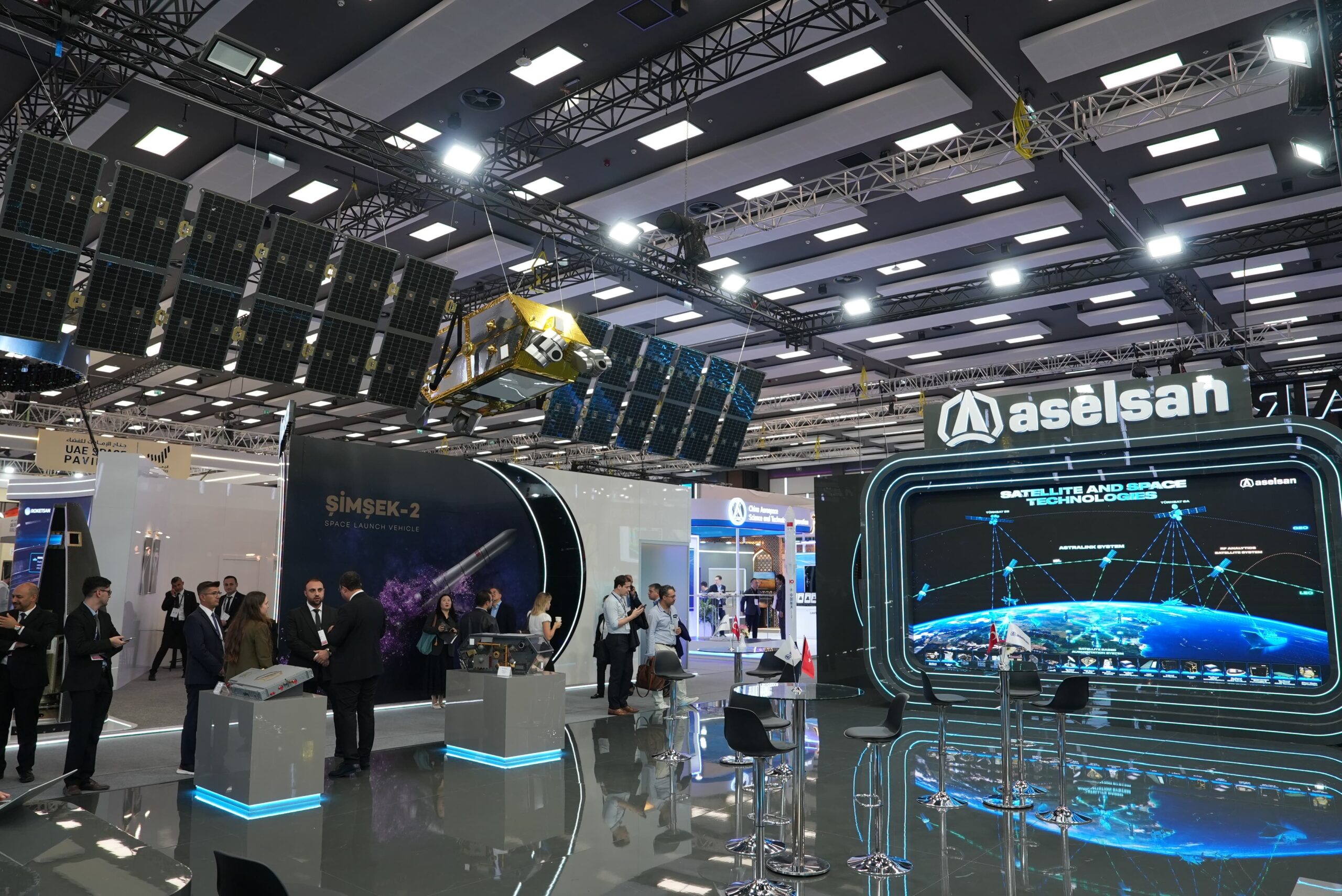
Turkish defense company ASELSAN is showcasing its expanding portfolio of satellite and space technologies at the 2026 International Astronautical Congress (IAC 2026).
According to information provided by ASELSAN to Polygonjournal, the company is also one of the main sponsors of the event, which is being held in Antalya.
Under its “From Chip to Constellation” vision, ASELSAN is presenting its capabilities across various stages of the space value chain. Building on its expertise in defense electronics, the company develops a wide range of technologies, from chip and space-qualified electronics technologies to satellite systems, platforms and payloads, ground infrastructure, and user terminals.
At IAC 2026, ASELSAN is highlighting three major satellite programs that demonstrate its capabilities across different orbits and missions.
One of the key projects on display is ASTRALINK, a Low Earth Orbit (LEO) communications satellite. Developed under the “LEO Satellites and Military 5G/6G Communications System Project,” ASTRALINK is designed to provide secure, uninterrupted, reliable, low-latency, and high-capacity communications between network centers and users located beyond the coverage of terrestrial networks.
The project also envisages establishing large-scale serial production capabilities. In this context, the company aims to produce up to four satellites per month. The project is also expected to contribute to strengthening Türkiye’s indigenous space-based communications capabilities.
Another project showcased at IAC 2026 is the TÜRKSAT-6A satellite. TÜRKSAT-6A demonstrates Türkiye’s growing indigenous capabilities in geostationary orbit (GEO) communications. The satellite incorporates communications payloads and other satellite technologies developed by ASELSAN.
Building on the experience gained and technological capabilities developed through TÜRKSAT-6A, ASELSAN continues its technology and engineering activities for TÜRKSAT-7A, Türkiye’s next-generation geostationary communications satellite.
Another major project attracting attention at the congress is Türkiye’s GÖKTÜRK-3 synthetic aperture radar (SAR) satellite program. The program will expand the country’s space-based imaging capabilities and provide imaging capability under all weather conditions, both day and night.
As part of the program, which involves several institutions and companies, ASELSAN is developing the SAR imaging radar, secure communications equipment for transmitting large volumes of data to Earth, and the satellite’s main security unit.
One of Türkiye’s leading defense industry companies, ASELSAN has been working on satellite and space technologies since the early 2000s. In its initial phase, the company focused on satellite ground segments and user SATCOM solutions.
Over the years, ASELSAN has expanded its capabilities in the space sector, building a broad portfolio covering satellite systems, platforms and payloads, satellite ground control centers, and other supporting technologies. These integrated capabilities enable the company to develop comprehensive space solutions tailored to mission requirements.
“Our experience as a defense electronics company has provided us with a strong foundation for developing technologies for the space sector. Today, ASELSAN has indigenous capabilities covering all stages of the space value chain, from chip technologies and space-qualified electronics to satellite systems, platforms and payloads, as well as ground infrastructure,” said Ahmet Akyol, President and CEO of ASELSAN.
According to him, IAC 2026 is an important platform for showcasing ASELSAN’s capabilities and growing ambitions in the space sector.
“Our ‘From Chip to Constellation’ vision brings these capabilities together, enabling the development of complete, secure, and competitive space architectures while creating new opportunities in international markets,” he added.