
BARBAROS Coastal Defence System – ANALYSIS
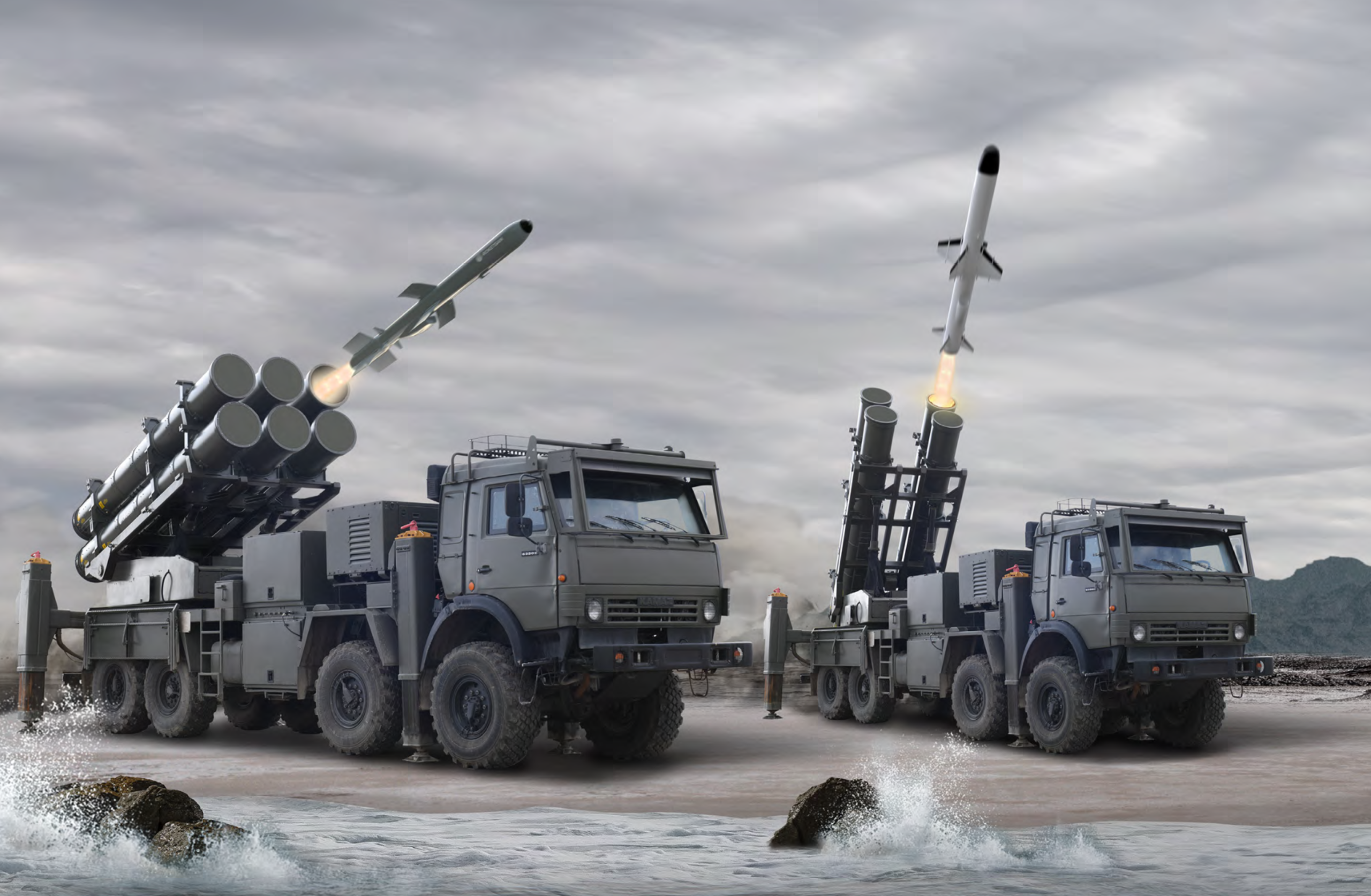
Coastal defence missile systems play a distinctive role in organising coastal protection. These systems are mobile or fixed weapon platforms designed to destroy enemy surface vessels, protect coastlines and naval bases, and control territorial waters.
According to Polygonjournal, coastal defence missile systems are land-based versions of anti-ship missiles. Globally, these systems are predominantly mobile and mounted on trucks.
Even the US military, which possesses large numbers of anti-ship missiles, fighter aircraft, cruise missiles, nuclear missiles and nuclear-powered submarines, includes coastal defence systems in its military inventory. The main countries that operate or are developing truck-mounted coastal defence systems include the United States, the United Arab Emirates (UAE), China, France, India, Japan, Norway, Pakistan, Russia, Serbia and Ukraine. Russia, in particular, deploys these systems as concealed, fixed-position ground batteries. China has recently developed and added to its inventory a ballistic missile defence vessel equipped with nuclear warheads.
Overall, coastal defence systems support naval forces and have the potential to neutralise enemy aircraft carriers, particularly when deployed in a designated area or position and prepared for engagement.
In recent years, Türkiye has significantly reduced its dependence on foreign sources through substantial investments in its defence industry. At the same time, it has equipped its armed forces with new and technologically advanced systems, strengthening their capabilities. These major investments in indigenous defence development cover multiple domains, including land, naval and air systems. Through its investments, particularly in the Turkish Naval Forces, Türkiye attaches great importance to national security and maritime security in a region that has experienced conflicts in recent years. The BARBAROS coastal defence system is a notable example of this approach.
BARBAROS is an indigenous coastal defence system developed and manufactured by Türkiye’s ROKETSAN to enhance the country’s ability to protect its maritime borders. The persistent and constantly evolving nature of threats from the sea has increased the importance of coastal defence in modern military doctrine. In this context, the BARBAROS system has been designed to meet key operational requirements, including rapid response to maritime threats, flexible deployment, integration capabilities and a reduced logistical footprint through the use of mobile batteries.
It is worth noting that the system was first publicly announced in 2022 following successful test firings of the BARBAROS missile off the coast of Sinop. Integration tests involving the ÇAKIR missile were completed in 2023–2024, demonstrating the system’s operational capabilities. The system was also showcased at international exhibitions in 2024 and 2025, highlighting Türkiye’s defence export potential.
The BARBAROS coastal defence system is based on a modular, mobile vehicle-and-battery configuration. Its main components are as follows:
– ATMACA missile system: Known as an indigenous anti-ship missile, ATMACA is a long-range cruise missile. A battery can be equipped with four missiles. Its land-based variant provides the capability to engage targets at sea from coastal positions. The stated range is 250 km, the missile weighs 750 kg, and its warhead weighs 220 kg. Its targets include moving surface vessels and fixed land targets. The missile features radar and infrared guidance capabilities, a low radar signature and the indigenous KTJ-3200 engine. The land-based variant is optimised for coastal defence missions.
– ÇAKIR missile system: Developed as an indigenous cruise missile, ÇAKIR offers a shorter-range option. A battery can be equipped with six missiles, which are launched from a ground-based launcher. The missile has a reported range of more than 150 km, weighs 300 kg and carries a 200 kg penetrating warhead. Its target set includes maritime and land-based targets. With inertial/GPS guidance and resistance to electronic countermeasures, it provides a lighter option suitable for rapid engagement.
– Command and Control Vehicle: This vehicle incorporates mission planning, target detection and fire-control functions. It serves as the central element responsible for coordinating the system’s components, planning missions, detecting targets and managing combat operations. A coastal surveillance radar station can be integrated when required. This also provides opportunities for integration with Türkiye’s existing network-enabled defence systems, including the ADVENT Combat Management System (Ağ Destekli Veri Entegre).
– Radar and sensor systems: Coastal surveillance radars are expected to support the system’s sensor architecture. These could potentially include high-bandwidth radars operating in the X-band, such as ASELSAN’s SERDAR, although the exact configuration requires official confirmation. The system is designed around a network-supported infrastructure for data collection, radar-data processing, target tracking and identification.
– Mobile battery configuration and portability: The system is designed to offer high mobility, reducing the time required to prepare for firing and relocate from a position. According to available imagery, the system is intended to be capable of relocating in less than five minutes. A battery comprises a command-and-control vehicle, missile launchers mounted on 8×8 armoured vehicles, and transport-reloading vehicles. The configuration is described as allowing each battery to carry and launch either four ATMACA missiles or six ÇAKIR missiles.
The system offers several advantages for coastal security in a strategic threat environment:
Deterrence against maritime threats: BARBAROS provides a deterrent against enemy vessels and other surface targets approaching maritime border areas. Operating in coordination with naval forces, it can contribute to protecting maritime sovereignty.
Mobility and logistical efficiency: By relying on mobile batteries and indigenous munitions, the system offers a lower logistical burden, greater deployment flexibility and the ability to conduct surprise launches compared with fixed coastal batteries.
Strengthening indigenous defence capabilities: The development of domestically produced missiles such as ATMACA and ÇAKIR, together with local manufacturing capacity, system integration and command-and-control infrastructure, represents an important step in the maturation of Türkiye’s defence industry.
Adaptation to Türkiye’s maritime geography: Türkiye’s coastlines along the Aegean, Mediterranean and Black Seas are strategically important because of their length, narrow straits, islands, peninsulas, maritime routes and exposure to maritime threats. The BARBAROS system offers a defensive layer tailored to these geographical realities.
Integration into a multilayered defence architecture: Türkiye is pursuing a multilayered defence approach encompassing air defence, naval defence and land-based defence systems. BARBAROS has the potential to contribute to this strategy by enabling the coastal defence line to operate in coordination with land and air defence assets.
Conclusion
The BARBAROS coastal defence system, manufactured by ROKETSAN, represents an important maritime defence capability and a significant addition to the range of systems supporting the Turkish Naval Forces. It marks a technological advance in Türkiye’s efforts to protect its maritime sovereignty.
By combining Türkiye’s indigenous defence industry capabilities with ATMACA and ÇAKIR missiles, BARBAROS offers a mobile, rapidly deployable and network-enabled system with the potential to play an important role in the country’s defence strategy.
As the system’s development progresses, its technical capabilities and operational characteristics will become clearer as further information is disclosed.
By Ahad Vahidoğlu