
Boeing Secures $12 Million Contract to Upgrade P-8A Poseidon
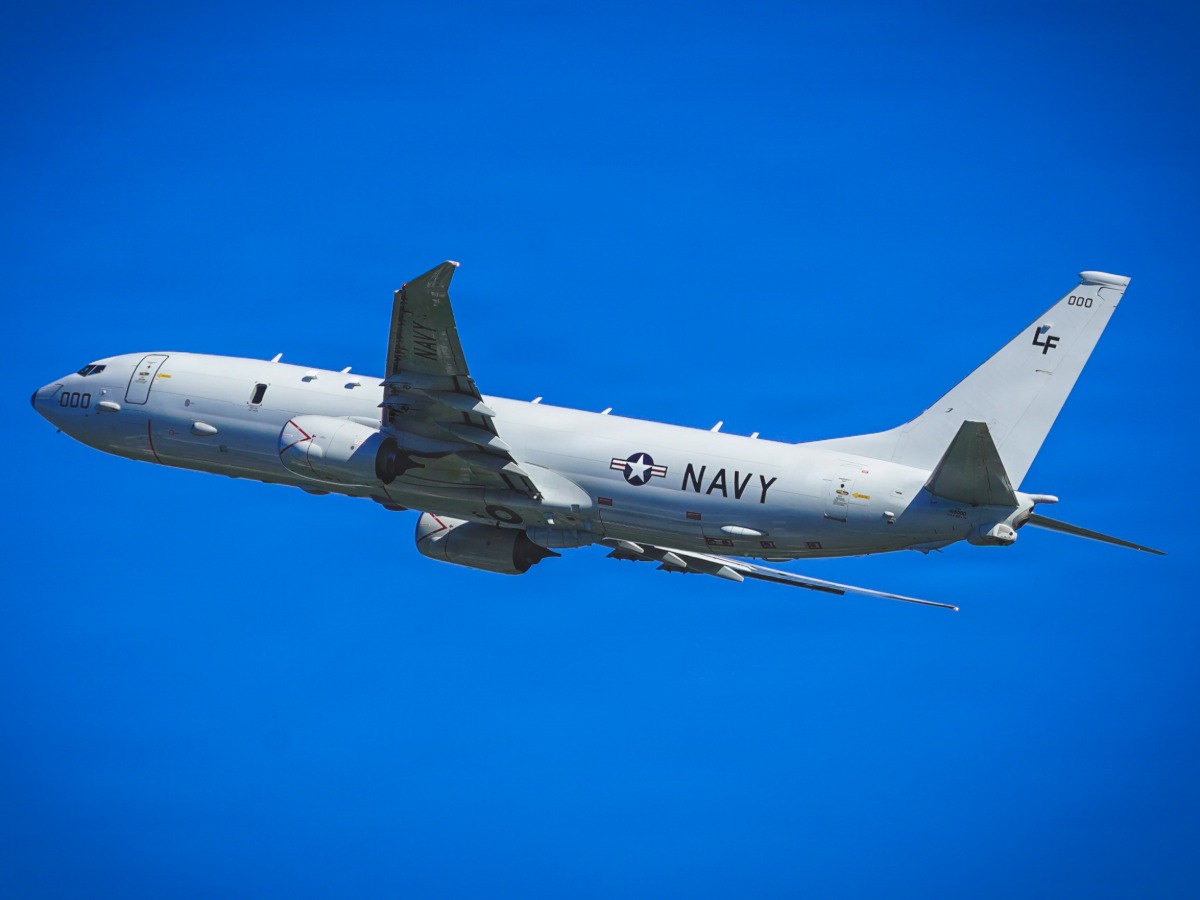
Boeing has been awarded a $11.95 million contract modification to install an Increment 3 retrofit kit on a U.S. Navy P-8A Poseidon maritime patrol aircraft.
The award exercises an option under an existing cost-plus-fixed-fee order and covers both the retrofit kit installation and associated ancillary support to upgrade the aircraft’s anti-submarine warfare capabilities.
Naval Air Systems Command at Patuxent River, Maryland, is the contracting activity. The contract action was not competed. Work is expected to be completed in October 2026, with the full $11.95 million in fiscal 2026 aircraft procurement funds obligated at the time of award — none of which will expire at the end of the current fiscal year.
Performance will be distributed across three locations. Jacksonville, Florida carries the dominant share at 79.6 percent, reflecting the city’s role as the primary hub for P-8A operations and maintenance on the East Coast. St. Louis, Missouri accounts for 10.9 percent, and Mesa, Arizona for 9.5 percent.
The P-8A Poseidon is the Navy’s frontline maritime patrol and reconnaissance aircraft, replacing the aging P-3C Orion fleet. Built on a modified Boeing 737-800ERX commercial airframe, the Poseidon is optimized for anti-submarine warfare, anti-surface warfare, and intelligence, surveillance, and reconnaissance missions over open ocean and littoral environments. It carries a suite of sensors including surface search radar, an electro-optical and infrared camera turret, and sonobuoy launch systems that allow the crew to detect and track submerged submarines across wide ocean areas. The aircraft can also carry and deploy torpedoes and anti-ship missiles, giving it a direct strike capability against both undersea and surface threats.
The Increment 3 retrofit represents the latest block upgrade within the P-8A’s ongoing modernization roadmap. The Navy’s P-8A program has proceeded through successive increments, each adding or improving sensor packages, communications systems, and mission computing capabilities. Increment 3 upgrades are specifically oriented toward enhancing anti-submarine warfare performance — the aircraft’s primary warfighting mission — ensuring that the fleet remains capable against increasingly sophisticated and quieter submarine threats. Installing these upgrades as retrofit kits on existing airframes rather than waiting for new-production aircraft allows the Navy to update its operational fleet continuously rather than leaving earlier-production jets behind as technology advances.
Boeing is the original equipment manufacturer for the P-8A, and retrofit kit installation of this complexity — integrating new hardware and software into the aircraft’s core mission systems — is not practically separable from the original developer. Naval Air Systems Command’s decision to exercise an option under the existing agreement rather than issue a new competed contract is consistent with standard practice for incremental upgrades within an established platform program.
Submarine activity by near-peer competitors, particularly China and Russia, has increased substantially over the past decade, with both nations fielding growing numbers of advanced diesel-electric and nuclear submarines capable of operating in contested waters. The P-8A is the primary tool the Navy deploys to find and track those submarines before they can threaten surface groups, carrier strike groups, or allied shipping lanes. Keeping the Poseidon fleet upgraded to the latest increment is therefore not a discretionary modernization choice — it is a direct operational requirement driven by an evolving undersea threat environment.
The Navy currently operates P-8As from multiple bases across the continental United States and overseas, with Jacksonville serving as the largest concentration of East Coast squadrons.