
Boeing Starts Assembly of Canada’s CP-8A Poseidon Aircraft
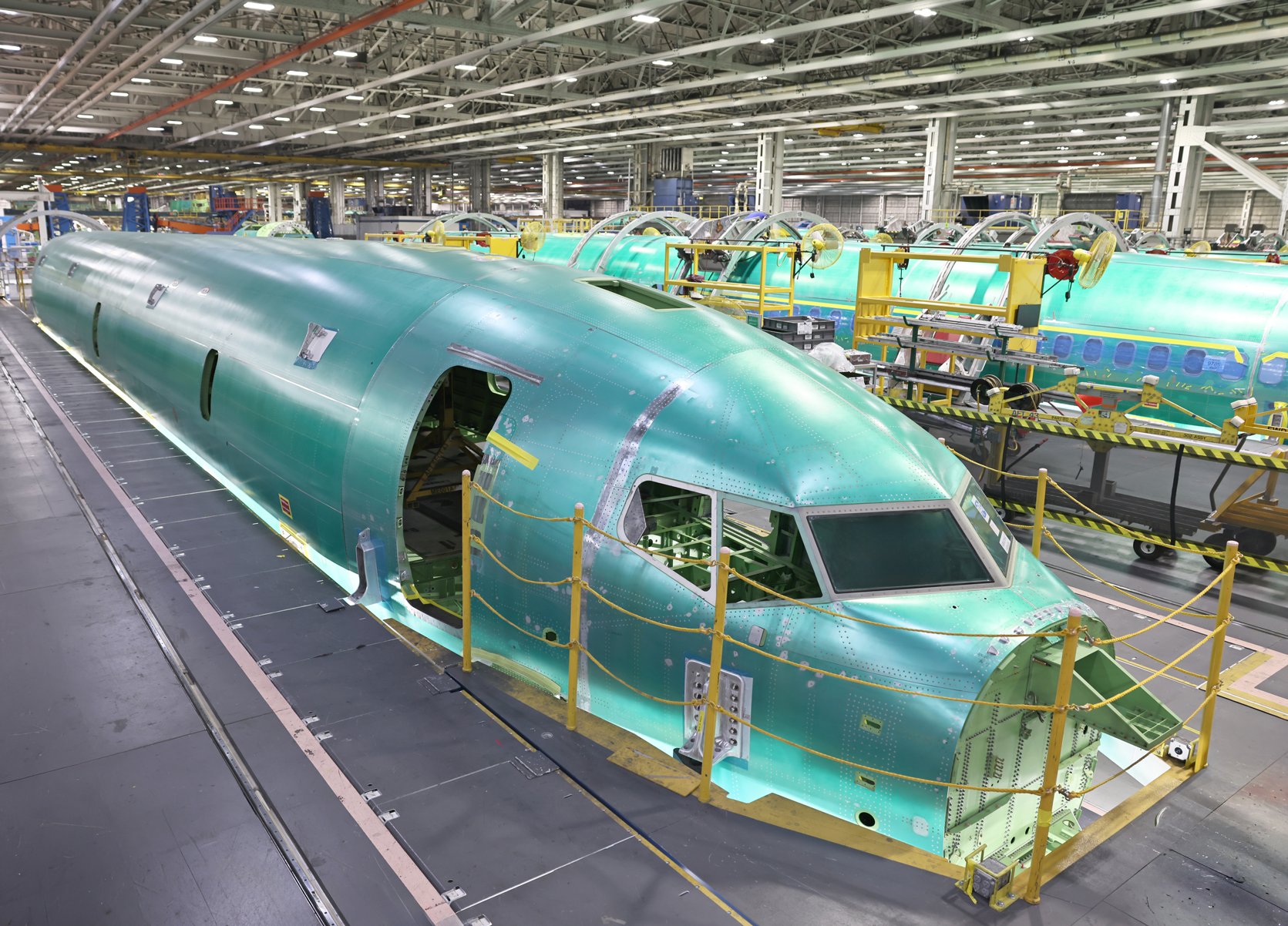
The Royal Canadian Air Force announced that fuselage integration and production have begun on Canada’s first CP-8A Poseidon aircraft, marking a new phase in the country’s maritime patrol modernization program.
The update was confirmed in an official service statement, while Boeing Defense said the aircraft with serial number 9627 is now taking shape as production advances.
The milestone reflects Canada’s effort to modernize long-range maritime surveillance and anti-submarine warfare capabilities needed to operate across its extensive maritime and Arctic regions. The aircraft is intended to strengthen Canada’s ability to meet operational commitments under NORAD, NATO, and allied defense frameworks.
According to the Royal Canadian Air Force, the Poseidon was selected as “the aircraft most capable of decisively contributing to the defence of Canada and our vast maritime and arctic regions.” The service emphasized interoperability with partner nations already operating the aircraft, noting that the platform is currently used by eight other countries.
Boeing Defense confirmed the production progress, stating, “Canada’s first Poseidon is taking shape. We’ve begun fuselage integration on RCAF’s new CP8A Poseidon aircraft. Canada will soon become the ninth nation to operate the P-8, joining the active fleet of more than 175 in service globally.”
The CP-8A Poseidon is the Royal Canadian Air Force designation for the Boeing P-8A Poseidon maritime patrol aircraft already operated by several allied nations. The aircraft is designed for anti-submarine warfare, maritime surveillance, intelligence collection, and search-and-rescue support missions.
As noted by the Royal Canadian Air Force, Canadian personnel are already undergoing training alongside partner forces ahead of aircraft delivery. RCAF members are currently working in the United Kingdom, the United States, Australia, and New Zealand to gain operational and technical experience required to operate the platform.
The service said cooperation with existing P-8A operators allows Canada to benefit from established operational lessons, helping ensure rapid operationalization once the aircraft is formally accepted into service. These preparations are intended to enable Canada to contribute quickly to the broader allied maritime operational community.
Technically, the Poseidon combines a modified Boeing 737 airframe with advanced mission systems tailored for maritime operations. The aircraft integrates radar, acoustic sensors, and communications equipment designed to detect submarines, track surface vessels, and coordinate with naval forces over long distances.
The aircraft can deploy sonobuoys and conduct persistent maritime surveillance missions, allowing crews to monitor large ocean areas and maintain situational awareness across remote regions. Long endurance and advanced sensors make maritime patrol aircraft a core component of modern naval and air defense operations.
Operationally, the CP-8A acquisition strengthens Canada’s surveillance presence across the North Atlantic and Arctic, where vast operating areas and harsh conditions require aircraft capable of extended missions. Maritime patrol platforms play a central role in sovereignty monitoring, maritime security, and allied coordination.
Alignment with existing Poseidon operators also improves interoperability during multinational missions. Shared aircraft types simplify training, logistics, and mission planning, enabling participating nations to operate more effectively together during NATO and coalition operations.
The global expansion of the Poseidon fleet reflects growing emphasis among allied nations on maritime domain awareness and undersea security. Aircraft capable of tracking submarine activity and monitoring shipping routes are increasingly viewed as essential for maintaining awareness across contested maritime environments.