
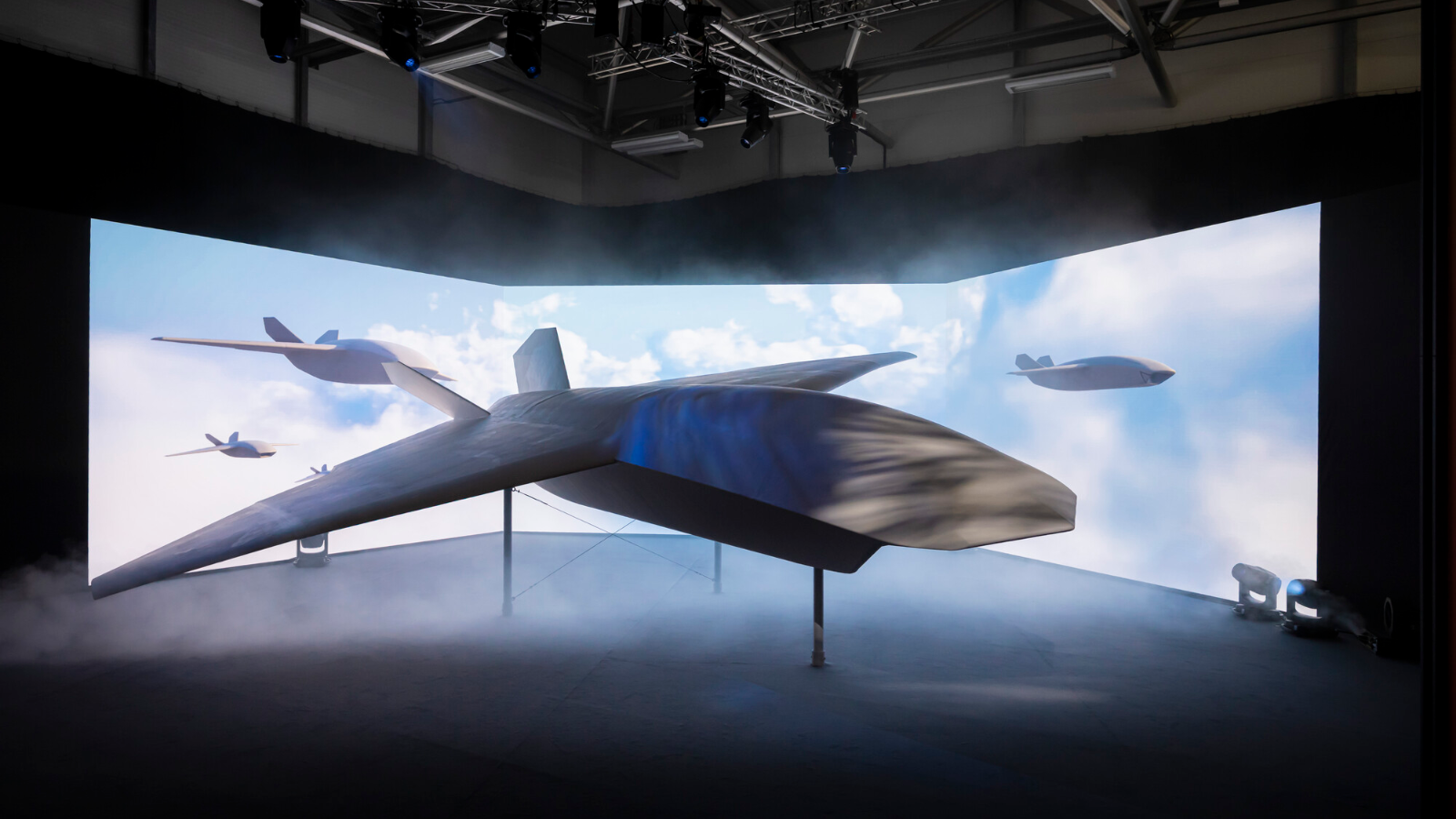
The prototype aircraft was designed and built by engineers at BAE Systems in Warton, Lancashire, home of the UK’s sovereign combat air industrial capability. More than 500 BAE Systems employees have been involved in the aircraft’s development to date, working with over 75 large companies and SMEs from across Britain’s world leading aerospace sector.
The first-of-its class CCA – named Brontanax – is intended to provide electronic warfare and precision strike capabilities against airborne and ground targets. Operating with frontline combat aircraft such as Typhoon it will enhance combat mass and operational effectiveness, with planned availability to enter service before the end of the decade.
Similar in size to a BAE Systems Hawk aircraft, Brontanax is designed to be operated by a Typhoon pilot or mission commander from range, allowing crewed and uncrewed aircraft to operate as a team. Developed with an open architecture and modular design, it can be easily adapted to stay ahead of evolving threats, maintaining operational relevance and adaptability for years to come.
The announcement comes after the UK Government published its Defence Investment Plan, which confirmed a £300m commitment to the Storm Fighter sovereign autonomous CCA programme, reflecting the aircraft’s increasing importance for the armed forces as part of a full force mix. Storm Fighter will provide the Royal Air Force with Europe’s first sixth generation capability.
Brontanax builds on more than 25 years of experience across the Company in uncrewed and autonomous systems.
Designed and delivered through BAE Systems’ FalconWorks team, Brontanax has been funded to date through the Company’s self-funded research & development investment. It is the latest uncrewed air system (UAS) to be revealed as part of a wider range of uncrewed products capable of working alongside both current and future frontline platforms to provide affordable and flexible combat mass.