
India’s Tata and Airbus fly the first Locally built C295
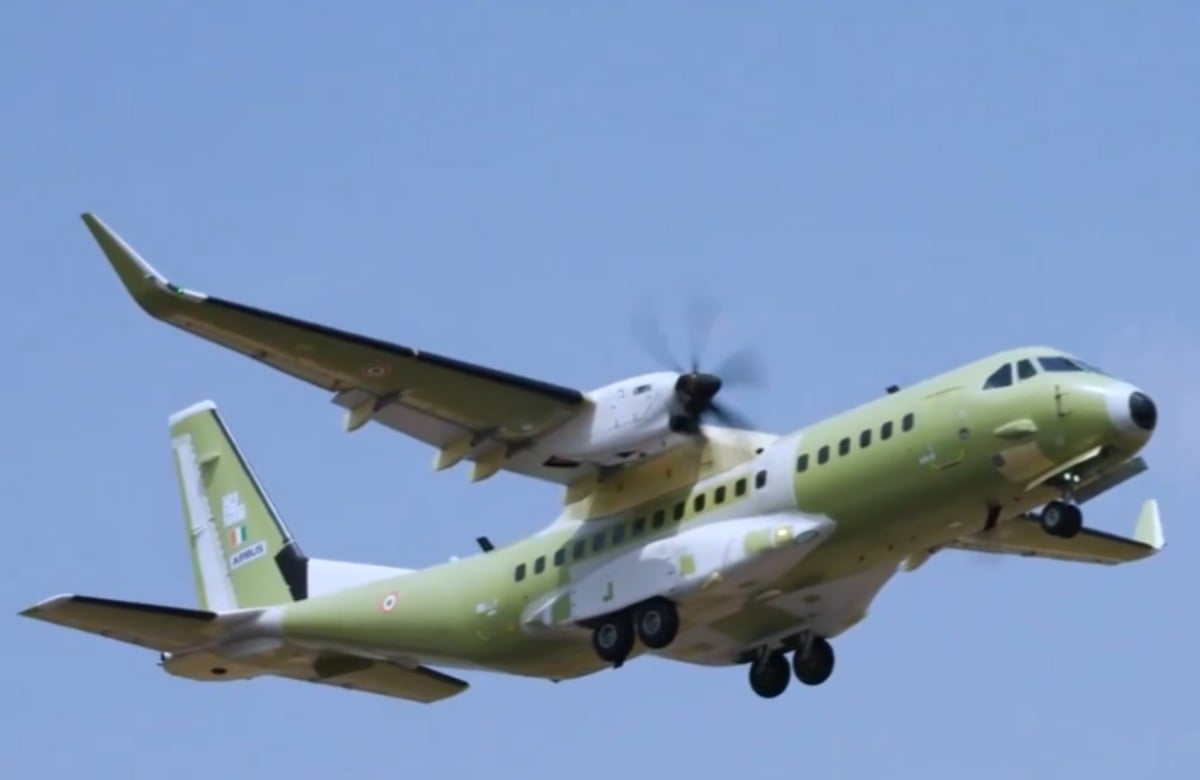
India has conducted the first test flight of the first Airbus C295 military transport aircraft assembled in India, at the Tata-Airbus Final Assembly Line in Vadodara, Gujarat, with Indian-made components and parts sourced from the wider Airbus supply chain, marking the most significant milestone yet in a program that represents the Indian private sector’s first-ever role in manufacturing a complete military aircraft.
The C295 completed its maiden flight as part of the post-production testing process required before delivery to the Indian Air Force. The aircraft is the first of 40 C295s to be built in India under a program that Airbus and India’s Ministry of Defence have described as a landmark in the government’s Make in India defense industrialization initiative. Airbus says the program remains on track to deliver the first Indian-assembled C295 to the Indian Air Force this year.
The C295 is a twin-turboprop medium transport aircraft built by Airbus Defence and Space, originally developed by Spain’s CASA, which later became part of EADS and then Airbus Defence and Space. It has a maximum payload of approximately 9,250 kg (20,400 lb), can carry up to 70 troops or 48 paratroopers, depending on configuration, and has a range of approximately 1,300 km (808 miles) with a full load. The aircraft can operate from unprepared or semi-prepared airstrips, a capability that is particularly relevant for the Indian Air Force given the need to supply remote mountain outposts along the country’s borders with China and Pakistan at altitudes and in weather conditions that limit what larger jet transports can access. The C295 is in service with more than 35 air forces worldwide, including Spain, Poland, Portugal, Czech Republic, Kazakhstan, and Egypt, giving it a well-established operational track record across diverse climatic and geographic environments.
India’s decision to build the C295 domestically rather than simply purchasing completed aircraft from Spain represents a strategic calculation about industrial capability rather than just near-term procurement efficiency. The Indian Air Force originally contracted for 56 C295 aircraft in September 2021 in a deal valued at approximately $2.4 billion, with the first 16 delivered as completed aircraft from Spain and the remaining 40 to be assembled in India. The assembly line in Vadodara is part of a transfer of technology arrangement in which Airbus provides the engineering documentation, tooling, and technical support for Tata Advanced Systems Limited to assemble the aircraft from components manufactured both in India and sourced from the global Airbus supply chain.
The involvement of Indian micro, small, and medium enterprises in manufacturing components for the aircraft across multiple locations throughout the country is a deliberate structural feature of the program rather than an incidental benefit. Building a supply chain of Indian component manufacturers creates industrial capacity that outlasts any single aircraft program, giving India’s aerospace sector capabilities in precision manufacturing, materials processing, and quality assurance that can be applied to future programs. The first assembly of a complete military aircraft by the private sector in India establishes a precedent that opens the door for subsequent programs to follow the same model, progressively reducing dependence on fully imported defense platforms.
Tata Advanced Systems Limited, a subsidiary of the Tata Group, is one of India’s most experienced aerospace manufacturing companies, with prior work on components for Boeing, Lockheed Martin, Sikorsky, and other global aerospace programs. Its involvement as the primary Indian industrial partner brings manufacturing discipline and quality management systems that smaller domestic companies alone could not provide, while the MSME network spreads the economic benefit and industrial learning across a wider base of Indian firms.
India has historically been one of the world’s largest defense importers, a status that successive governments have identified as both a financial liability and a strategic vulnerability. The Make in India defense initiative, which has been a policy priority since 2014 and has accelerated substantially since 2020, aims to reverse that dependence by building domestic manufacturing capability across the defense sector. The C295 assembly line is the most visible single achievement of that initiative in the aviation domain, because it involves not just license assembly of a foreign design but a genuine transfer of manufacturing knowledge and supply chain development.
The Indian Air Force’s C295 fleet will replace the aging Avro HS 748 turboprop, a British aircraft that entered Indian service in the 1960s and has been flying for decades beyond its original intended service life. The Avro serves the short-range tactical transport mission that the C295 is designed for, but the difference in capability between the two aircraft is substantial: the C295 carries more payload, has better avionics, offers improved performance in the high-altitude conditions of India’s northern borders, and can conduct maritime patrol, electronic intelligence, and medical evacuation missions that the Avro cannot support. The fleet of 40 Indian-built aircraft, once complete, will give the Air Force a modern tactical transport backbone with a supply chain rooted in the country it serves.