
L3Harris Technologies today said it had begun high-volume production of its VAMPIRE counter-unmanned systems at a new facility in Huntsville, Alabama.
The company said the production line is designed to meet growing demand from the United States and allied forces for systems capable of countering drone threats.
Counter-drone systems such as VAMPIRE are being fielded to protect personnel, equipment and infrastructure from low-cost aerial threats that can be deployed at scale.
According to a press release from L3Harris, the Huntsville facility includes a flexible assembly, testing and installation area capable of integrating VAMPIRE systems onto ground vehicles and containerized weapon platforms. The company said the production line can scale output based on operational demand.
“We’re making every effort to put these effective, combat-proven systems on the frontline as fast as possible to save lives,” said Tom Kirkland, president of Targeting and Sensor Systems, Communications & Spectrum Dominance at L3Harris. “Our newest production line combines the best people, technology, facilities and innovation to deliver the ultimate C-UxS solution to our customers.”
L3Harris said the VAMPIRE system has been used in combat operations in Europe [Ukraine] since 2023, where it has detected, tracked and defeated small drones. The company described the system as combat-proven and said it has demonstrated effectiveness against unmanned threats in operational environments.
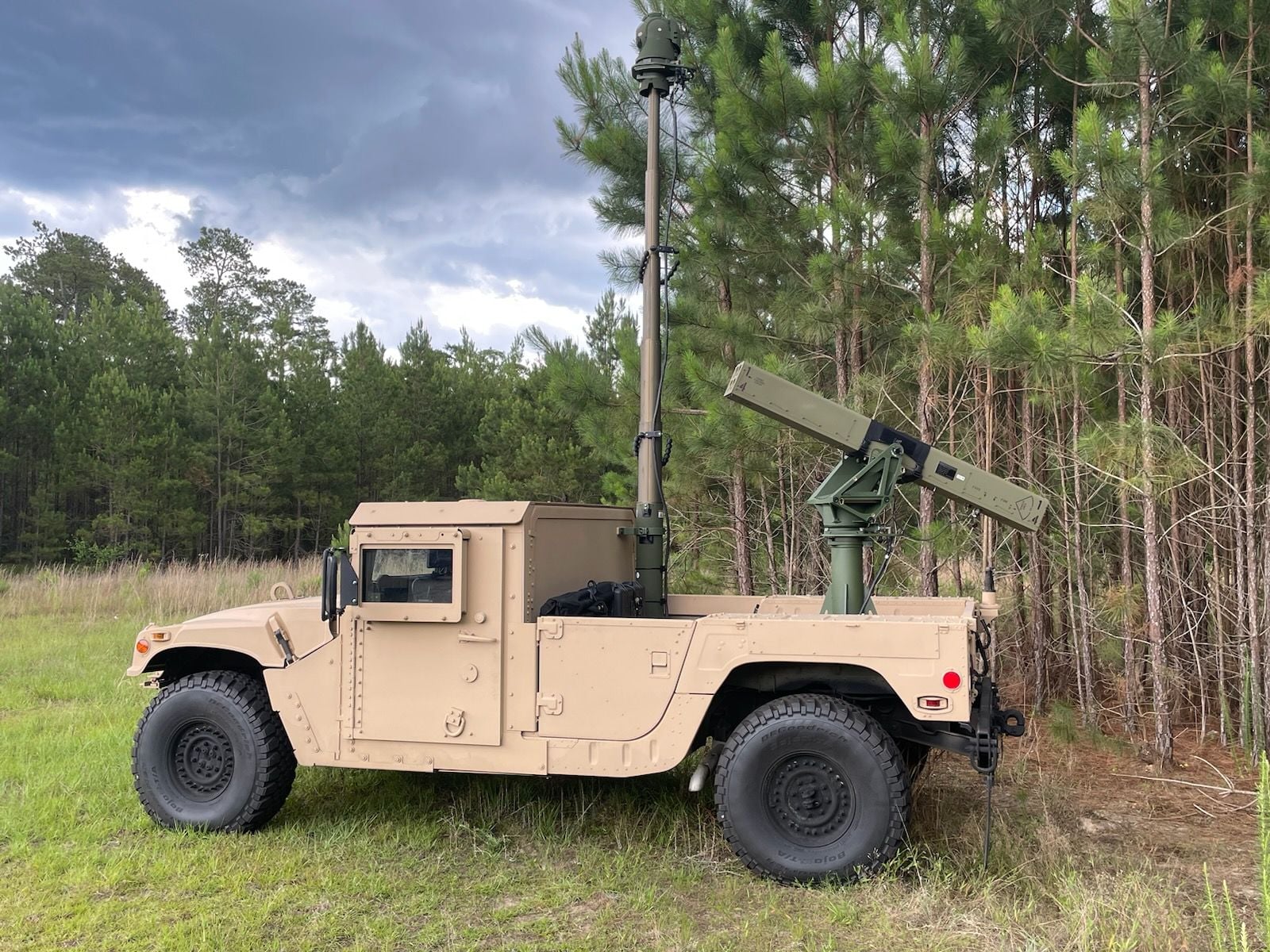
The VAMPIRE system is designed as a modular counter-UAS solution that can be mounted on a range of platforms. In practical terms, it combines sensors for detecting and tracking drones with a precision-guided weapon system capable of engaging targets. The system is typically integrated onto light tactical vehicles, allowing for mobility and rapid deployment.
By using a modular design, the system can be adapted for different mission profiles and platforms. L3Harris said its production line supports integration onto both vehicle-mounted and containerized configurations, which can be deployed to protect fixed sites or move with ground forces.
Systems like VAMPIRE are intended to provide a close-range defense layer against small unmanned aircraft. These threats are often difficult to counter using traditional air defense systems due to their size, cost and ability to operate in large numbers.
The company also said it expanded the VAMPIRE family in 2025 to include variants for land, maritime, air and electronic warfare roles. These developments reflect an effort to adapt the system for a wider set of operational environments and mission requirements.
The Huntsville production line is structured to support ongoing integration work alongside manufacturing. That includes testing and installation processes needed to prepare systems for deployment on different platforms, depending on customer requirements.
The expansion of production capacity follows increased demand for counter-drone systems among the United States and its partners. The use of drones in recent conflicts has driven interest in systems that can detect, track and defeat unmanned threats at relatively low cost and with minimal logistical burden.