
NATO Scales Counter-UAS Experimentation
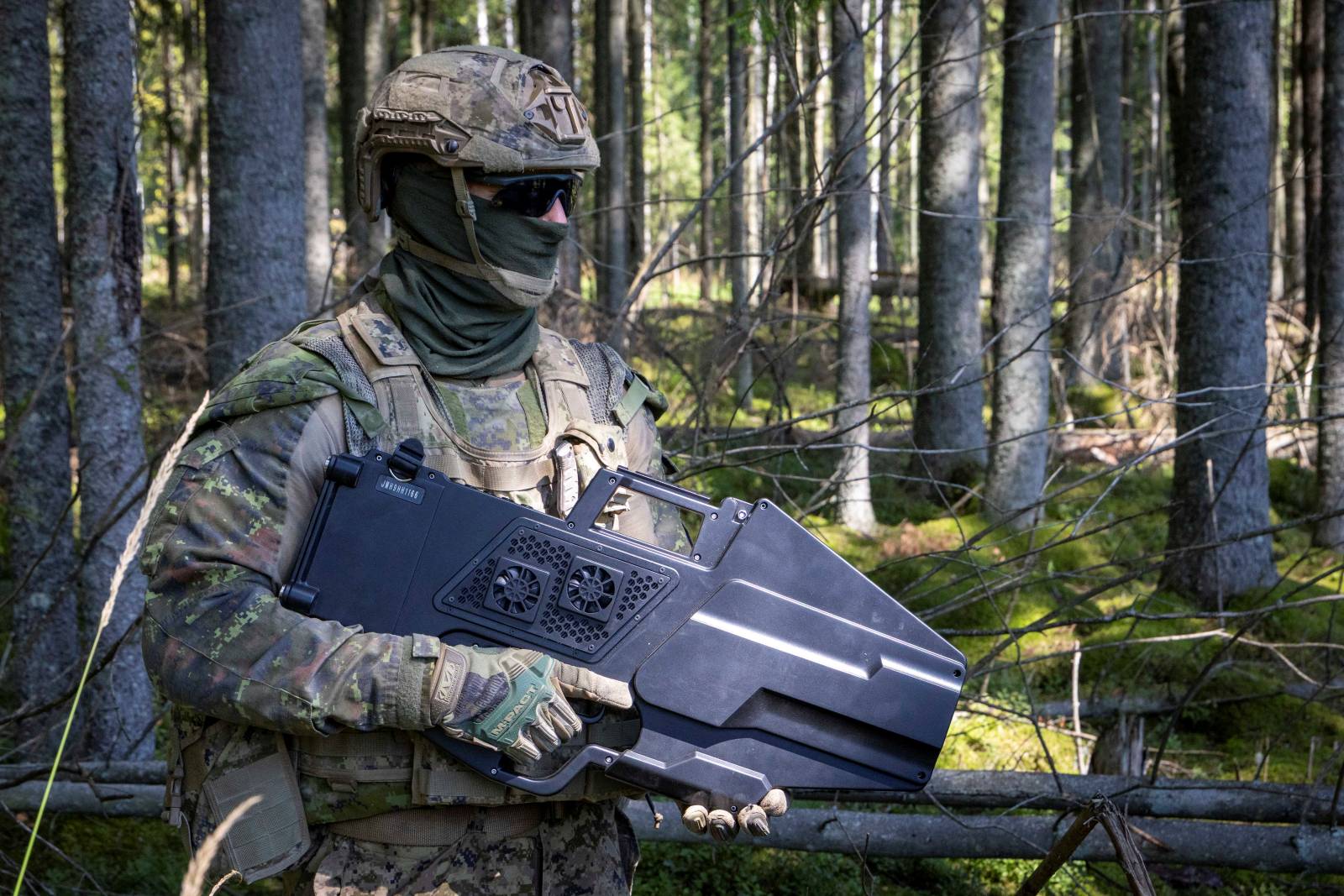
The rapid proliferation of inexpensive uncrewed aircraft systems is creating an urgent challenge for Allied forces: how to detect, track and defeat them using capabilities from different nations and manufacturers that can operate together. NATO Allied Command Transformation’s Layered Counter-UAS Initiative (LCI-X) is testing solutions against that challenge at greater scale during Crucible 4-26, its latest experimentation event, conducted as part of Digital Backbone Experimentation 2026 (DiBaX26).
Building on the technical integration demonstrated during previous tests, LCI-X is now connecting and testing multiple counter-UAS cells to examine how capabilities can operate together across national and technical boundaries.
Test, Connect, Integrate, Scale
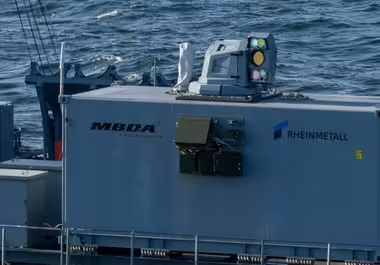
LCI-X is integrating and connecting individual elements of C-UAS system into cells. A C-UAS cell is a collection of C-UAS sensors, a command-and-control node, and effectors, that within the cell detect, track and neutralize an uncrewed aircraft system (UAS) and can share data outside the cell. The challenge is ensuring capabilities developed by different nations and manufacturers can exchange information and operate together as part of an integrated C-UAS response.
Imagine a single C-UAS sensor detecting an approaching UAS. LCI-X connects that sensor to NATO command-and-control in meaningful ways, feeding that information across NATO and Allied forces. Using that information, a commander is better equipped to rapidly understand both the threat and the best effector to neutralize the UAS. This connection, from the individual sensor that detects the UAS to the final effector that neutralizes the threat, illustrates how interoperability creates battlefield advantage.
Connecting and scaling these cells could also support the defence of larger areas of interest, including national borders and critical infrastructure. Previous LCI-X tests have built up to this one, Crucible 4-26, with the events increasing in complexity and scale:
- In Romania, Crucible 1-26 focused on integrating sensors, command-and-control systems and effectors within an individual C-UAS cell.
- In Finland, Crucible 2-26 expanded beyond the individual cell, examining how multiple cells could share information, coordinate responses and connect across locations.
- In Latvia, Crucible 3-26 advanced that work into multi-cell integration across tactical formations and NATO command-and-control systems.
In Crucible 4-26, NATO will apply lessons from the first three events at greater scale, extending C-UAS connectivity and interoperability across greater distances and more complex operational structures while integrating with DiBaX26 and Next Generation Targeting to explore wider cross-domain operations.
The results will provide data and help identify where technical standards, procedures or integration requirements need to evolve for these capabilities to operate effectively together at Alliance scale.
Industry at LCI-X
LCI-X continues to advance integration and interoperability across Allied and industry capabilities. Later this month, NATO Allied Command Transformation (ACT) will bring together over 100 unique NATO, Allied and defence industry entities from more than 30 Allies and Partners, challenging industry capabilities with operational use cases to help inform national procurement decisions.
LCI-X serves as a testbed for experimentation. Through this Beacon Project, ACT is testing cutting edge technology in threat-informed environments to understand what works, what needs to evolve, and what challenges exist for implementation. The rapid pace of testing means that failure is part of the plan. LCI-X views failure not as an endpoint, but as an opportunity to learn constructively, adapt, and adopt systems to field at scale. With experimentation, national governments can observe the outcomes, how different systems perform, and how effectively they exchange information within NATO standards and architectures. The resulting evidence can help identify integration challenges, inform future capability requirements, and reduce uncertainty for nations considering potential C-UAS investments.
Importantly, LCI-X also gives operators and industry an opportunity to test and improve their systems in realistic environments. By bringing together NATO, Allied and industry capabilities into a single testing environment, individual entities can learn from one another. Additionally, each LCI-X Crucible Series experiment gives industry a chance to identify opportunities to improve interoperability with NATO standards and systems.
Crucible 4-26 also underscores how NATO is drawing from warfighting experience in Ukraine. Working with the NATO-Ukraine Joint Analysis, Training and Education Centre (JATEC), LCI-X is incorporating valuable battlefield lessons and working with Ukrainian industry to inform C-UAS experimentation. At Crucible 4-26, Ukraine’s experience is being translated into threat-informed scenarios that seek to tackle battlefield challenges.
LCI-X at DiBaX26
DiBaX26 provides the experimentation environment and digital infrastructure through which LCI-X Crucible 4-26 operates. LCI-X data flows through that network, allowing the initiative to stress test it under the volume and types of data generated by C-UAS operations. That same data can also support Next Generation Targeting (NGT) experimentation, helping examine how information generated by C-UAS activity can move across the wider targeting and digital environment.
Turning Experimentation into Operational Advantage
LCI-X’s participation in DiBaX26 underscores how NATO addresses today’s operational threats and leans into tomorrow’s potential challenges. As low-cost UAS proliferates battlefields in increasing numbers, ACT is testing how capabilities from across the Alliance can work together as part of a unified response. Through collaboration with industry, procurement authorities and national militaries, LCI-X is generating evidence that can help NATO and Allies identify integration challenges, refine requirements and make better-informed decisions about future C-UAS capabilities.