
Raytheon Launches AMRAAM-ER Missile full-rate Production
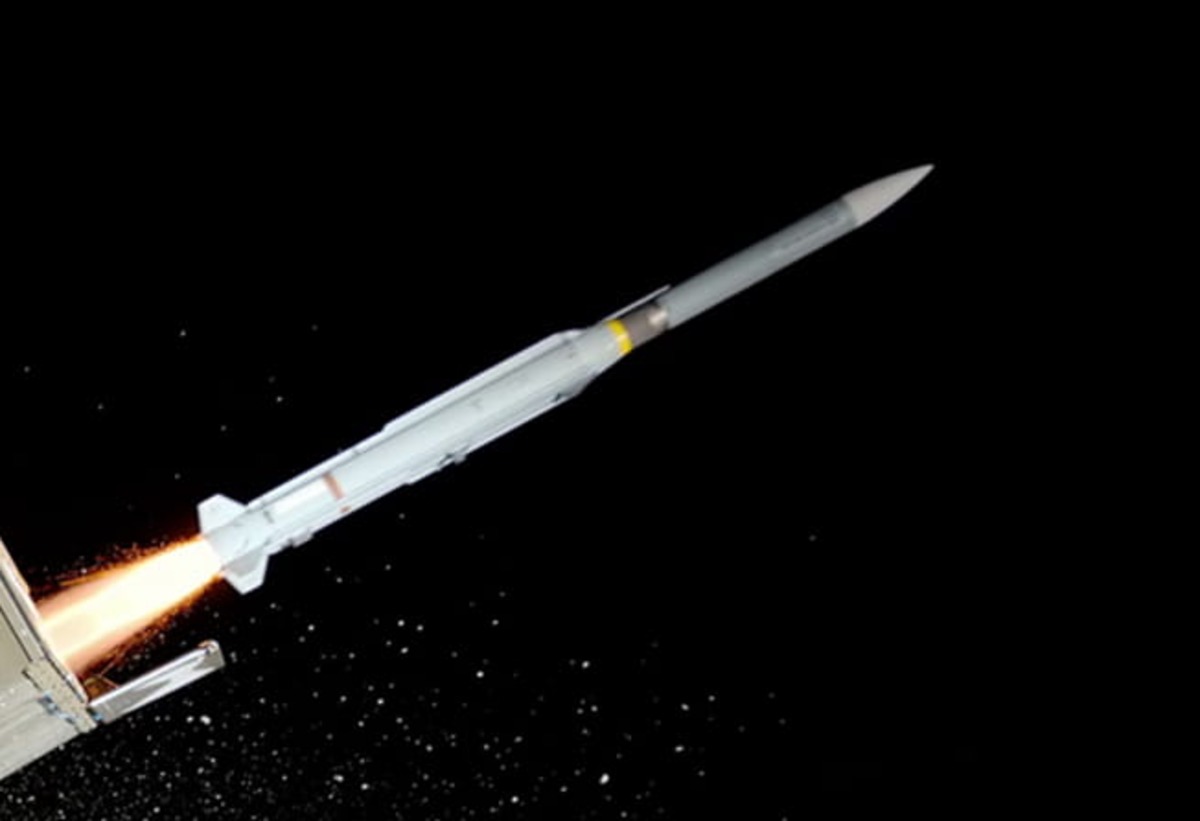
Raytheon is moving its AMRAAM Extended Range missile into full-rate production under a new $234.8 million contract from the Department of War.
The award gives Raytheon Co. of Tucson, Arizona, a not-to-exceed $234,757,000 cost-plus-fixed-fee undefinitized contract action to complete the work needed for the production transition. The contract runs through April 13, 2030, with all work set to take place in Tucson. At the time of award, $61,569,156 in Foreign Military Sales funds was immediately obligated.
Beyond the contract value itself, the key news is that the AMRAAM-ER has now reached the stage where it is being prepared for sustained large-scale output. In defense procurement terms, that means the missile is moving beyond development and limited production work into a stable manufacturing pipeline intended to support long-term orders.
The customer list attached to the award shows how widely the missile is already being positioned among U.S. partners. The Foreign Military Sales package includes Hungary, Kuwait, Lithuania, the Netherlands, Norway, and Taiwan.
Taiwan’s inclusion stands out given the island’s continuing efforts to strengthen its layered air defense network. The Netherlands and Norway, meanwhile, remain central operators within NATO’s evolving ground-based air defense architecture, making the production transition particularly relevant for European procurement plans.
The AMRAAM-ER is an extended-range version of the well-known Advanced Medium-Range Air-to-Air Missile family. While the standard AMRAAM is widely used as an air-to-air weapon carried by fighter aircraft, the ER variant has become especially important for ground-based launch systems, most notably NASAMS.
That role has given the missile a higher profile in recent years. NASAMS, developed through the long-running partnership between Raytheon and Norway’s Kongsberg, is now fielded by a growing list of countries and has become one of the most widely recognized Western air defense systems.
The AMRAAM-ER is essentially built to let those ground launchers reach farther. It combines the guidance section of the standard AMRAAM with a larger rocket motor and modified body, allowing it to intercept targets at greater range and higher altitude.
That extra reach is especially valuable for defending cities, military installations, and critical infrastructure against aircraft, cruise missiles, and other airborne threats.
A production schedule that extends to 2030 suggests Raytheon and its customers are planning for sustained procurement over several years rather than a limited short-term buy.
The contract’s core significance is straightforward: a mature missile program tied to NASAMS and multiple allied customers is now entering sustained full-rate production through the end of the decade.