
Russia Bolsters Air Force with new Su-35S Batch
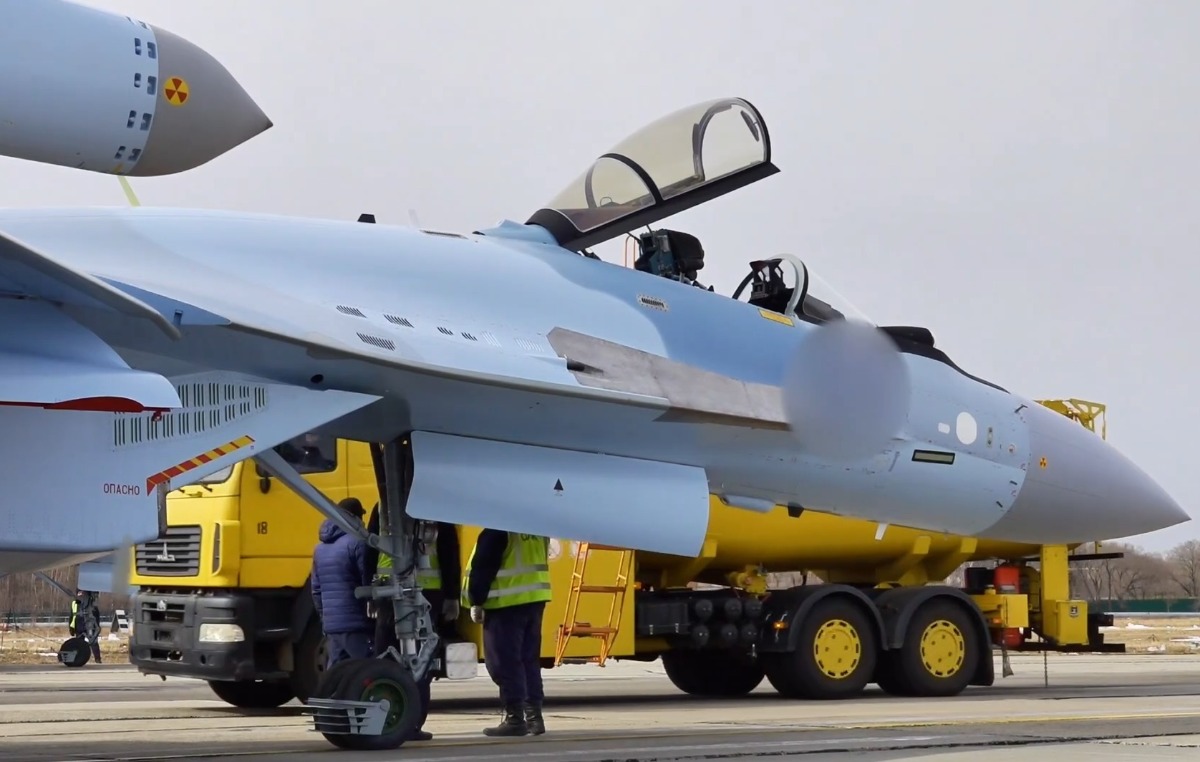
Russia’s state defense conglomerate Rostec announced that the United Aircraft Corporation (UAC) has delivered another batch of new production Su-35S multirole fighters to the Russian Aerospace Forces.
Vladimir Artyakov, First Deputy Director General of Rostec, praised the aircraft’s battlefield record in remarks accompanying the announcement. “These fighters today are the most effective modern combat aircraft in the world, record holders in the number of intercepted enemy military aircraft,” Artyakov said. “The aircraft have proven themselves excellently in the troops. Pilots note the high performance characteristics of the Su-35S, which is the most objective assessment for military equipment.”
The number of airframes included in the latest batch was not specified in the official statement. That pattern of limited disclosure has been consistent throughout the year. According to available information, Su-35S deliveries to the VKS ran from March 29 through December 25, 2025, with batches transferred on May 12, June 25, August 21, September 24, and November 1. Precise totals remain unconfirmed — estimates from various sources range from a minimum of seven aircraft to as many as 15 or 21 jets delivered over the course of the year, with individual batches typically consisting of two to three fighters.
The Su-35S is a fourth-generation-plus, single-seat, twin-engine supermaneuverable multirole fighter built by the Sukhoi Design Bureau and manufactured at the Komsomolsk-on-Amur Aircraft Plant in Russia’s Far East. According to Rostec, the platform is designed to handle a wide range of combat missions: long-range interception of aerial targets, escort and cover of strike groups and ground assets, destruction of unmanned aerial vehicles, and precision strikes against ground and naval targets using guided munitions. The aircraft can also conduct reconnaissance and strike enemy positions at significant depth behind the front line.
At the core of the Su-35S’s capability is the Irbis-E passive electronically scanned array radar, which gives the jet a long detection range against both aerial and surface targets. Its AL-41F1S turbofan engines, equipped with thrust vectoring nozzles, provide the aircraft with exceptional agility in within-visual-range combat scenarios. The combination of sensor capability, weapons payload, and aerodynamic performance places the Su-35S at the upper end of Russia’s non-stealth tactical aviation inventory.
Russia has relied heavily on the Su-35S throughout its air campaign, deploying the type primarily for air superiority missions, combat air patrols, and escort of strike packages over contested airspace. Rostec’s characterization of the jet as a record-holder in enemy aircraft interceptions reflects that operational focus — the VKS has used the Su-35S consistently against Ukrainian air assets and in response to drone and cruise missile threats penetrating Russian-controlled airspace.
Continued serial deliveries point to sustained production activity at KnAAZ despite Western sanctions that have targeted Russia’s defense industrial supply chains, particularly components used in aviation electronics and precision manufacturing. While sanctions have complicated access to certain imported parts, Russia has pursued domestic substitution programs across its defense sector, and Su-35S production appears to have remained active throughout 2025.
The Su-35S also has an established export history. China received a significant number of the type in earlier procurement cycles, and Egypt signed a contract for the aircraft, though that deal faced pressure from U.S. secondary sanctions. Domestically, the VKS continues absorbing new-production Su-35S jets even as Russia’s aviation industry pursues the more advanced Su-57 stealth fighter, which remains in limited-rate production and has seen only gradual fleet growth.
For the Russian Aerospace Forces, fresh deliveries of the Su-35S represent a tangible, near-term reinforcement of tactical airpower at a time when attrition from the ongoing conflict has placed sustained pressure on aviation assets across the force. The fighter remains the most operationally capable non-stealth platform in Russia’s active inventory and is expected to anchor Russian tactical aviation operations for years to come.