

The Backbone of NATO’s Digital Transformation: DiBaX26
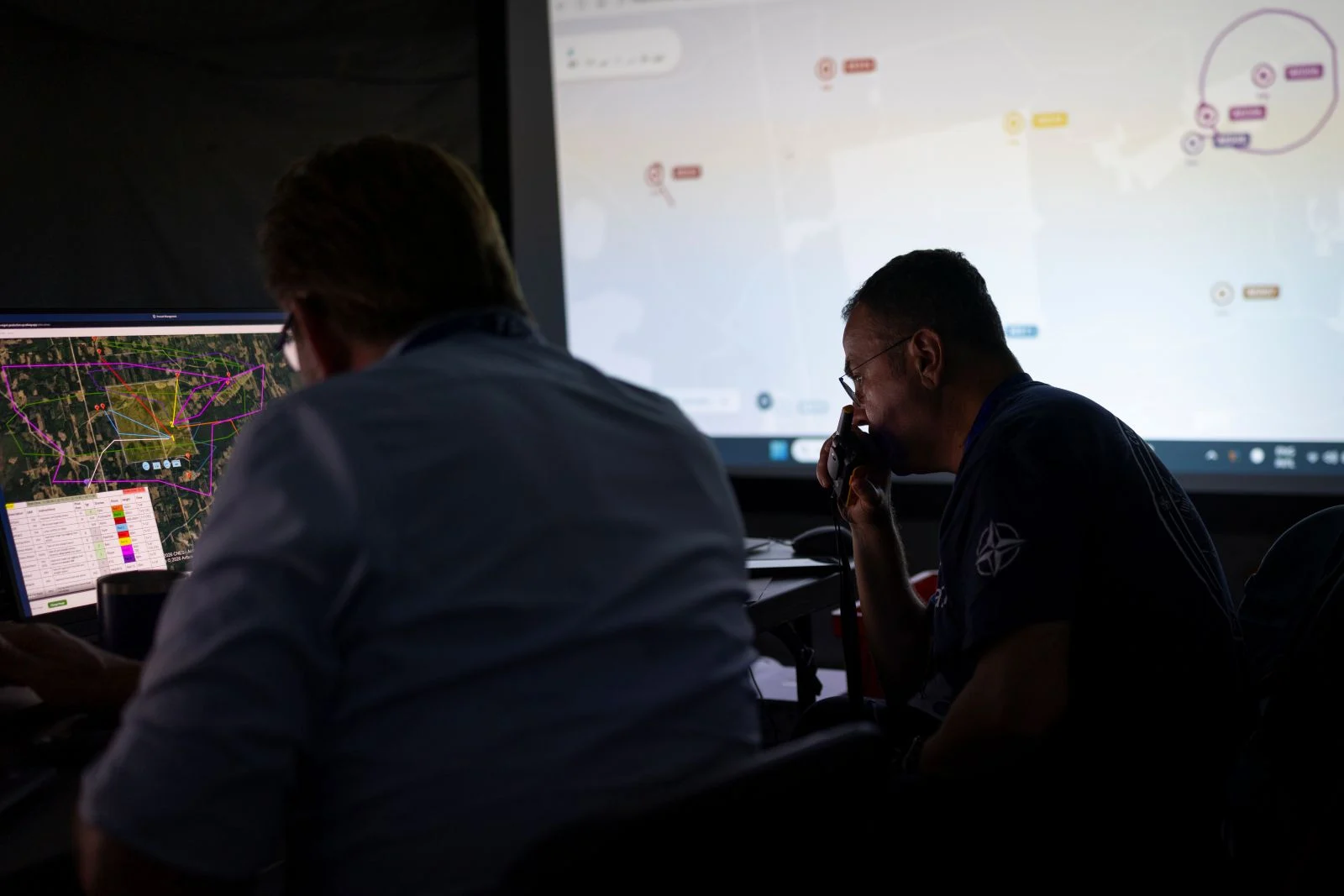
This month, NATO is conducting one of its largest operational experimentation events focused on emerging technologies: Digital Backbone eXperimentation (DiBaX). Hosted in Latvia since 2022, DiBaX provides an environment where NATO, Allied operators and industry can test how technologies and systems perform when connected against real operational challenges. This year’s experimentation focuses on NATO’s Digital Backbone: the foundational layer of integrated software, data networks and infrastructure that allows forces to connect, share data and operate together.
Testing Against Operational Problems
DiBaX26 will focus on three use cases: rapid deployment through 5G network slicing, resilient communications across multiple networks, and leveraging integrated elements of the Digital Backbone to enhance Situational Awareness (SA) and accelerate decision making, including passive object detection using 5G infrastructure.
Modern military operations depend on secure, resilient and interoperable command-and-control that gives Allied forces reliable access to data and communications they need to achieve tactical and operational success.
DiBaX26 builds on previous DiBaX experimentation events by exploring how multiple communication networks, distributed computing approaches and integration of civilian infrastructure can improve the resilience and responsiveness of military communication.
Connecting Forces From Day One
DiBaX26’s first goal is to explore how NATO forces can achieve secure command and control and data services from day one before full NATO Communications infrastructure arrives. Using a combination of existing telecommunication networks and non-terrestrial networks, DiBaX will test whether forces can establish the connectivity needed to command, coordinate and share information during the earliest stages of deployment.
One element of the experiment will focus on how a dedicated portion of a 5G network (known as a 5G network slice) could be reserved for NATO forces using host-nation mobile infrastructure. When NATO forces first deploy, they cannot always rely on existing NATO physical infrastructure. The 5G network slicing test experiments with existing private and public telecommunications networks to maintain secure NATO command-and-control.
In addition, DiBaX26 will incorporate non-terrestrial networks into its command-and-control testing. Military forces must flexibly maneuver during exercises and operations, often through areas with sparse or no communications. In times of crisis, these “dead zones” can be compounded by hostile jamming and electronic warfare. Using non-terrestrial networks, such as communication satellites and uncrewed airborne systems, can cover these gaps, giving military forces the communications support they need during complex operations.
Resilient Communications In Crisis
DiBaX26 is also stress-testing NATO’s communication networks. In times of crisis, forces need to remain connected even when individual networks are denied, degraded, intermittent, and limited (DDIL). To ensure Allied warfighters have the interconnectivity they need, the experimentation event is advancing communications systems that can stay connected through more than one network to the tactical edge, where deployed forces may have limited or disrupted connectivity.
Operators at DiBaX26 will test devices that can maintain network access even when one connection is weak, disrupted or unavailable. This will be paired with a 5G network designed with backup capacity and functions. Both experiments test how well NATO forces can continue to communicate and coordinate in an environment contested by jamming, electronic warfare and communication infrastructure attacks. DiBaX26 is also supporting how network providers can keep communications stable, testing how NATO can streamline communications and prioritize important missions. Success will be measured based on whether forces can continue to command, coordinate and share priority information under degraded or disrupted network conditions. This will feed into ACT and NATO’s understanding of what technical standards, procedures and capability requirements are needed to make command-and-control more resilient.
Decision Advantage: Data, Sensors and AI
DiBaX26’s third use case will explore whether everyday communication systems can serve as dual-use sensors. This means combining their data with information from dedicated military sensors and analyzing them with artificial intelligence to enhance situational awareness and accelerate decision making. DiBaX26 is working with many partners across the Alliance to turn everyday cell towers and generated information into meaningful insights.
Connecting ACT’s Experimentation Efforts
DiBaX26 also provides an experimentation environment for two of ACT’s 2026 Beacon Projects: the Layered Counter-UAS Initiative (LCI-X) and Next Generation Targeting (NGT). Beacon Projects focus attention and experimentation on priority capability challenges where testing can help inform future decisions by NATO and Allied nations. At DiBaX26, LCI-X and NGT will bring operational use cases into the DiBaX26 environment, including experimentation related to layered counter-UAS and targeting and decision-making.
DiBaX26 acts as the host, providing these two programmes with a venue and environment to test their systems. For LCI-X, DiBaX26 helps test how different counter-UAS sensors, data feeds and effectors can be connected as part of a layered defensive shield. For NGT, DiBaX26 supports experimentation on how data from multiple sources can be aggregated, analysed and turned into actionable information. At the same time, data from LCI-X and NGT feed back into DiBaX26’s testing environment, which provides realistic use cases against which to evaluate the Digital Backbone. LCI-X and NGT data feeds stress the Digital Backbone in a realistic environment, helping DiBaX26 understand what connectivity, data-sharing, resilience and interoperability requirements the Digital Backbone must meet to support future multi-domain operations.
Experimenting With Industry
NATO is working closely with industry throughout DiBaX26 to test technologies against operational requirements. ACT has long worked with the Latvian Mobile Telephone company, which provides its 5G testbed and serves as the integrator for DiBaX26.
DiBaX26 also provides defence industry with an opportunity to test its communications systems in a realistic environment at scale. Working alongside NATO operators allows companies to identify interoperability problems, receive operational feedback and adapt technologies based on what happens during experimentation. The resulting evidence can help NATO and Allied nations make better-informed decisions about which capabilities warrant further development, testing or consideration. For example, the 2025 edition of DiBaX contributed to the development of a new standard on Cellular Communications for Defence. This standard defines the core procedures, interfaces and protocols to develop and field interoperable cellular systems across NATO, enabling integrators to build and commission 5G-related infrastructure that meets both military and commercial benchmarks.
Senior Leadership Perspectives
“DiBaX is really about a mesh network so if you scraped everything away from the field, how do you build a network for the warfighter so they have the best IT digital backbone to fight wars on” – Lieutenant General Marcus Annibale Deputy Chief of Staff for Capability Development Allied Command Transformation.
“DiBaX26 helps NATO and nations to move from innovation to adoption. It helps NATO understand how communications, data, sensors and decision-support tools perform when conditions are contested, time is limited and interoperability matters” – Lukas Mueller acting Director DiBaX26 Allied Command Transformation.
DiBaX26 As The Integrator
At DiBaX26, NATO is testing the next generation of secure communications that underpin NATO’s future military advantage. This interoperability experimentation is key to NATO’s ability to operate on the modern multi-domain battlefield. Through its communication experimentation, integration of ACT Beacon Projects and industry cooperation, ACT can identify what works together, what does not and what must change before capabilities move further along the development pathway.