


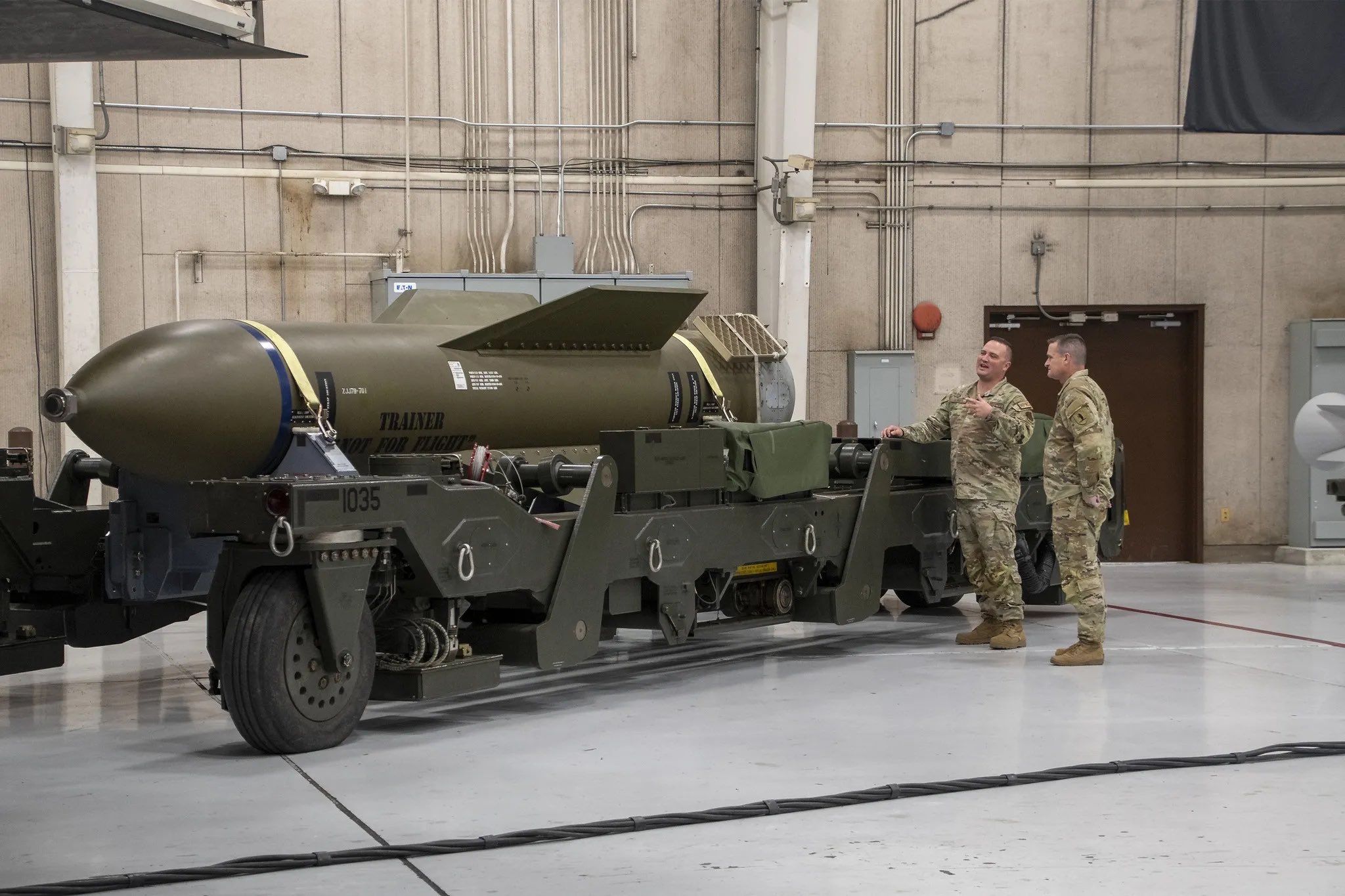
U.S. Air Force Funds Bunker Buster Bomb Production Support
The United States Air Force has awarded aerospace manufacturer Boeing a not-to-exceed $61,5 million contract for the replenishment of the GBU-57 Massive Ordnance Penetrator weapon system, according to a contract announcement released by the service.
The work will support production of key components for the heavy bunker-penetrating bomb and will be carried out in St. Louis, Missouri, with completion scheduled between September 2028 and May 2030.
According to the announcement, the agreement covers Wing Drop Ship Kit sets, KMU-612 E/B tailkits, GBU-57 G/B fuze system cable guides, separation nuts, and dedicated Massive Ordnance Penetrator containers. Fiscal Year 2025 procurement funds totaling $61,548,900 are being obligated at the time of award.
The contract was issued as a sole-source acquisition, meaning Boeing was selected without competitive bidding due to its role as the original manufacturer and integrator of the GBU-57 system. The Armament Directorate’s Attack Division at Eglin Air Force Base, Florida, serves as the contracting activity under contract number FA8681-26-C-B001.
The GBU-57 Massive Ordnance Penetrator is among the heaviest conventional air-delivered weapons in the United States inventory. Designed to penetrate reinforced underground structures before detonation, the weapon is intended for targets protected by thick layers of concrete, rock, or earth that conventional bombs cannot effectively destroy.
The system relies on precision guidance and specialized structural design rather than explosive yield alone. The penetrator’s hardened casing enables it to survive impact and burrow into fortified facilities prior to detonation, increasing effectiveness against deeply buried command centers, storage sites, or hardened infrastructure.
Tailkits such as the KMU-612 E/B included in the contract provide guidance and stabilization functions, allowing the weapon to be delivered accurately from high altitude. Supporting components covered under the award, including cable guides and separation hardware, are required to ensure safe aircraft integration and proper release dynamics during deployment.
According to the announcement, production work will take place at Boeing facilities in St. Louis, a long-standing hub for the company’s military aircraft and weapons manufacturing operations. The extended performance period through 2030 reflects the specialized manufacturing requirements associated with low-volume, high-complexity weapons systems.
The Massive Ordnance Penetrator has historically been integrated with long-range strategic bombers capable of carrying large payloads. Its operational role centers on providing a conventional option for engaging hardened targets that would otherwise require alternative strike methods.
While the announcement does not specify deployment locations or operational plans, replenishment activity typically supports long-term readiness requirements rather than immediate operational changes. The scheduled production window extending into 2030 indicates a sustained lifecycle management effort rather than a rapid expansion program.