


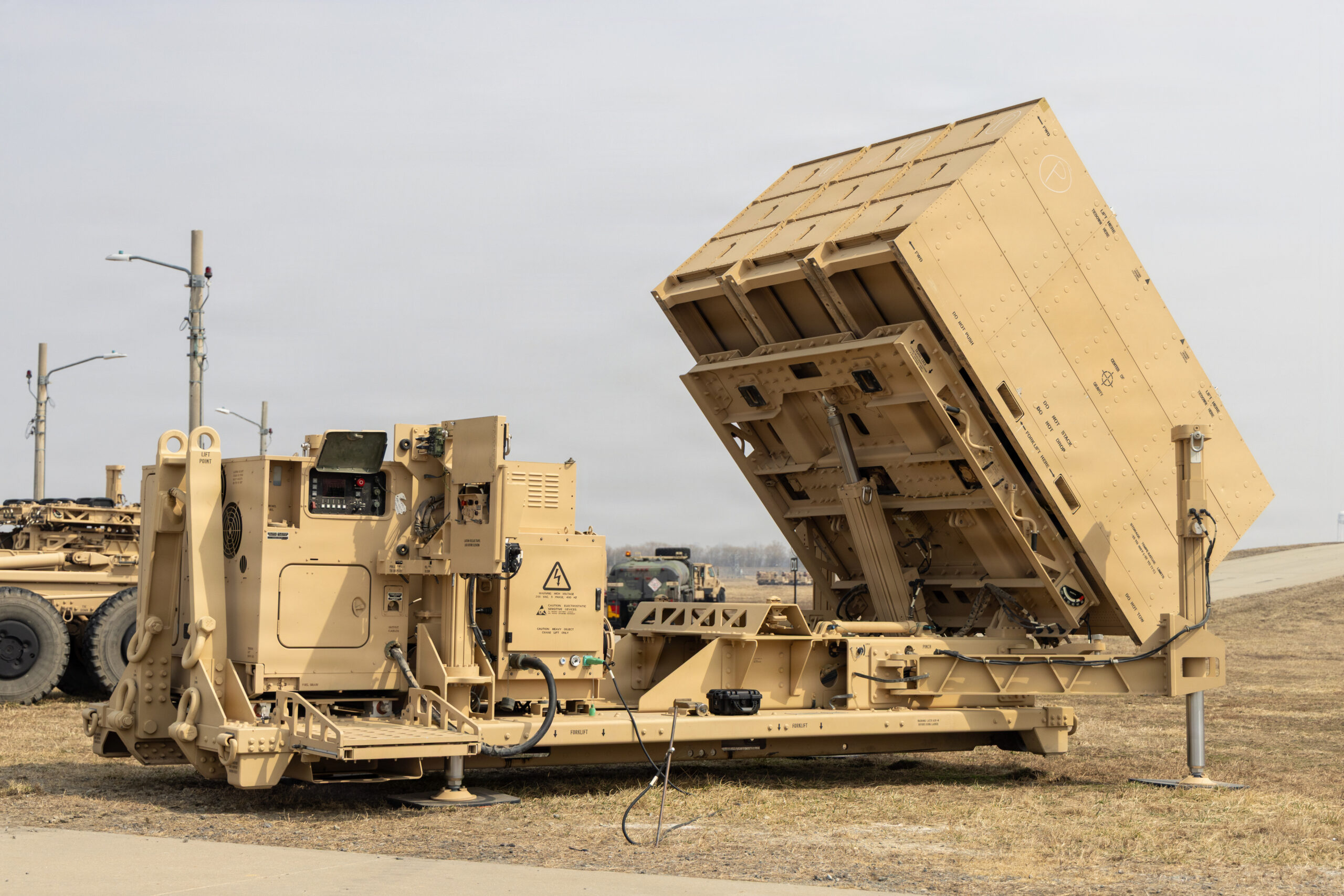
U.S. Army Deploys IFPC air Defense System in South Korea
The United States Army deployed its Indirect Fire Protection Capability Inc 2 (IFPC) air defense system on March 16 during the Freedom Shield 26 exercise in South Korea, according to the Eighth Army.
The system was positioned at a training site as part of combined drills on the Korean Peninsula.
The deployment comes as the United States Army continues efforts to strengthen protection of forward-deployed forces and critical infrastructure against a range of aerial threats. The exercise provides an opportunity to test how new air defense systems operate within a combined and networked battlefield environment.
According to the Eighth Army, the IFPC system is integrated into the Army’s Integrated Battle Command System, a network designed to connect and coordinate multiple air and missile defense assets. The deployment during Freedom Shield allows commanders to assess how the system performs as part of a broader, layered defense structure.
The United States Army said in a statement that the IFPC is a mobile, ground-based air defense system designed to counter a wide range of threats, including subsonic cruise missiles, unmanned aerial systems, rockets, artillery, and mortars.
The system is equipped with a 360-degree radar and interceptor capability, enabling it to detect and engage threats approaching from multiple directions. Analysts have described the system as an “American Iron Dome,” referencing Israel’s air defense system known for intercepting short-range threats.
The IFPC is designed to fill a gap in air defense coverage between short-range systems and higher-tier missile defenses. By focusing on threats such as drones and cruise missiles, the system addresses challenges that have become more common in recent conflicts.
Technically, the IFPC operates as part of a network rather than as a standalone system. Through the Integrated Battle Command System, it can receive targeting data from other sensors and share information across the battlefield. This allows multiple air defense units to coordinate engagements and improve response times.
The system’s interceptors are intended to engage incoming threats before they reach protected areas, while its radar provides continuous coverage of the surrounding airspace. This combination supports defense of bases, logistics hubs, and other critical sites.
Recent conflicts have shown that traditional air defense systems optimized for aircraft and ballistic missiles may not be sufficient on their own. Systems like IFPC are intended to address this gap by focusing on lower-altitude and more numerous threats.