
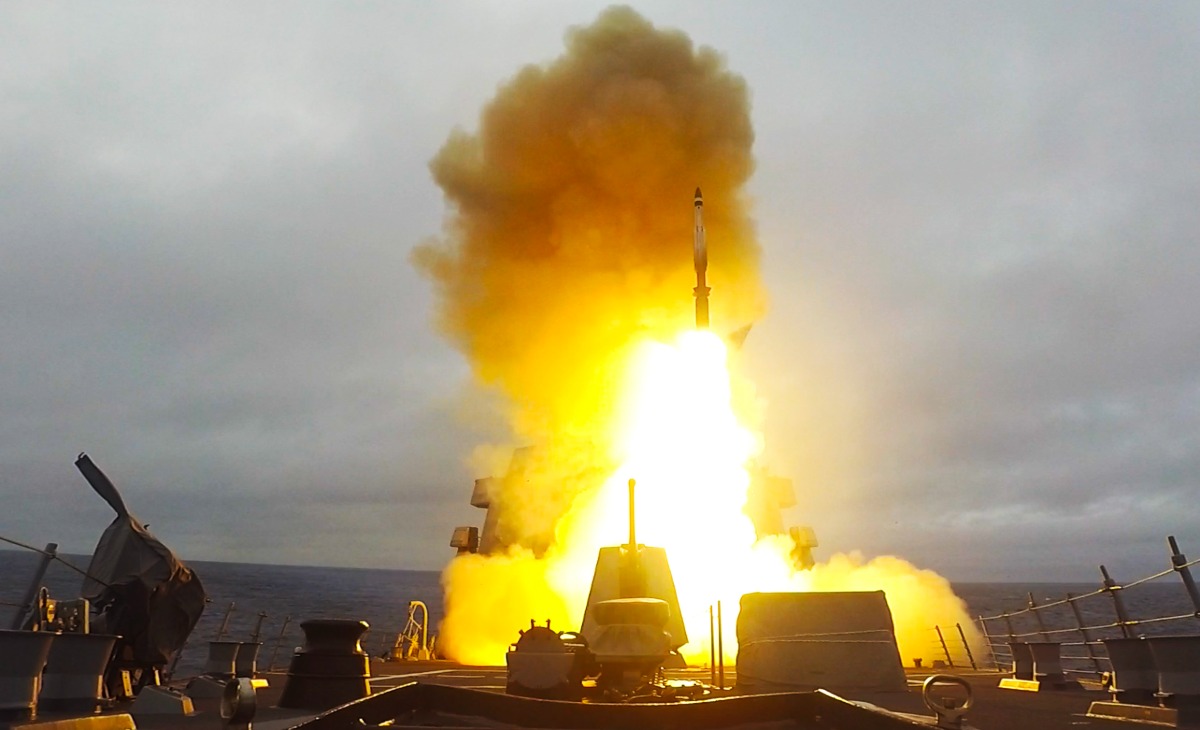
The United States Missile Defense Agency has awarded Raytheon an $8.41 billion contract ceiling increase to support the sustainment and engineering of Standard Missile-3 (SM-3) variants, expanding the total contract value to $11.74 billion.
According to the U.S. Department of War, the modification applies to a previously awarded indefinite-delivery/indefinite-quantity contract (HQ0851-21-D-0001). Under the updated agreement, Raytheon will provide management, materials, and services required for sustaining engineering and product support of SM-3 missile variants used by both the United States and Foreign Military Sales partners.
The work will be carried out primarily in Tucson, Arizona, and Huntsville, Alabama, with performance continuing through October 29, 2029.
The SM-3 is a key component of the U.S. missile defense architecture, designed to intercept short- to intermediate-range ballistic missiles during the midcourse phase of flight, outside the Earth’s atmosphere. It is deployed on Aegis Ballistic Missile Defense ships and at land-based Aegis Ashore sites.
From a technical standpoint, the interceptor uses a kinetic warhead to destroy incoming ballistic missiles through direct impact, rather than relying on an explosive payload. This approach requires precise tracking, targeting, and guidance systems to achieve a successful interception in space.
The contract modification focuses on sustaining these capabilities over time, including maintenance, upgrades, and lifecycle support, ensuring that deployed interceptors remain effective against evolving threats.
The announcement comes alongside a separate contract modification issued the previous week, in which the U.S. Missile Defense Agency awarded Raytheon nearly $267 million to produce 23 additional SM-3 Block IB interceptors and restart the missile’s production line.
That effort will bring the total number of interceptors under the production contract to 78, according to prior reporting.
Together, the two contract actions indicate a dual-track approach by the U.S. military: maintaining the existing interceptor fleet while also expanding production capacity to meet operational demand.
The restart of the SM-3 Block IB production line suggests continued reliance on this variant as part of the layered missile defense system, even as newer variants are developed and fielded.
The SM-3 family of interceptors is widely used by U.S. allies through Foreign Military Sales programs, supporting integrated missile defense networks across multiple regions.