


U.S. Marine Corps Buys Scorpion Light Mobile Mortars
Global Military Products has received a firm-fixed-price contract valued at up to $4.9 million to deliver its Scorpion Light mobile mortar system to the United States Marine Corps for testing and evaluation, the company announced on Feb. 24, 2026.
The systems will be supplied through the Naval Surface Technology & Innovation Consortium and will undergo live-fire testing once delivered to the service.
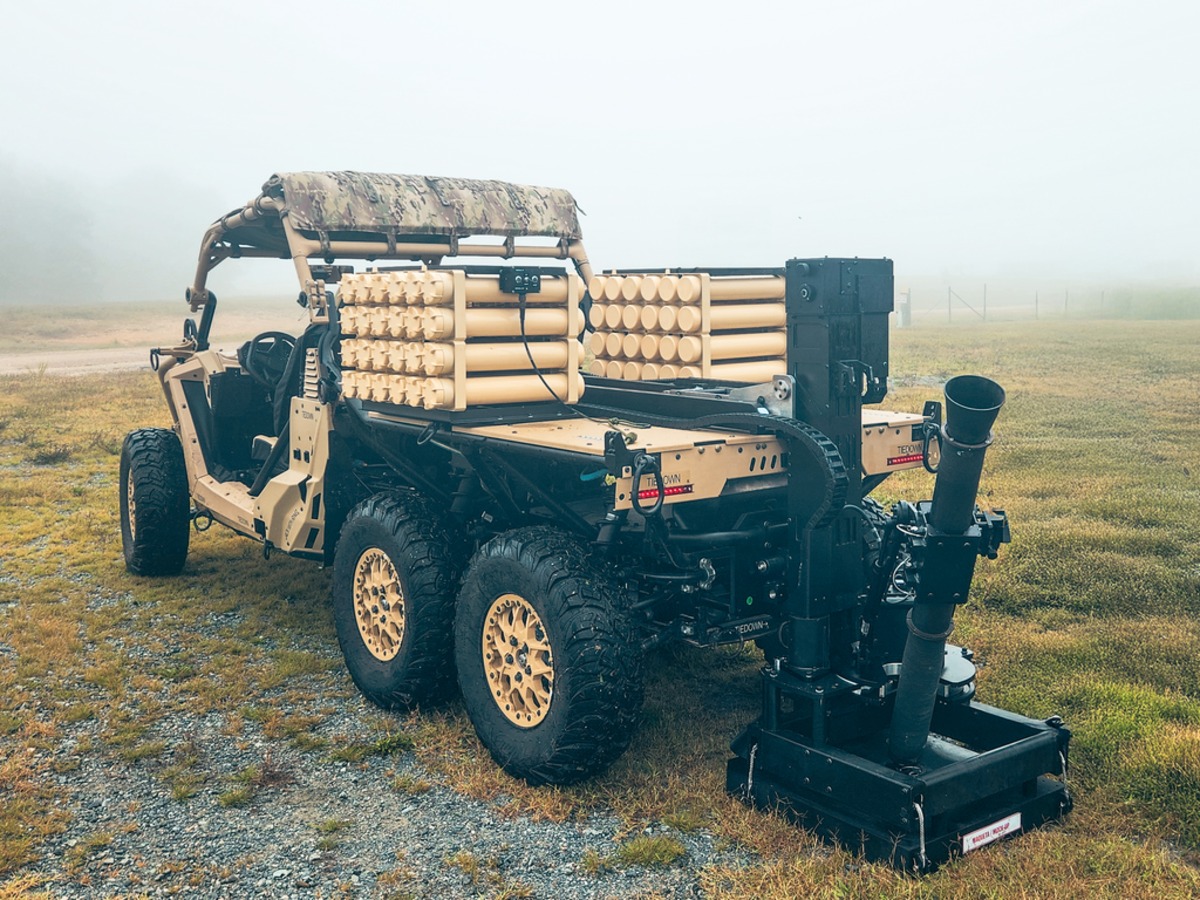
According to Global Military Products, a Global Ordnance company, the Scorpion Light is mounted on the Polaris MRZR Alpha 6×6 vehicle and forms a fully integrated mobile mortar platform designed to improve mobility, lethality, operator protection, and air transportability. The system is intended to support light infantry formations operating in austere terrain where traditional towed mortar systems may face mobility limitations.
“This contract signals a step forward in the Marine Corps’ mortar modernization,” said James Knight, director of Global Military Products. “This partnership delivers a revolutionary ‘shoot and scoot’ capability designed for expeditionary forces operating in high-threat, dispersed environments by providing critical indirect fire support to light infantry formations.”
As noted by the company, the Scorpion Light system demonstrated its rapid deployment capability during a recent range event at Quantico conducted alongside the Marine Gunners Symposium. The platform can deploy, fire eight rounds, and relocate in less than two minutes. Rapid emplacement and displacement are intended to allow mortar crews to engage targets and move before adversaries can conduct effective counter-battery fire.
The mobile mortar system incorporates an advanced digital fire-control system designed to enable rapid targeting and re-aiming with minimal crew input. Marines operating the platform can engage multiple targets in quick succession, improving responsiveness during combat operations. The vehicle’s expanded payload capacity allows crews to transport up to 48 mortar rounds alongside the weapon system.
The platform is based on the pre-production MRZR Alpha 6×6 manufactured by Polaris. The Technology Readiness Level-8 prototype vehicle is configured as a two-seat platform featuring a cargo bed approximately 65 percent larger than earlier variants, optimized for heavier payloads such as integrated weapons systems. The vehicle provides a total payload capacity of 3,600 pounds, including roughly 3,000 pounds available within the extended cargo bed.
According to the company, the addition of a third axle combined with a short wheelbase improves mobility across soft soil, mud, and bog conditions. The MRZR Alpha 6×6 maintains comparable top speed performance while retaining more than 90 percent parts commonality with the base MRZR Alpha vehicles already fielded by U.S. Marine Corps units and U.S. Special Forces, simplifying logistics and maintenance.
A central feature of the integrated system is its ability to be internally transported aboard a V-22 Osprey tiltrotor aircraft. This capability enables rapid insertion of mortar teams into remote or austere environments without requiring heavy transport aircraft or established infrastructure, aligning with Marine Corps expeditionary doctrine emphasizing distributed maritime operations.
Mobile mortar systems combine indirect firepower with tactical mobility, allowing forces to deliver high-angle explosive fire against concealed or distant targets while avoiding prolonged exposure. Traditional mortar units often require longer setup times and dedicated towing vehicles, increasing vulnerability in environments where counter-fire sensors and drones can rapidly detect firing positions. A vehicle-mounted system designed for rapid firing and displacement reduces that risk while maintaining organic fire support at the small-unit level.
The Marine Corps has increasingly prioritized lighter, more mobile platforms as part of broader force restructuring efforts aimed at operating across island chains and contested littoral regions. Expeditionary units are expected to operate in smaller formations with limited logistical support, placing greater emphasis on systems that combine firepower, mobility, and transportability.