


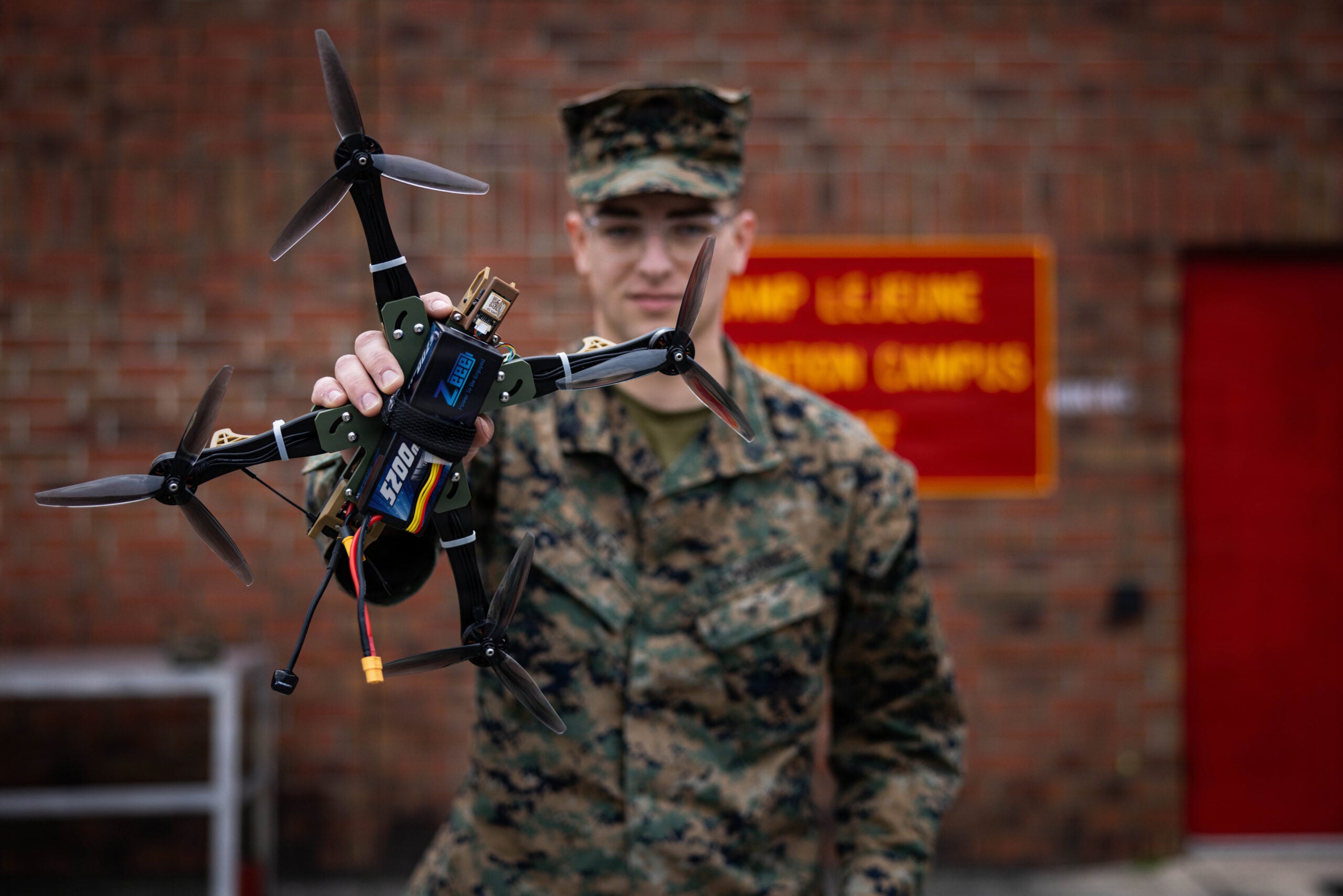
U.S. Marine Corps Fields first Approved 3D-printed Drone
The United States Marine Corps has approved its first fully National Defense Authorization Act–compliant 3D-printed drone, marking a new step in fielding low-cost, adaptable unmanned systems built entirely by Marines for operational use, the service confirmed.
The drone, known as HANX, was developed by the 2nd Marine Logistics Group and received interim flight clearance from the Naval Air Systems Command (NAVAIR), allowing it to be flown and employed by Marine units. The approval makes HANX the first Marine-built 3D-printed drone to meet strict NDAA requirements designed to prevent foreign software or hardware vulnerabilities.
According to the Marine Corps, the platform was created in response to the Department of War’s stated goal of expanding U.S. drone capacity and acquiring large numbers of one-way attack and multi-mission unmanned systems by 2028. Unlike earlier experimental projects, HANX was designed from the outset to comply with security and procurement standards required for fleet-wide use.
The drone was developed by Sgt. Henry David Volpe, an automotive maintenance technician with 2nd Maintenance Battalion, working through the II Marine Expeditionary Force Innovation Campus at Camp Lejeune. Volpe led the design, prototyping, and testing process, producing five major versions of the aircraft before final approval.
“This was only possible because of the collaboration with the team around me,” Volpe said. “I designed it, but I didn’t work on it alone.”
Marine Corps officials said the drone’s NDAA compliance ensures that all critical components are sourced from approved manufacturers and are free of backdoor software that could expose data or allow adversary interference. Volpe said sourcing compliant components was one of the most difficult parts of the project.
“Anyone can create a cheap drone using cheap non-approved parts; however, finding parts that don’t run the risk of having backdoor software is difficult,” he said.
HANX is designed as a modular platform that can be rapidly adapted for different missions, including reconnaissance, logistics, and one-way attack roles. The airframe and many components are 3D printed, allowing units to manufacture parts locally, repair damage quickly, and modify the design without relying on contractors.
Marine Corps officials said the drone can be produced at low cost and built entirely within Marine units, providing flexibility that is not possible with commercial off-the-shelf systems that cannot be modified by operators. The Innovation Campus has already begun developing training plans and course material so that Marines across the force can manufacture and sustain the system themselves.
Chief Warrant Officer 3 Matthew Pine, who oversees the Innovation Campus, said the project demonstrates how distributed manufacturing can shorten development timelines and give Marines direct control over their equipment. Pine also worked to resolve policy barriers that previously prevented flight approval for Marine-built drones.
Following approval, Marine Corps Special Operations Command at Camp Lejeune has begun preparing to use the platform, and additional units are expected to adopt the system as training expands. Volpe said explosive ordnance disposal units are among those planning to acquire multiple drones for operational tasks.
The Marine Corps described HANX as a major advance over earlier 3D-printed drone efforts, such as the experimental “Nibbler” system built in 2017, which did not face today’s compliance and security requirements.