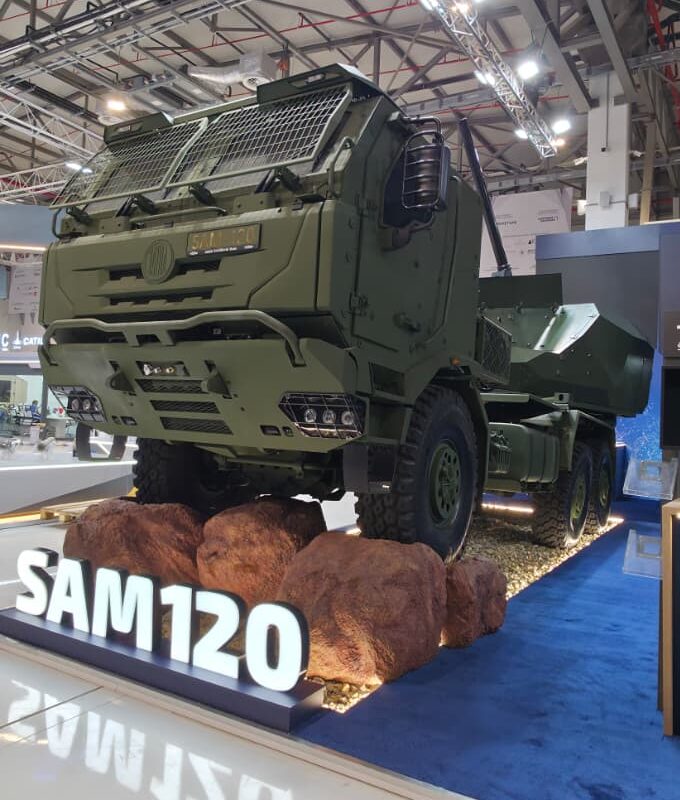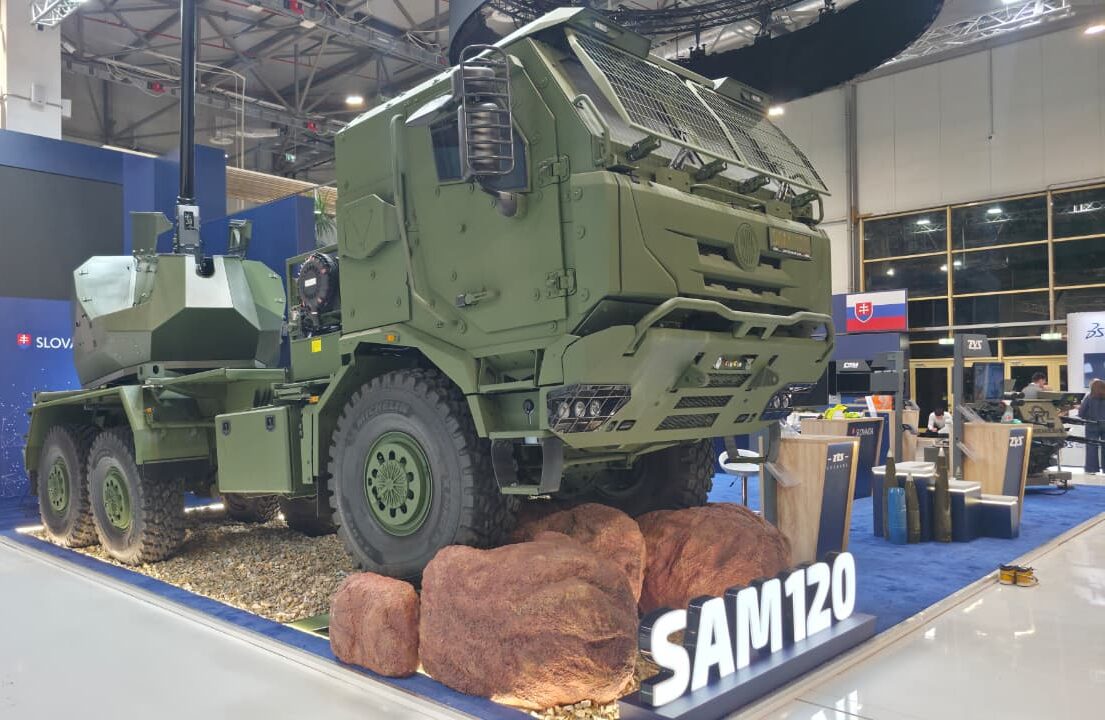

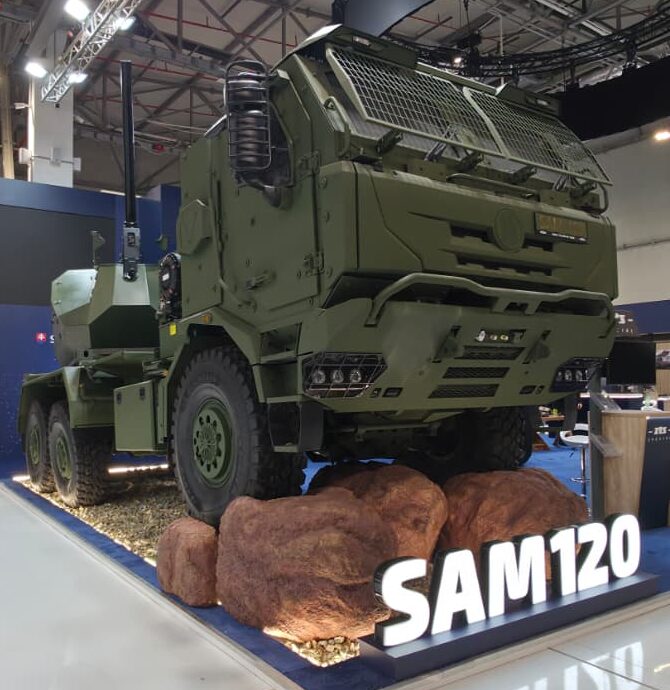
The first SAM120 self-propelled automatic mortar system manufactured by Slovakia’s state-owned company ZTS Special under an order from Azerbaijan was showcased at the ADEX-2026 exhibition held in Baku.
Polygonjournal reports that Slovakia’s Deputy Prime Minister and Minister of Defence, Robert Kaliňák, stated in comments to journalists at the exhibition that the SAM120 system represents the first outcome of defence industry cooperation between Azerbaijan and Slovakia.
“Essentially, this is the result of our cooperation. First, we reached an agreement on new 120 mm automatic mortars. This is the first result of that cooperation and the first piece of equipment delivered to Azerbaijan. Under this contract, the first third will be manufactured in Slovakia. During this period, we will transfer the technology to Azerbaijan. I hope that the next third will be manufactured on a 50-50 basis. After that, the product will be manufactured entirely in Azerbaijan,” Robert Kaliňák emphasised.
It is recalled that in February this year, on the sidelines of the World Defence Show 2026, Azerbaijan signed a framework agreement worth €210 million with Slovakia’s state-owned company ZTS Special for the procurement of SAM120 (AM120) self-propelled automatic mortar systems. The agreement was concluded with Azerbaijan’s state-owned Iqlim Scientific and Production Enterprise. The contract envisages the procurement of approximately 300 SAM120 systems.
The self-propelled automatic mortar system was first presented under the designation AM120 at the IDEB-2024 exhibition, held in Bratislava, Slovakia, in 2024. The remotely operated turret-mounted 120 mm automatic mortar is integrated into the chassis of the TATRA FORCE T 815-7 6×6 truck manufactured by Excalibur Army. The platform is equipped with a four-seat, two-row armoured Puma L2 Long cabin.
The system was developed through cooperation between ZTS Special, Slovakia’s Kerametal, which provides the LANSYS fire-control system, and the Czech company Czechoslovak Group, which supplies the chassis and cabin.
Work on the 120 mm automatic mortar began in 2018 as part of a Czech tender for a self-propelled mortar system. The Czech Army planned to acquire 62 self-propelled mortars, with one of the key requirements being the ability to engage targets using both high-angle and direct fire. However, the final selection was postponed twice, including in light of lessons learned from the Russia-Ukraine war.
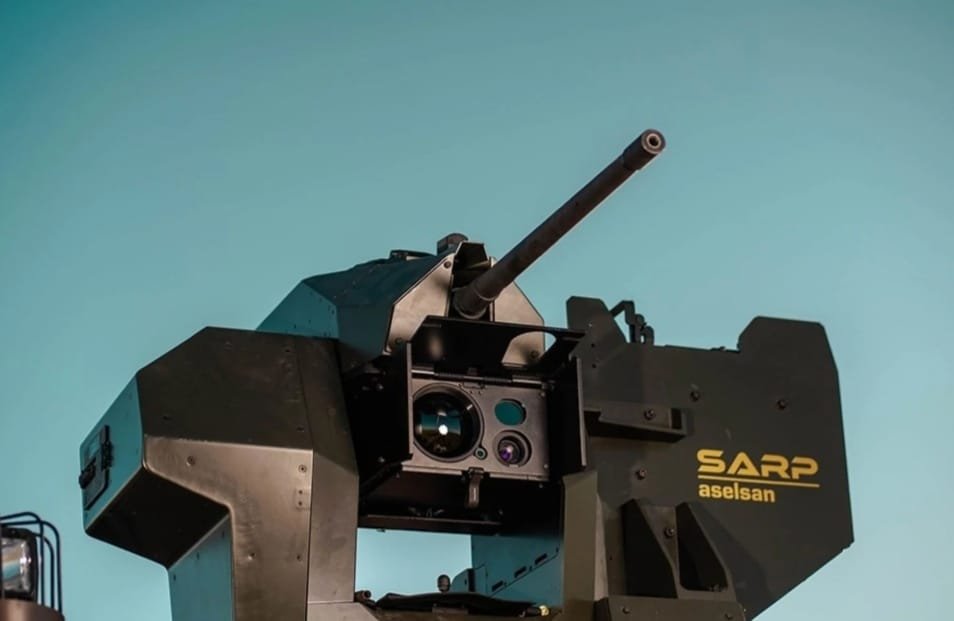
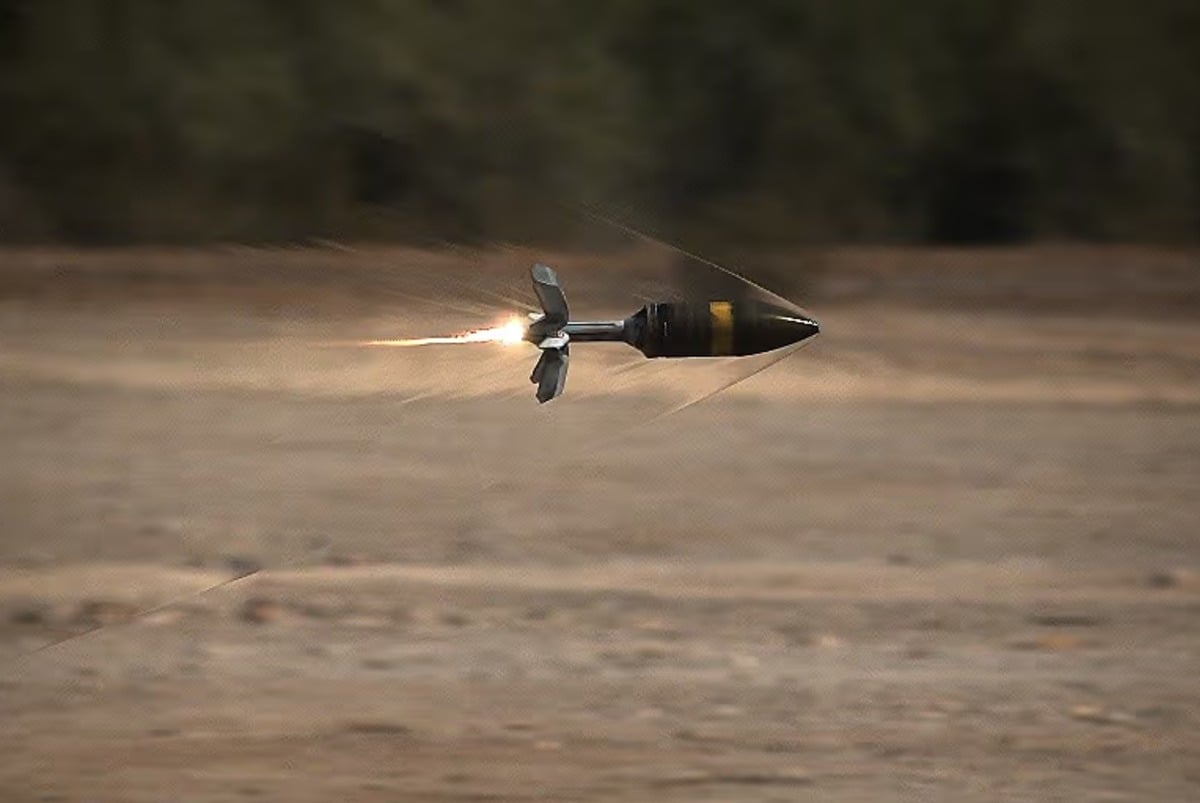
The SAM120’s artillery unit is a 120 mm breech-loaded, smoothbore mortar. The system is equipped with an automatic loading mechanism holding 60 mortar rounds. All equipment is housed in a relatively spacious turret, providing additional room for a second ammunition load. Another 40 mortar rounds can be carried in transport racks.
The turret is fully traversable, with a 360-degree rotation capability. The barrel’s elevation angle ranges from 40 to 80 degrees. This characteristic poses a challenge in meeting the Czech Army’s requirements, as the system is not designed for direct-fire engagements.
The self-propelled mortar has a minimum firing range of 504 metres and a maximum range of 8,200 metres. Its rate of fire is 18–20 rounds per minute, allowing it to fire approximately once every three seconds, a relatively high rate compared with similar systems.
The mortar is designed to destroy or suppress enemy fire assets, equipment and personnel. It can engage targets concealed in trenches, covered positions and light field fortifications. Fire control is primarily conducted from inside the vehicle’s cabin. Depending on the customer’s requirements, the crew can comprise between two and four personnel. Alternatively, the system can be operated directly from the turret, which also supports fully functional manual control.
The remotely operated turret weighs approximately 5,500 kg when fully equipped, including 100 mortar rounds. The system has substantial overall dimensions:8.2 metres in length, 2.55 metres in width and 3.1 metres in height, with a combat weight of 23.5 tonnes.
The system’s considerable size and weight are considered its main disadvantages for a weapon intended for battalion-level operations. Given its intended role, the system would be expected to operate relatively close to the front line. Consequently, detection and destruction by unmanned aerial vehicles (UAVs) could take minutes rather than hours.