
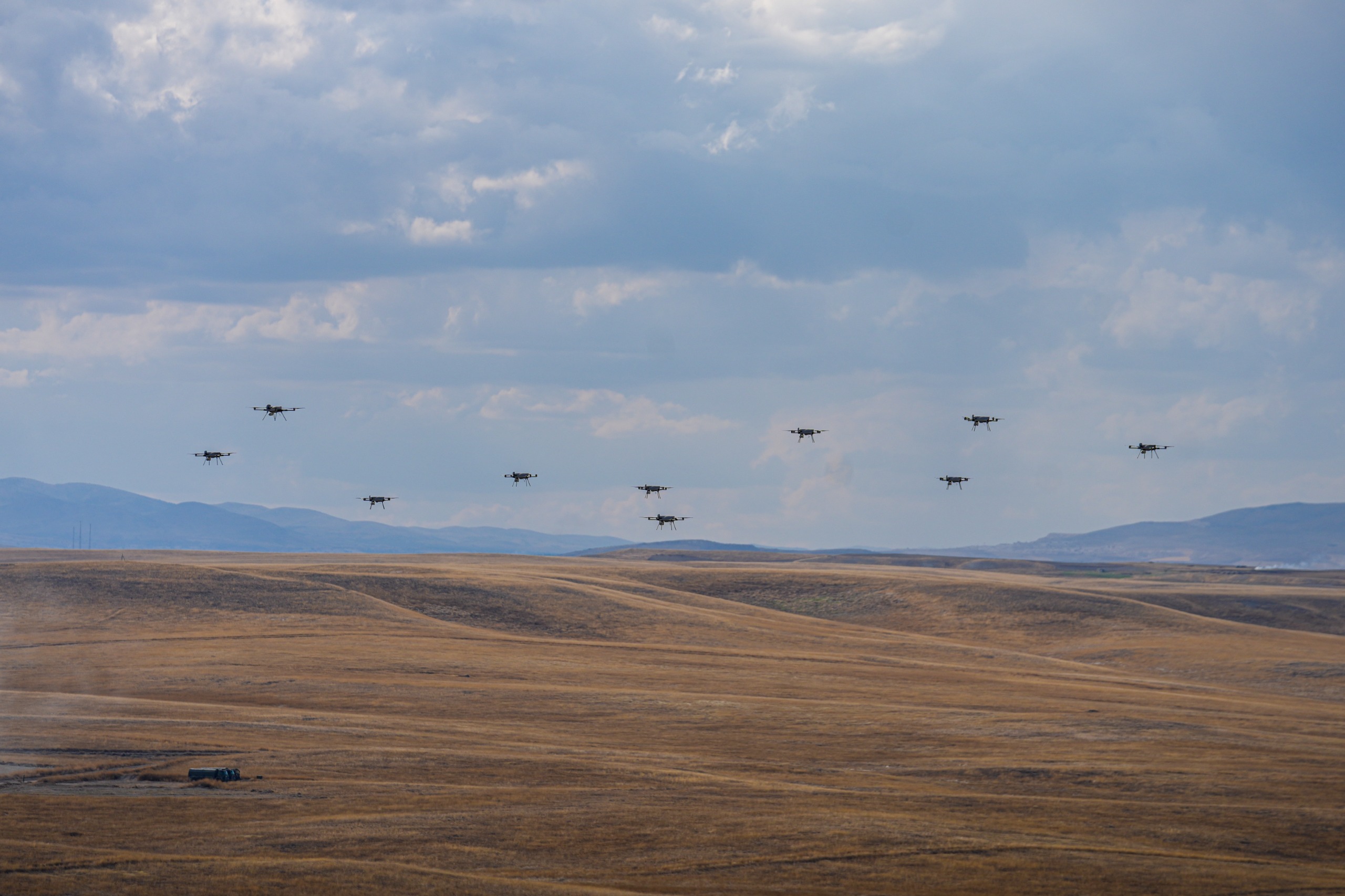
Tactical unmanned aerial vehicles (UAVs) developed by Türkiye’s STM have demonstrated their operational effectiveness during the “Ateş Serbest-2026” exercise, which showcased the firepower of the Turkish Armed Forces.
According to information provided by STM to Polygonjournal, the company successfully demonstrated its swarm intelligence technology, developed entirely using indigenous algorithms, during the Distinguished Observer Day of the exercise held at the General Nahit Şenoğul Firing and Training Centre in Polatlı, Ankara.
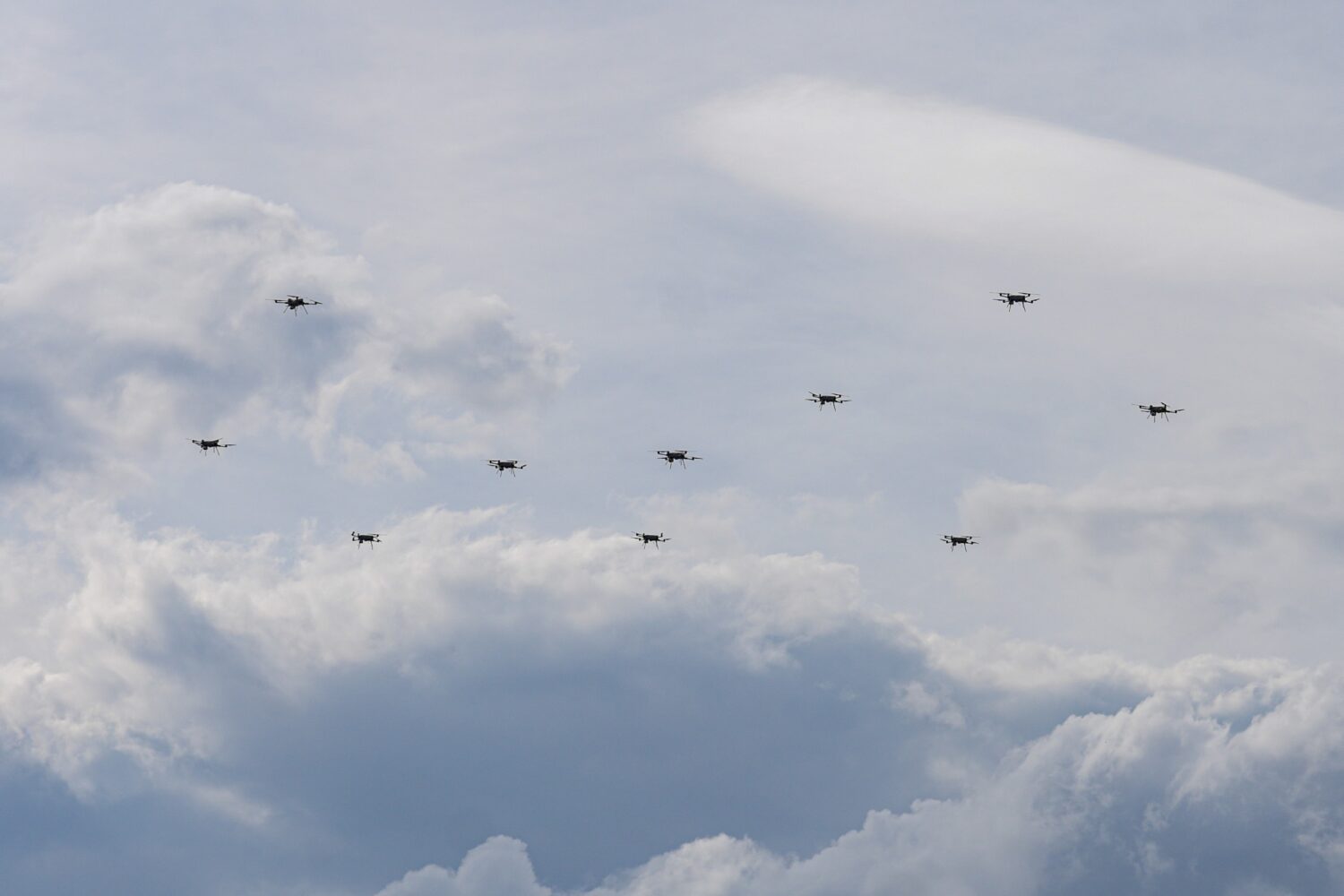
According to the exercise scenario, after enemy infantry units were detected, a swarm consisting of 20 KARGU loitering munition UAVs autonomously took off under the supervision of a single operator and flew towards the target area.
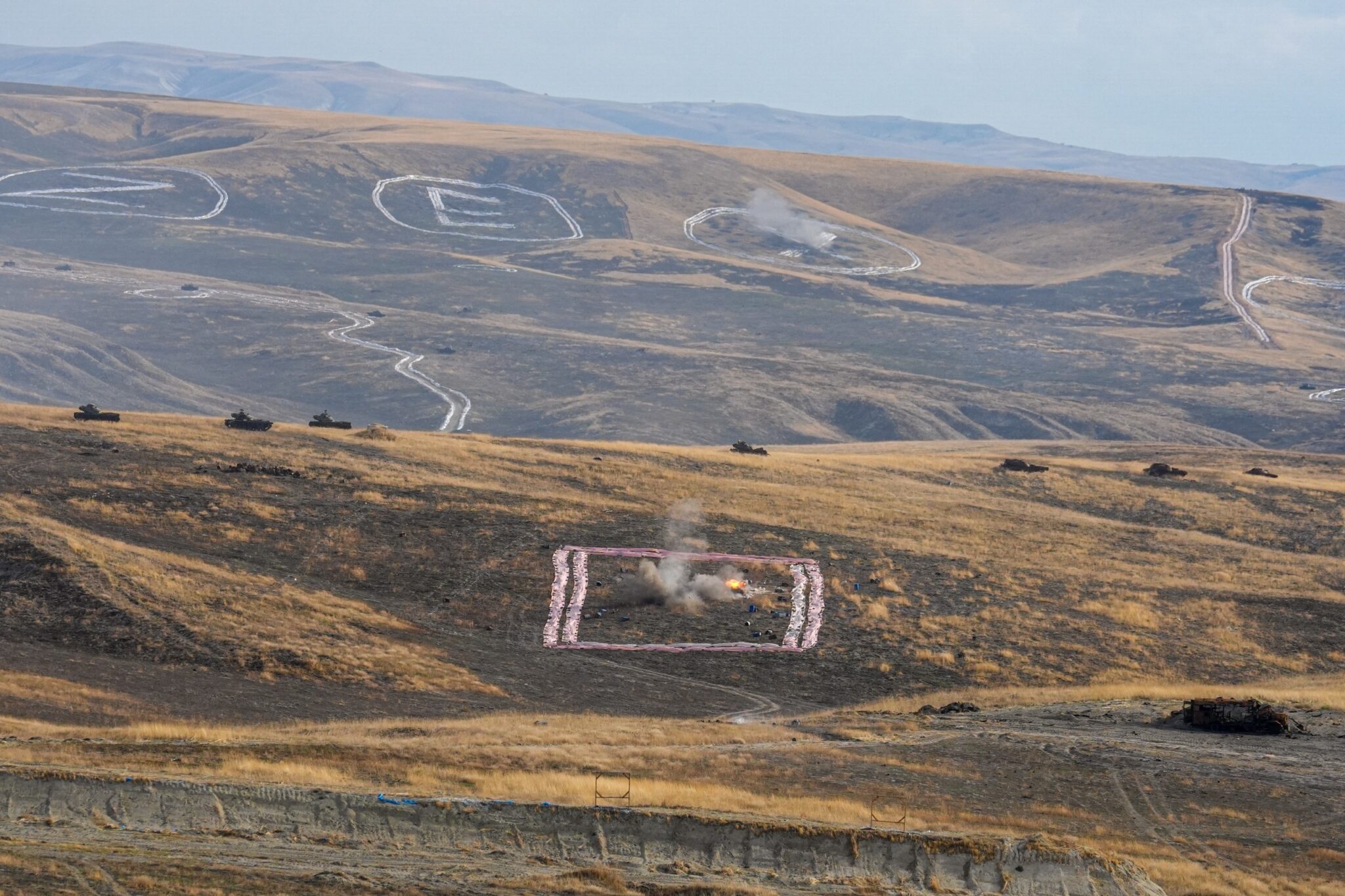
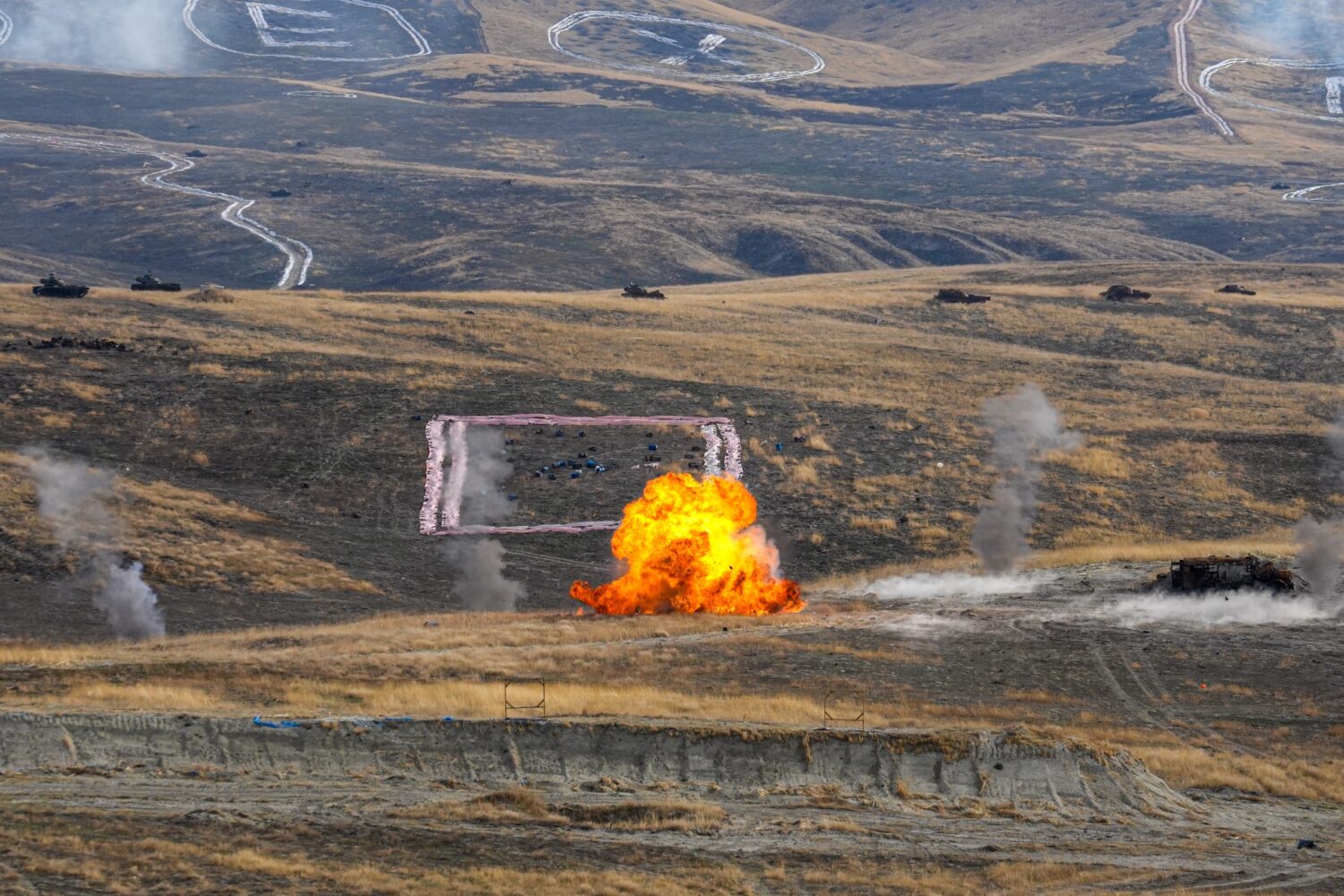
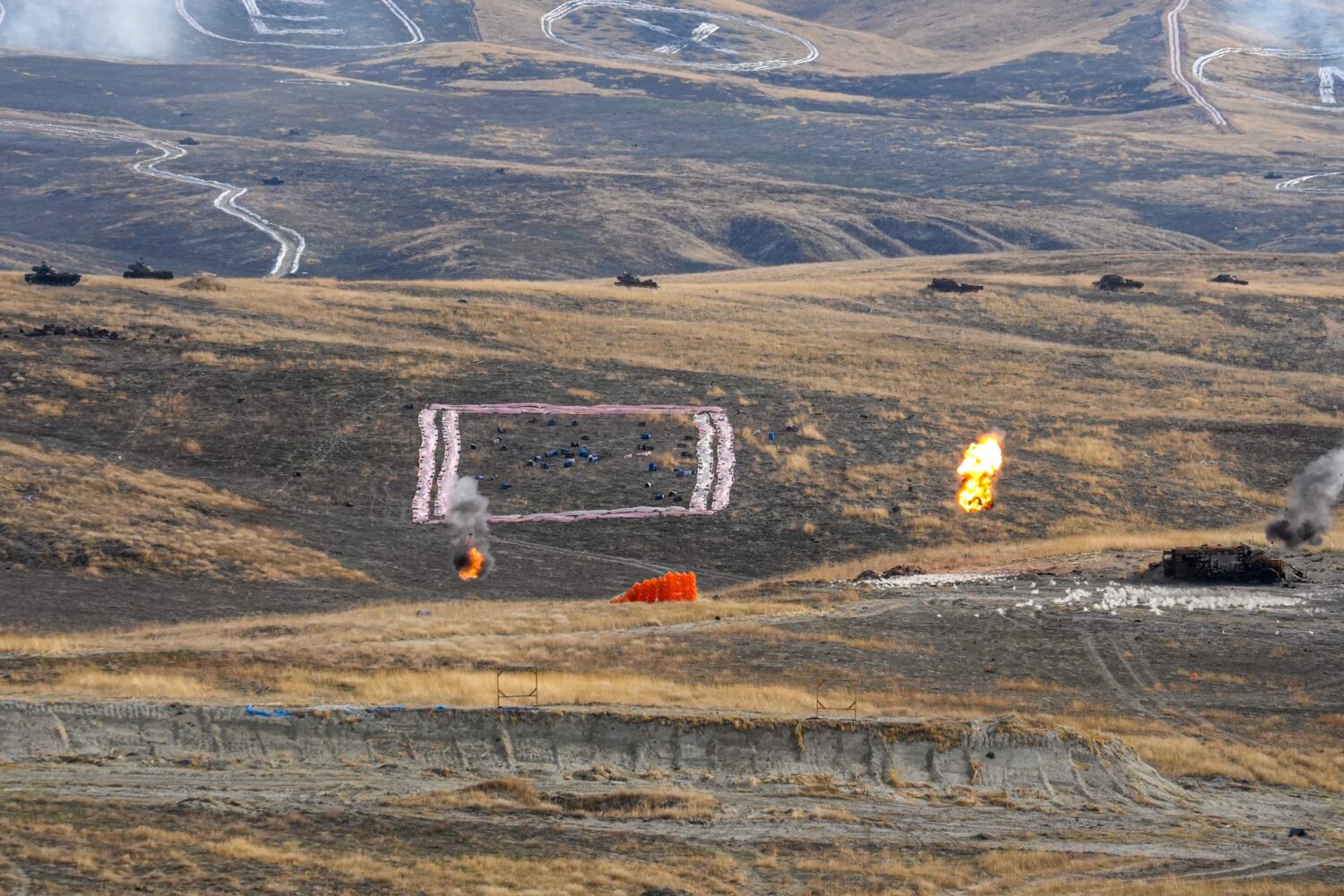
Thanks to their distributed control architecture, the KARGU UAVs communicated with one another in real time, coordinating target detection, classification and information sharing. Upon reaching the target area, the swarm split into two groups of 10 UAVs each. The groups launched simultaneous attacks, destroying designated targets with precision strikes using their anti-personnel warheads.
The BOYGA munition-dropping UAV, developed using STM’s indigenous engineering capabilities, also conducted a successful firing during the “Ateş Serbest-2026” exercise. BOYGA, which has been in service with the Turkish Armed Forces since 2022, accurately released its 81 mm munition onto a designated target. In addition, STM’s FPV solution, the KarguFPV loitering munition UAVs, took part in the exercise.
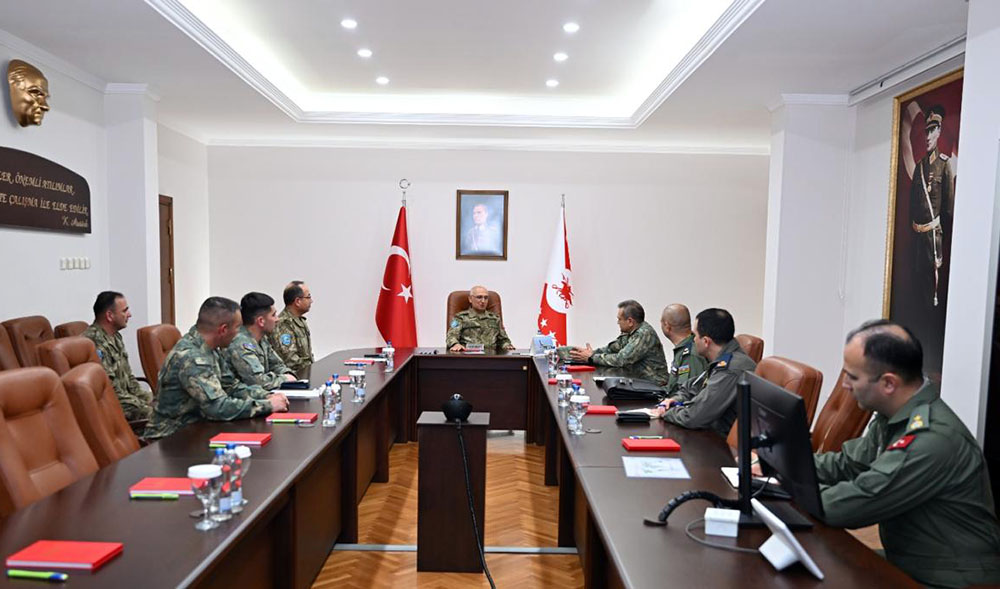
The swarm UAV operation conducted during the Distinguished Observer Day of “Ateş Serbest-2026” was observed on site by Turkish Minister of National Defence Yaşar Güler, Chief of the General Staff General Selçuk Bayraktaroğlu, Commander of the Land Forces General Metin Tokel, Commander of the Air Force General Rafet Dalkıran, and senior military delegations.
In May 2026, during the EFES-2026 exercise, STM achieved what it described as a first in global defence history by conducting an autonomous swarm attack with 20 KARGU UAVs using live ammunition within the framework of an international military exercise scenario.
The successful demonstration of the same capability at “Ateş Serbest-2026” once again highlighted STM’s operational readiness in swarm intelligence technologies and Türkiye’s advanced engineering capabilities in autonomous warfare systems.
STM General Manager Özgür Güleryüz stated that the capabilities demonstrated during “Ateş Serbest-2026” reflected the level achieved by the Turkish defence industry in autonomous systems.
“The high performance demonstrated on the battlefield by our indigenous technologies, developed through Turkish engineering, is a great source of pride for us. At STM, we are developing solutions that will shape not only today’s but also tomorrow’s battlefield through our advanced autonomous systems and swarm intelligence technologies. During EFES-2026, we achieved a milestone in defence history with 20 KARGU UAVs. At ‘Ateş Serbest-2026’, we once again demonstrated this advanced autonomous swarm capability using live ammunition.
“Developing this critical technology, which is available to only a limited number of countries worldwide, through our own national capabilities and strengthening the deterrence of our heroic armed forces on the battlefield are among our greatest sources of pride. Under the leadership of our Defence Industry Agency, we will continue working towards our goal of a fully independent defence industry and delivering game-changing systems to our country,” Güleryüz emphasised.
Thanks to STM’s proprietary algorithms and software, the tactical UAVs in its swarm system can communicate with one another in real time, detect targets, share information about them, prioritise targets and conduct coordinated attacks.
STM’s swarm intelligence architecture enables each UAV to make independent decisions regarding assigned tasks without relying on a centralised control unit. This distributed control architecture allows the swarm to continue its mission even if part of the system is disabled, increasing the likelihood of mission success.
Swarm systems enable large numbers of UAVs to converge on a target area simultaneously and in a coordinated manner under the saturation-attack concept. This approach is intended to overwhelm and neutralise enemy defence systems.
STM’s algorithms enable UAVs within a swarm to engage targets according to the types of munitions they carry. For example, UAVs equipped with anti-personnel or armour-piercing warheads can distinguish between human and vehicle targets and autonomously engage them according to the target type.
The systems under development also allow new UAVs to be added to or removed from the swarm in real time, missions to be updated, and the swarm to be divided into several groups within the operational area to perform different tasks.
STM also demonstrated its swarm UAV capabilities during a test conducted in January 2026 in Polatlı, Ankara. A swarm of 20 KARGU UAVs operating entirely on indigenous algorithms autonomously manoeuvred under the supervision of a single operator and accurately struck targets using live ammunition.
Key features of the swarm system include:
Swarm intelligence algorithms;
Saturation-attack capability;
Distributed control architecture;
Communications infrastructure between UAVs;
Autonomous formation generation and maintenance;
Collision avoidance system;
Real-time target detection and classification;
Task allocation within the swarm;
Target prioritisation and task assignment;
CRPA-assisted navigation resistant to electronic warfare interference;
Navigation independent of satellite navigation systems (GNSS), enabled by KERKES integration;
Swarm splitting and merging;
Real-time integration of UAVs into and removal of UAVs from the swarm.
KARGU Loitering Munition UAV
The KARGU strike UAV, widely known as a “kamikaze UAV”, was developed by STM using indigenous and national capabilities. Introduced into the inventory of the Turkish Armed Forces in 2018, KARGU is actively used by various Turkish security forces, primarily in counterterrorism, special operations and cross-border operations.
Proven in a variety of geographical and terrain conditions, KARGU has been exported to 15 countries across four different continents. Depending on operational requirements, personnel can quickly replace its warhead with either an anti-personnel or an armour-piercing variant.
Its small radar signature makes KARGU difficult to detect in enemy territory. The UAV can be easily carried by a single soldier and made ready for operation within one minute in the operational area.
Its artificial intelligence and image-processing capabilities, low noise signature and ability to deliver its explosive payload accurately onto a target enable KARGU to conduct surprise strikes and gain an operational advantage. Equipped with advanced electro-optical and infrared cameras, KARGU can operate both day and night.
KARGU can remain airborne for more than 30 minutes and has an operational range of 10 kilometres. The UAVs can also operate in swarms. Furthermore, STM-developed software enables KARGU to withstand electronic warfare interference and carry out missions without relying on GNSS.
STM has also integrated an RF seeker into KARGU, providing the capability to detect and target enemy radars and other systems emitting radio-frequency signals. Integration of the JINN electronic warfare pod enables the UAV to suppress enemy radars through electronic jamming, degrade the performance of air defence systems and create safer operational corridors for friendly forces.
BOYGA Munition-Dropping UAV
BOYGA, a member of STM’s tactical UAV family, accurately releases a specially developed 81 mm mortar munition onto a target using an advanced ballistic calculation algorithm.
Designed for use in counterterrorism operations and asymmetric warfare, BOYGA can remain airborne for 30 minutes while carrying its mortar munition. The platform can reach an altitude of 3,000 metres and conduct missions at a range of up to 10 kilometres. Weighing 17 kilograms, the UAV can be carried by a single soldier.
The munition system was integrated through cooperation with MKE. Successfully used by Turkish security forces since 2022, BOYGA was exported to one country in 2024.