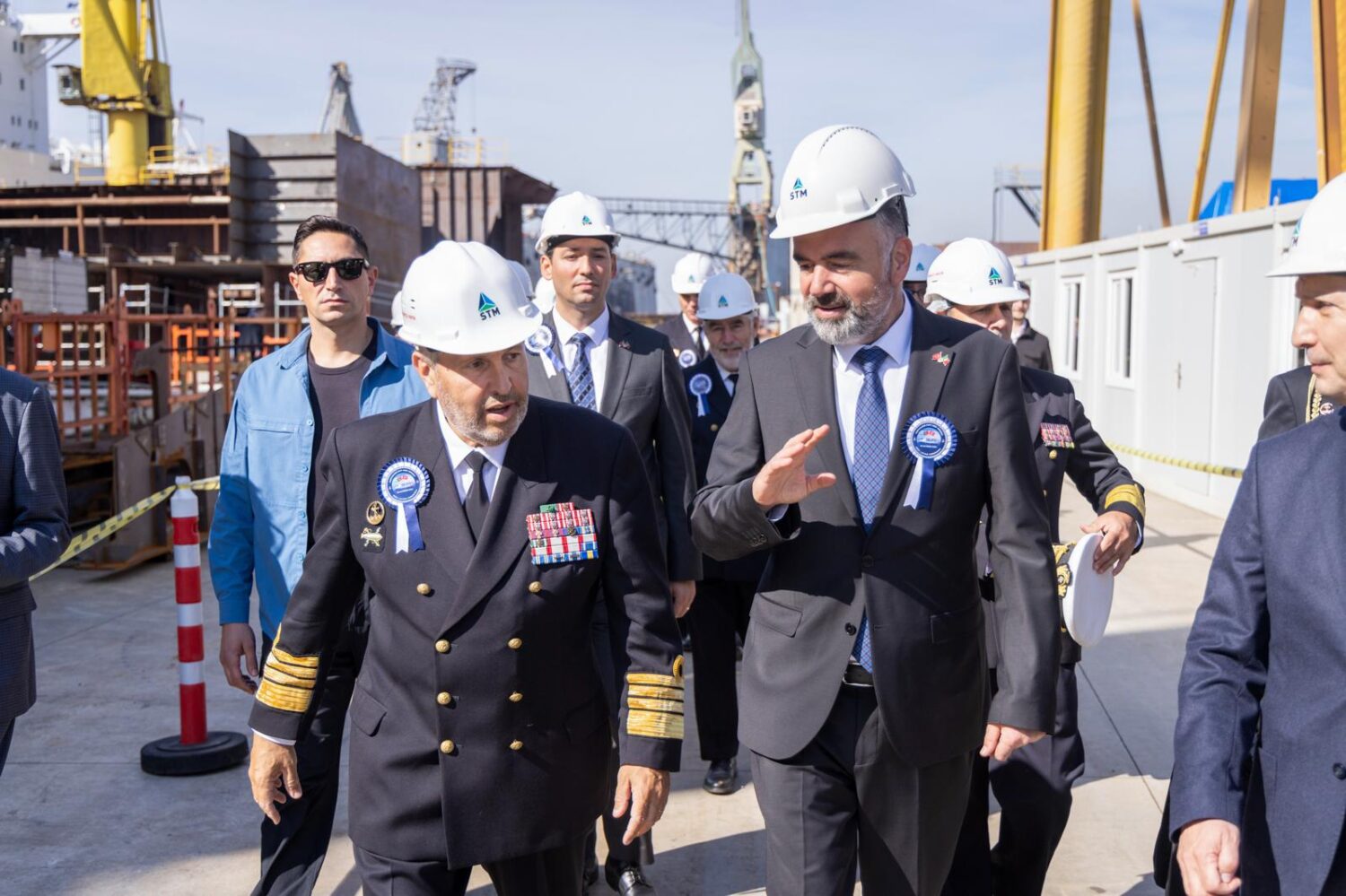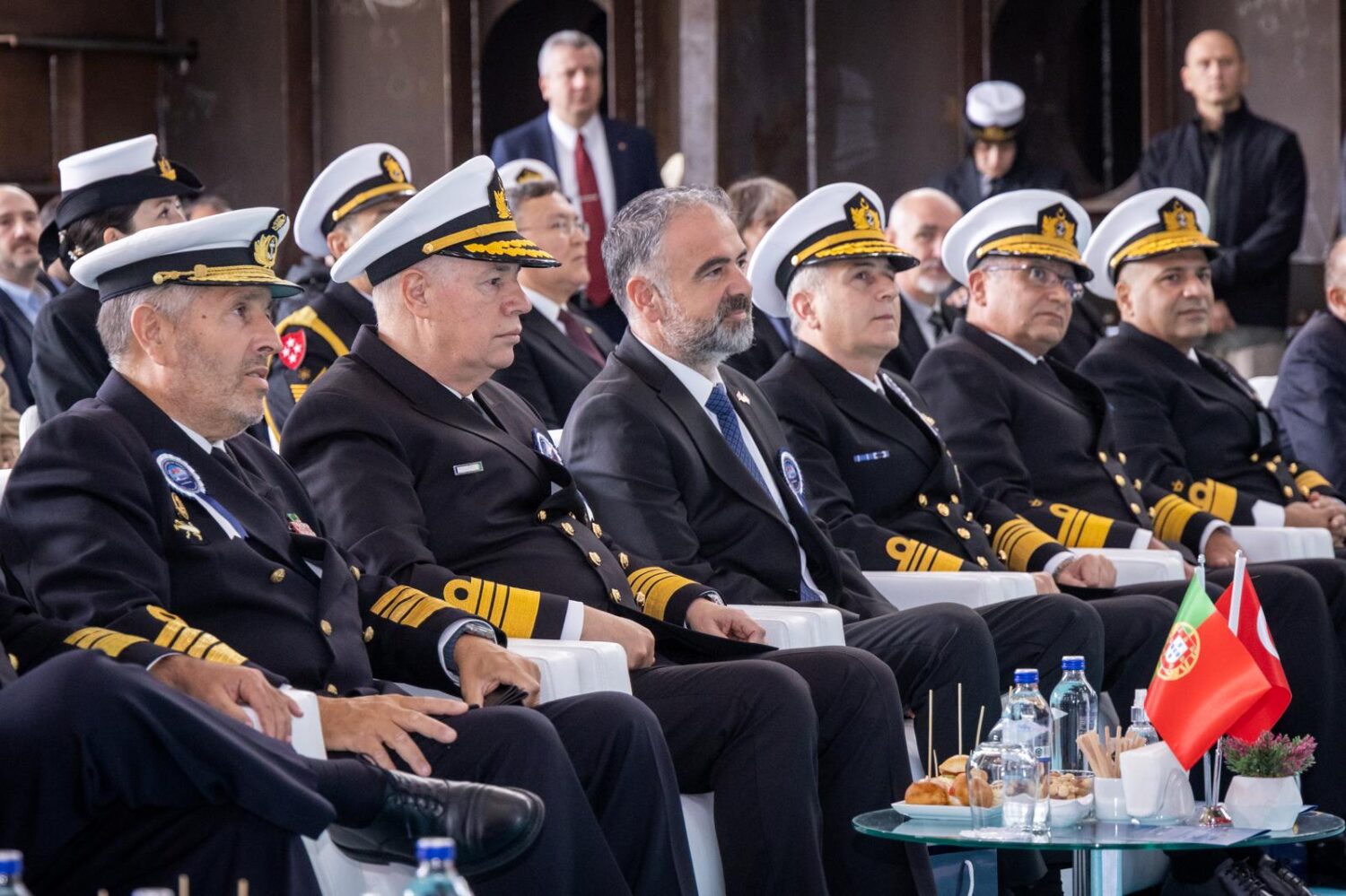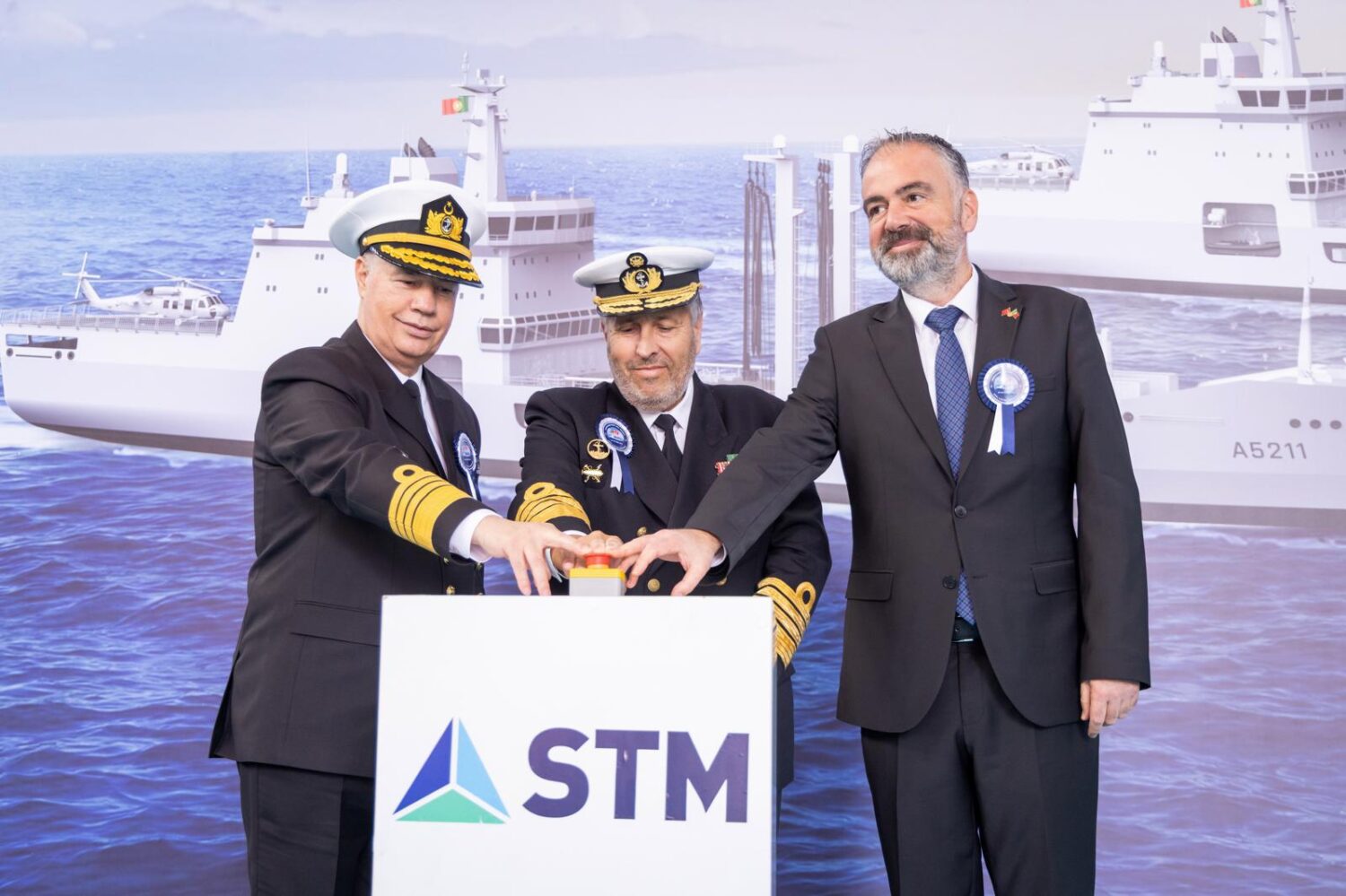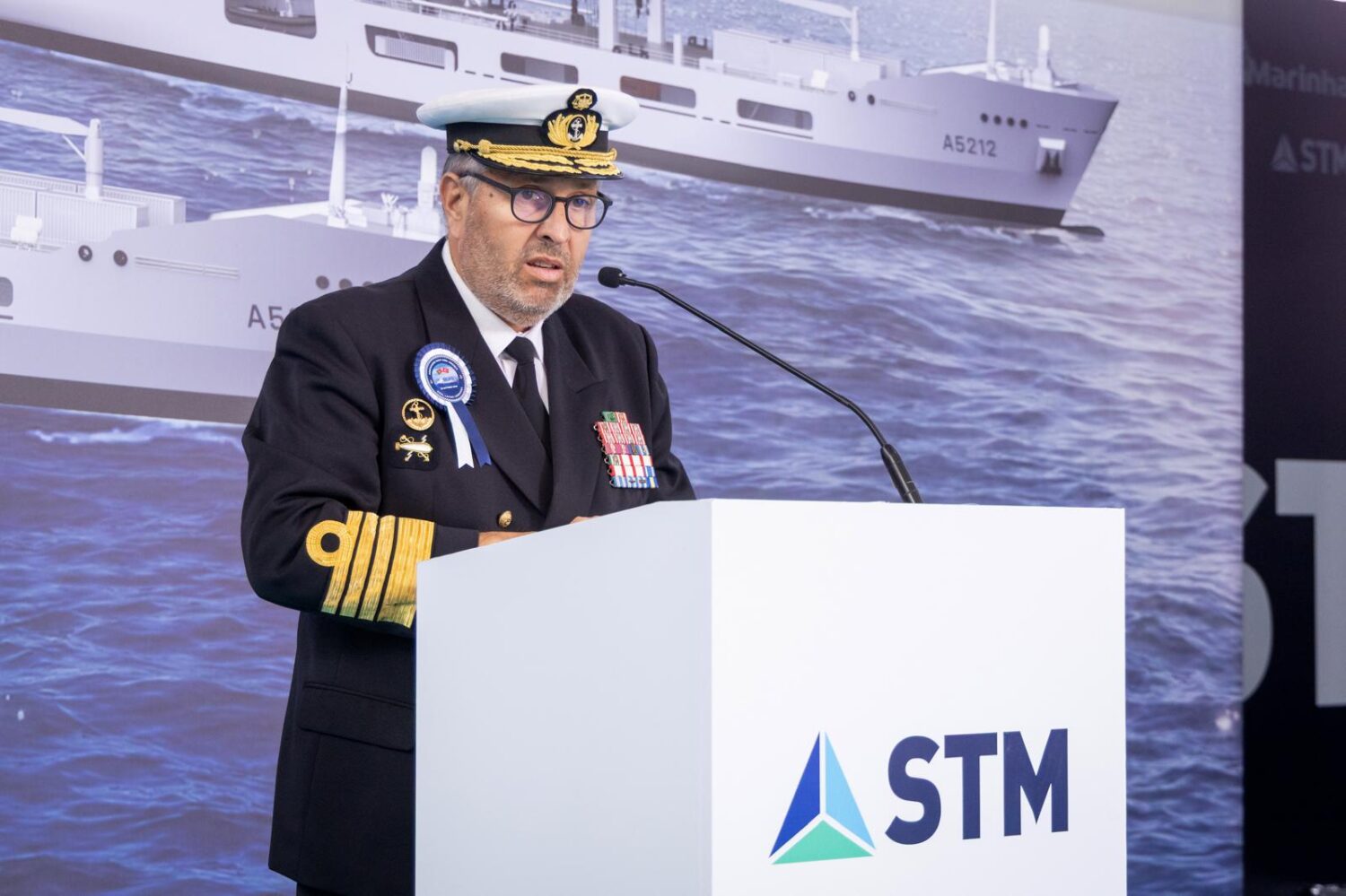

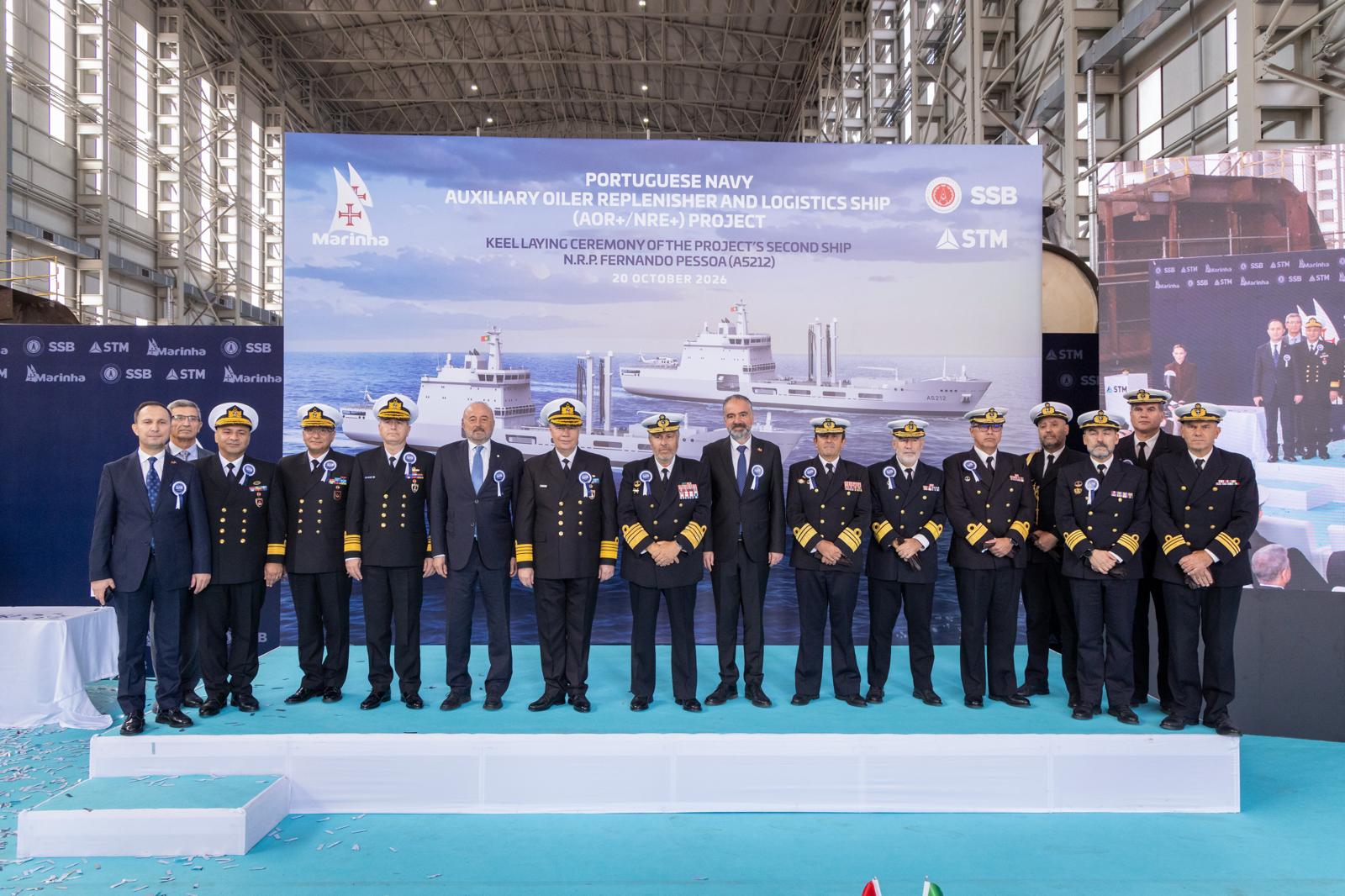
A ceremony has been held to position the blocks of the N.R.P. FERNANDO PESSOA, a vessel being built by Türkiye’s STM for the Portuguese Navy, on the launching facility.
According to information provided to Poliqonjurnal by STM, this is the second vessel being built for the Portuguese Navy under the Sea Replenishment and Logistics Support Ship Project.
The ceremony was attended by Portuguese Navy Commander Admiral Nobre de Sousa, Turkish Naval Forces Commander Admiral Kadir Yıldız, representatives of the Portuguese and Turkish navies, executives from STM and ADA Shipyard, and project teams.
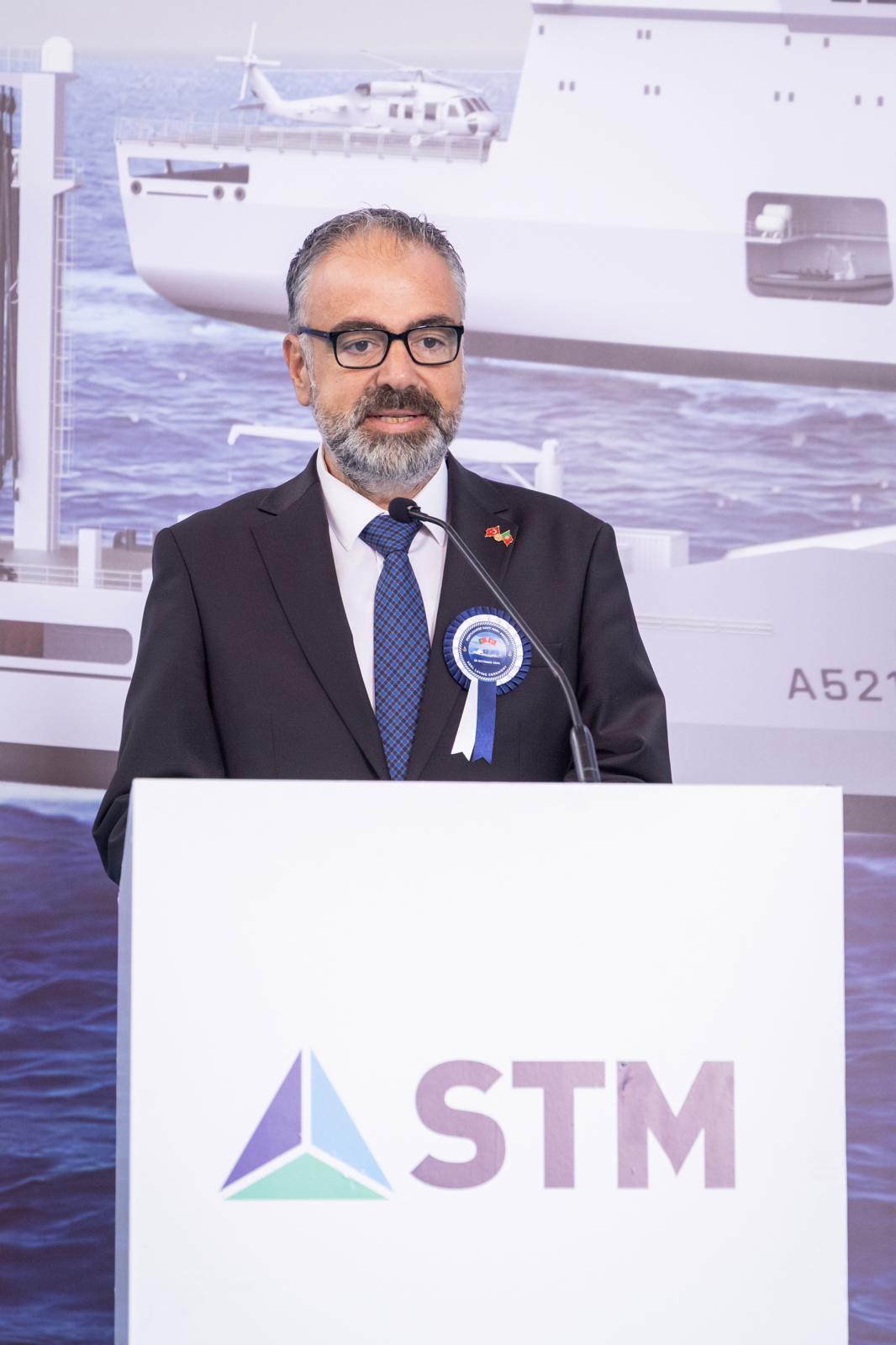
Speaking at the ceremony, STM General Manager Özgür Güleryüz stated that the project for the Portuguese Navy was progressing according to schedule.
“As Türkiye’s leading naval engineering company, we continue to share with friendly and allied countries the experience we have gained from 44 naval platform projects carried out at 11 different shipyards. Today, we are reaching another important milestone in our project for Portugal, which marks Türkiye’s first military ship export to a country that is both an EU and NATO member. While block assembly and outfitting work continues on the first vessel, we have also positioned the blocks of the second vessel on the launching facility, allowing construction of both ships to proceed simultaneously at the same shipyard,” he said.
According to the general manager, the vessels are scheduled to be launched in 2027 and delivered to the Portuguese Navy during 2028.
Portuguese Navy Commander Admiral Nobre de Sousa emphasized in his speech that the vessel under construction would make a significant contribution to the operational capabilities of the Portuguese Navy.
He noted that the ships would substantially enhance the Portuguese Navy’s operational flexibility by providing the logistical support required for a broad range of missions, from humanitarian assistance and disaster response to power projection and combat operations.
“Once commissioned, they will strengthen our support for NATO maritime operations, enhance interoperability with our allies, and reinforce our contribution to the collective defence of the Euro-Atlantic region. This project is a tangible demonstration of the strong relationship, mutual trust, knowledge exchange, and strategic cooperation between Türkiye and Portugal, two NATO allies,” he said.
It should be recalled that STM signed an agreement in Lisbon, the Portuguese capital, on 17 December 2024, marking Türkiye’s first military ship export to an EU and NATO member country. Following the signing of the agreement, design work was completed, and construction of the first vessel, N.R.P. LUIS DE CAMOES, began with a steel-cutting ceremony in November 2025. The ceremony to position the first vessel’s blocks on the launching facility took place in January 2026. Steel cutting for the second vessel was carried out on 18 June 2026. Construction of both ships is currently underway simultaneously.
The vessels being built under the project have been given names reflecting Portugal’s rich literary and maritime heritage.
The first vessel is named after Portugal’s national poet, Luís de Camões. The name of the second vessel, which was initially planned to be named after King Dom Dinis, was changed to N.R.P. FERNANDO PESSOA by a decision of the Portuguese Navy.
Fernando Pessoa, one of Portugal’s most prominent poets of the 20th century, devoted considerable attention in his works to the country’s maritime history and cultural heritage.
The vessels are being built at ADA Shipyard in Istanbul under STM’s prime contractor responsibility. The Sea Replenishment and Logistics Support Ships feature a modular design and are significant in demonstrating Türkiye’s capabilities in naval systems engineering.
In addition to providing logistical support and conducting at-sea fuel and cargo transfers, the ships will be capable of transporting armoured vehicles, deploying joint forces, and supporting amphibious operations.
The vessels will be able to carry up to 20 light armoured tactical vehicles. Thanks to their modular, original, and multipurpose design, they will also be capable of carrying out missions such as humanitarian assistance, search and rescue, and medical support during crisis situations. Equipped with an integrated communications system, the ships will also offer command-and-control capabilities.
The vessels will be 137 metres long, have a displacement of 11,000 tonnes, and reach a maximum speed of more than 18 knots. They will be capable of remaining at sea continuously for up to 30 days. In addition to a crew of 100, each vessel will be able to accommodate a further 100 personnel.
The ships will be equipped with sensor and weapon systems suitable for all major types of naval warfare, particularly air defence. Their armament and defensive systems will include short-range air defence systems, 12.7 mm remotely operated weapon systems, and chaff and decoy countermeasures designed to counter electronic threats. The vessels will also carry a range of advanced sensors and systems.
In addition, the ships will feature a flight deck for helicopters and unmanned aerial vehicles (UAVs), as well as a hangar for UAVs.