

Danish Startup Develops heavy-lift Autonomous eVTOL cargo Aircraft
A Danish startup is entering the unmanned logistics market with a family of heavy-lift, high-speed autonomous cargo aircraft designed to move large payloads over medium distances.
Acodyne says it is developing an unmanned electric vertical takeoff and landing aircraft aimed at what it describes as the “middle-mile” logistics segment, a space between short-range drones and conventional cargo aviation.
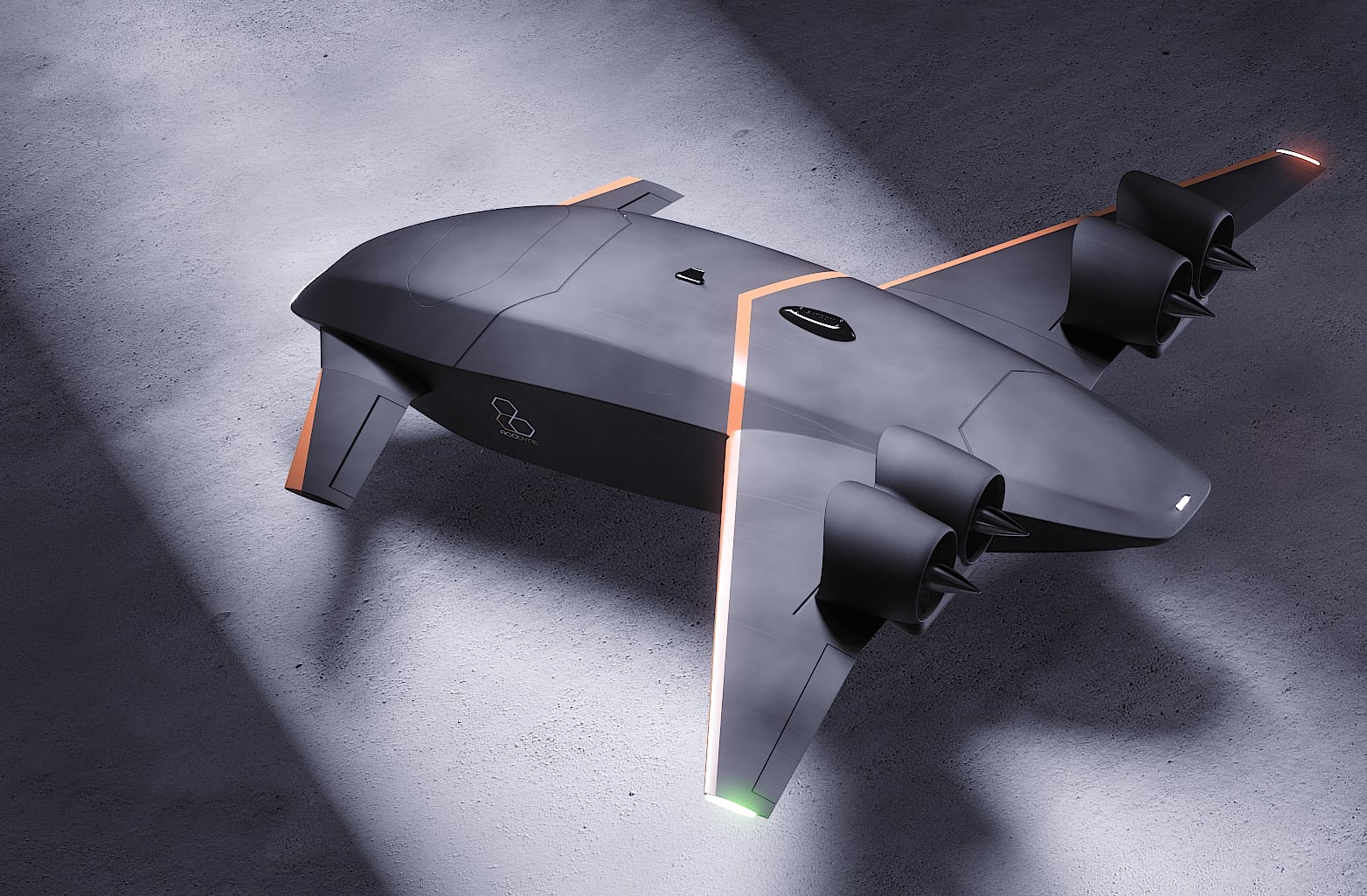
According to information published by the company, Acodyne’s aircraft are designed to carry heavy payloads at speeds and ranges that exceed those of most existing unmanned systems. The company describes its concept as focused on autonomous flight, high cruise speed, and the ability to operate from constrained locations such as helipads, clearings, or conventional runways.
Acodyne says its platform combines vertical takeoff and landing capability with a fixed-wing design, allowing the aircraft to transition to efficient forward flight once airborne. The aircraft are powered by proprietary ducted-fan electric motors rather than open propellers, a design choice the company says improves safety during ground operations and enables higher cruise speeds.
“Acodyne is redefining middle-mile logistics with the fastest eVTOL unmanned aerial system built for heavy payloads,” the company states on its website.
The company has outlined an aircraft family that scales across multiple payload classes. The smallest variant, designated E100 or H100, is designed to carry a payload of up to 100 kilograms. This version has a footprint of roughly 5.5 meters by 5.5 meters, placing it well above the size of small delivery drones but below traditional crewed cargo aircraft.
A larger E200 or H200 variant is designed for payloads of up to 200 kilograms, with overall dimensions of about 7 meters by 7 meters. Acodyne has also disclosed a heavy-lift E500 or H500 configuration, which targets payloads of up to 500 kilograms while retaining the same approximate footprint as the 200-kilogram class.
Acodyne says its ducted-fan technology enables cruise speeds of up to 450 kilometers per hour, significantly higher than most current cargo drones. The company also claims a cruise endurance of up to 75 minutes, translating into a range of approximately 500 kilometers on a single charge, depending on payload and mission profile.
Autonomy is a central element of the concept. Acodyne says its aircraft are designed for “true autonomy” using its proprietary eThor artificial intelligence suite. The system is intended to manage flight operations without onboard pilots, supporting point-to-point cargo missions with minimal human intervention.
The company also emphasizes modularity. According to Acodyne, the aircraft are engineered to accommodate industry-standard cargo units as well as mission-specific payloads, allowing the same platform to support commercial logistics, industrial transport, or specialized government missions.
While Acodyne has not disclosed timelines for flight testing, certification, or production, the specifications outlined place the aircraft in a category that could attract interest from both commercial logistics providers and defense organizations seeking unmanned resupply options.
Heavy-lift unmanned aircraft have drawn growing attention as militaries and emergency services look for ways to move supplies without exposing crews to risk. Platforms capable of carrying hundreds of kilograms at high speed could support dispersed operations, rapid resupply, or humanitarian response in areas with limited infrastructure.