


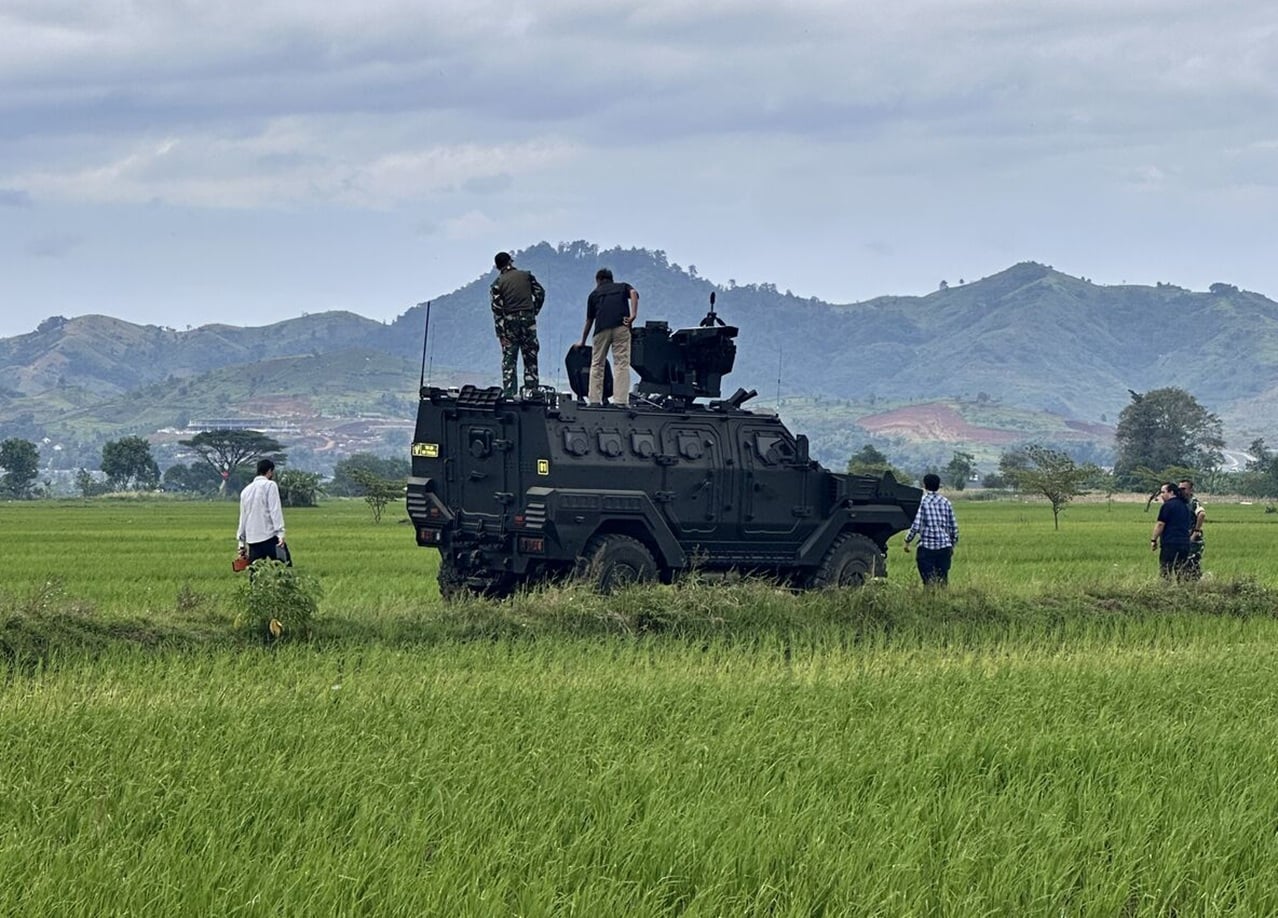
Indonesian Special Forces test Aselsan Weapon System
Turkish defense company ASELSAN has completed the integration and live-fire testing of two combat systems for Indonesia’s elite special forces.
According to a statement published by ASELSAN Indonesia, the ASELSAN SARP 12.7 mm Remote Weapon Station and the ASELSAN SEDA Gunshot Detection System were successfully integrated on their designated platform and tested with live ammunition. The systems were supplied to J-Forces and evaluated at the KOPASSUS firing range in Bandung.
Company says the integrated systems completed performance verification firing tests and achieved all test objectives. The evaluation confirmed system functionality, accuracy, and integration performance under live-fire conditions.
The SARP 12.7 mm Remote Weapon Station is designed to allow operators to engage targets from within protected vehicles, reducing crew exposure while maintaining firepower. The SEDA Gunshot Detection System is intended to provide real-time acoustic detection and localization of small-arms fire, supporting faster situational awareness during operations.
The systems are entering service with the KOPASSUS, a unit tasked with high-risk missions including counterterrorism, special reconnaissance, and direct action. The integration effort represents the first operational deployment of this specific system combination within the unit.
As noted by ASELSAN Indonesia, the project also reflects a streamlined cooperation model between ASELSAN and J-Forces, centered on rapid delivery, system integration, and validation within Indonesia. The company said the effort demonstrated an effective approach to fielding new capabilities without extended overseas testing cycles.
ASELSAN Indonesia stated that it coordinated and supported the integration and testing activities locally, working with Indonesian partners, engineers, and field teams throughout the process. The company said its local presence played a central role in ensuring timelines were met and technical requirements were addressed on site.
In its statement, ASELSAN Indonesia said it is looking to expand its role in future projects and capability development programs in the country, building on experience gained during the SARP and SEDA integration effort.
The company also thanked Indonesian authorities and all participating stakeholders for their support during the testing phase, noting that close coordination was required to complete live-fire trials at an operational military range.
The successful tests are also tied to broader defense-industrial cooperation between Türkiye and Indonesia. ASELSAN described the project as part of ongoing efforts to develop interoperable defense solutions tailored to Indonesian operational needs, with an emphasis on local coordination and sustainment.