


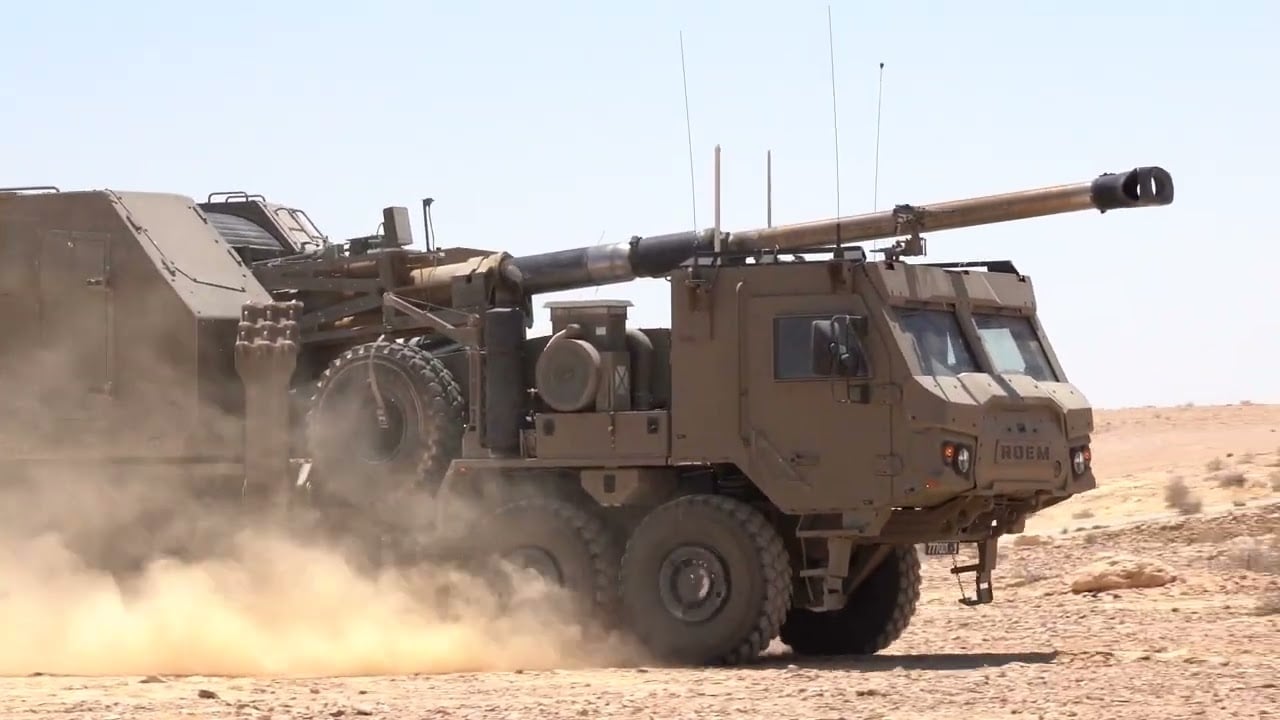
Israel Fields next-gen Artillery System
The Israel Defense Forces have begun inducting a new self-propelled howitzer, the SIGMA 155 “Roem,” according to IsraelDefense magazine.
The Roem, developed and manufactured by Elbit Systems, is intended to gradually replace the U.S.-made M-109 “Doher” howitzers that have served the IDF for decades.
Israeli officials describe the transition not only as a platform replacement, but as a shift toward automated, networked artillery operations designed to reduce response times and increase operational flexibility.
During an official handover ceremony at Elbit’s production facility, senior officers highlighted the operational changes enabled by the new system. The event was attended by the Chief Artillery Officer, Brig. Gen. Ehud Bibi, according to defense establishment reporting and the Artillery Corps’ announcement.
According to those statements, the Ro’em introduces a fully automated loading system that reduces the combat crew from seven personnel to three. The automation removes the need for a manual loader and replaces the physical handling of heavy artillery shells with mechanical and computerized processes.
Operationally, the Ro’em offers a longer engagement envelope than the M-109. The Artillery Corps said the new howitzer doubles the range of its predecessor and can fire up to eight rounds per minute. According to the IDF, this allows a single battery to generate levels of fire that previously required much larger formations.
Unlike the tracked M-109, the Ro’em is based on a wheeled chassis. The IDF says this allows the system to move independently on roads and logistical routes without transporters, improving responsiveness when units are required to shift rapidly between operational sectors.
The howitzer is also equipped with an advanced fire control system designed to operate as part of the IDF’s broader digital battlefield network. According to the Artillery Corps, the system can synchronize in real time with intelligence, surveillance, and strike elements, enabling faster sensor-to-shooter cycles.
With the first Ro’em units now en route from Elbit’s factory to the Tze’elim training base in southern Israel, the IDF has begun the operational integration phase. Regular artillery units are expected to transition to the new platform, while the older Doher howitzers will remain in reserve service.
The IDF said the Ro’em’s logistical footprint is smaller than that of previous systems. The ability to reload ammunition through a single cassette operation is intended to shorten resupply times and simplify sustainment during extended operations.
Israeli defense officials frame the Ro’em as part of a broader effort to transform the Artillery Corps into a more automated and data-driven force. The focus, they say, is on precision, speed, and integration rather than massed fire alone.