


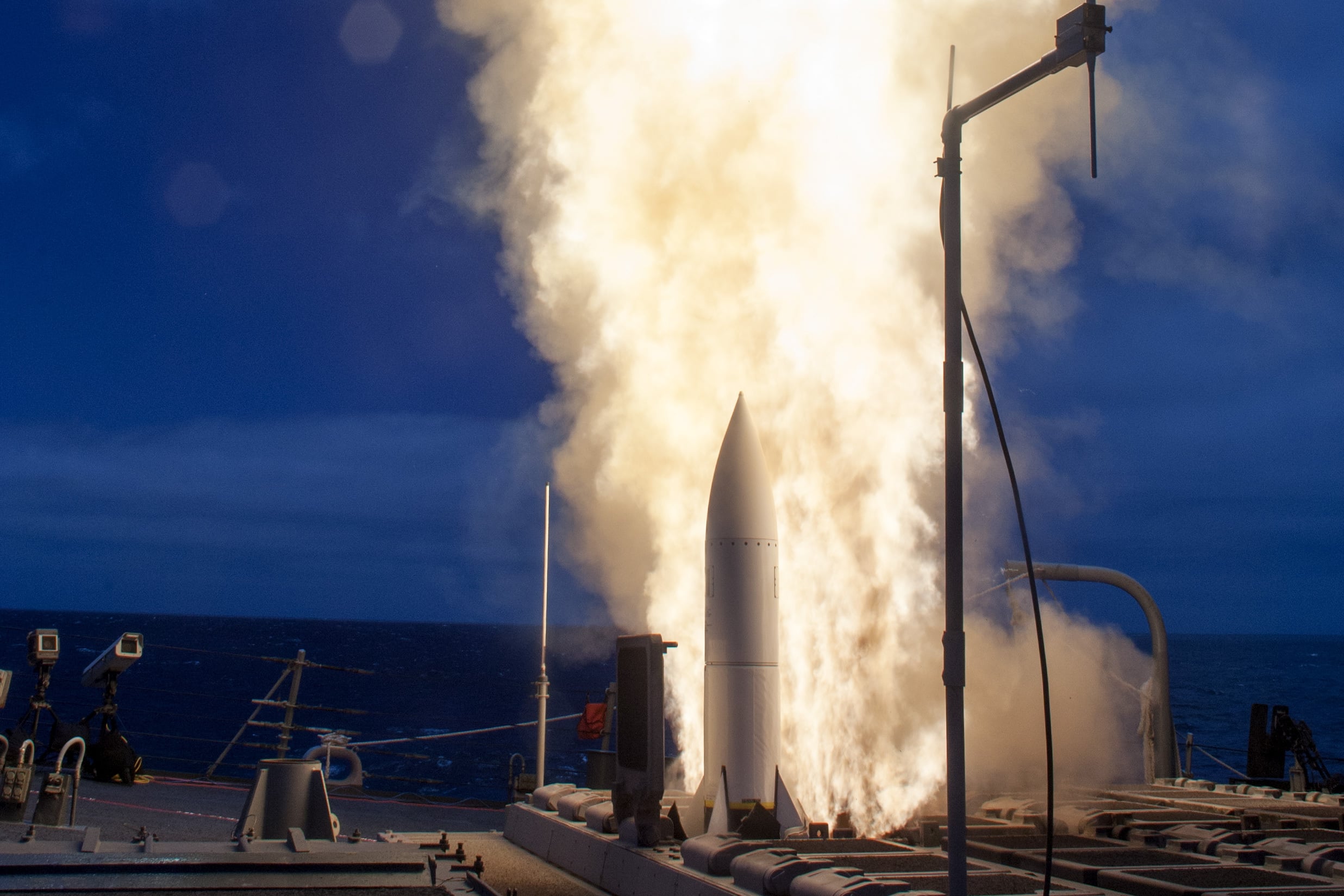
U.S. Navy Expands SM-6 Missile Production Capacity
The United States Navy has awarded Raytheon a $29 million contract modification to expand production tooling and test equipment for the Standard Missile-6 (SM-6) program.
According to contract details released by Naval Sea Systems Command, the award covers new supplier special tooling and special test equipment needed to increase output of the SM-6 All Up Round, a key multi-mission missile used across the Navy’s surface fleet. The work will be carried out at Raytheon facilities in Tucson, Arizona; Middletown, Connecticut; and Westminster, Maryland, with completion expected by September 30, 2028.
Fiscal 2025 Navy weapons procurement funds totaling $14,594,097 were obligated at the time of the award. The Navy stated that none of the obligated funding will expire at the end of the current fiscal year. The modification (N00024-20-C-5405) is tied to a previously awarded cost-plus-fixed-fee contract supporting the broader SM-6 production expansion effort.
As noted by Raytheon parent company RTX, the SM-6 is deployed on U.S. Navy surface combatants and uses the proven Standard Missile airframe and propulsion design. RTX states the weapon provides “over-the-horizon offensive and defensive capability,” combining anti-air warfare, anti-surface strike, and sea-based terminal ballistic missile defense in one missile.
The SM-6 has become one of the Navy’s most versatile long-range weapons, enabling destroyers and cruisers to engage aircraft, cruise missiles, ballistic missiles in terminal flight, and hostile ships. The Navy has moved in recent years to accelerate SM-6 production as demand grows in both U.S. and allied fleets.
Raytheon’s new tooling and equipment covered under the latest award are intended to support that expansion and improve throughput across the missile’s manufacturing chain. Production growth is part of a wider Navy push to increase stockpiles of multi-mission interceptors, long-range strike systems, and high-end ship-launched weapons.
The production sites for this contract represent major nodes in the SM-6 supply network: Tucson for final integration, Middletown for propulsion components, and Westminster for specialized electronics and test hardware.
The SM-6 is also used by international partners under the U.S. Foreign Military Sales program, further increasing demand for expanded production capabilities. RTX has emphasized that the missile’s multi-role design allows navies to enhance offensive and defensive firepower without introducing multiple distinct systems.