


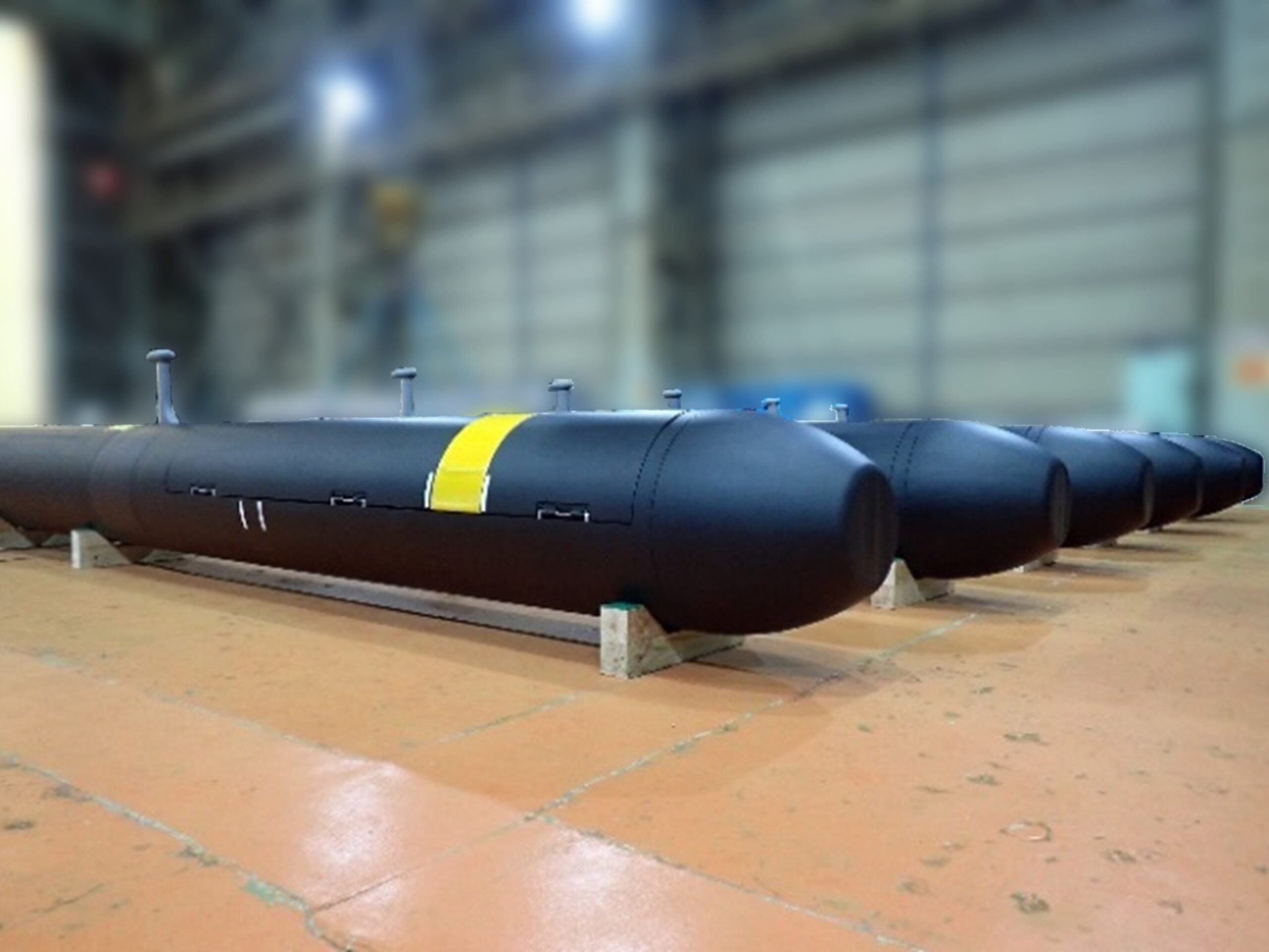
Japan’s Navy Fields Domestically Built Underwater Drones
Japan’s Maritime Self-Defense Force (JMSDF) confirmed on January 20, 2026, that it has taken delivery of a newly developed small unmanned underwater vehicle (UUV) designed for underwater defense missions.
The announcement was made by the Ministry of Defense’s JMSDF public affairs office, which stated that the domestically developed UUV has now been formally inducted into service. The system is intended to support underwater surveillance and defense tasks, strengthening Japan’s ability to monitor and secure its surrounding waters.
According to the JMSDF statement, the UUV is part of Japan’s broader effort to integrate unmanned assets into its force structure. The service said it will continue to steadily advance defense capability development that includes unmanned systems, with the goal of improving both deterrence and response capabilities.
The newly delivered system is a small UUV designed for operations in coastal and near-shore environments, where detection of underwater threats is increasingly important. While the JMSDF did not release technical specifications, the vehicle is expected to support missions such as underwater reconnaissance, monitoring of sea lines of communication, and protection of ports and critical maritime infrastructure.
The delivery comes as Japan faces growing concerns over undersea activity in the Western Pacific, including the movement of submarines, underwater sensors, and other unmanned platforms operated by regional actors. Small UUVs are seen as a cost-effective way to expand persistent surveillance without relying solely on crewed vessels or aircraft.
Japan has been steadily investing in unmanned maritime systems as part of its defense modernization, with a focus on distributed sensing, endurance, and reduced risk to personnel. The JMSDF has previously tested multiple classes of UUVs for mine countermeasures and intelligence collection, but this delivery reflects a shift toward operational fielding rather than experimentation.
As noted by the JMSDF, the introduction of the new UUV supports Japan’s “Free and Open Indo-Pacific” (FOIP) strategy, which emphasizes maritime security, freedom of navigation, and stability across critical sea lanes. Underwater surveillance is a key component of that strategy, particularly in areas where surface monitoring alone is insufficient.
The Ministry of Defense has increasingly highlighted unmanned systems as essential to addressing manpower constraints and the expanding scale of maritime monitoring requirements. UUVs allow continuous operations in areas that are difficult or costly to patrol with conventional platforms, providing commanders with more persistent situational awareness below the surface.